




What Does Hail Damage Look Like On a Roof? (Damage Guide)
Understanding what does hail damage look like on a roof is crucial for any homeowner, especially in regions prone to severe weather. Hail can cause significant and often hidden damage that, if left untreated, may lead to costly repairs or even structural problems. Recognizing these signs early can save you time, money, and stress. For those looking to safeguard their homes, professional roof inspection services for residential roofing offer expert evaluation and repair solutions.
- Learn the typical signs of hail damage on different roofing materials
- Understand the risks of ignoring hail damage
- Discover how to assess whether roof repairs or replacements are necessary
- Get tips for when to call in roofing professionals for inspection and repair
Recognizing Hail Damage on Your Roof: Why It Matters
Storms with hail can be fierce, and the impact they leave on roofing materials might not be immediately visible. Many homeowners are unaware of the subtle indicators of damage which can worsen over time. Early detection of hail damage is essential to prevent leaks, mold growth, and structural weakening of your home’s roof.
- Safety concerns: Damaged roofs can compromise your home’s safety by allowing water infiltration
- Insurance claims: Correctly identifying hail damage ensures your insurance claim is valid and optimized
- Property value: A well-maintained roof protects curb appeal and long-term home value
- Cost efficiency: Early detection leads to smaller, more affordable repairs
- Peace of mind: Addressing damage promptly prepares your home for future storms
6 Clear Signs: What Does Hail Damage Look Like On a Roof?
Hail damage can present itself differently depending on the type of roofing material used. Some materials show damage immediately, while others develop issues over time. The table below outlines common hail damage indicators by roofing type.
Signs of Hail Damage by Roofing Material
| Roofing Material | Common Hail Damage Signs | Severity Risk |
| Asphalt shingles | Granule loss, bruising, cracking | Moderate to High |
| Metal roofing | Dents, scratches, panel distortion | Low to Moderate |
| Wood shakes | Splitting, surface dents, cracking | High |
| Clay or concrete tile | Cracks, chipped edges, broken tiles | High |
Below are the most common visual and structural signs homeowners should watch for after a hailstorm.
1. Dents and Dings on Shingles
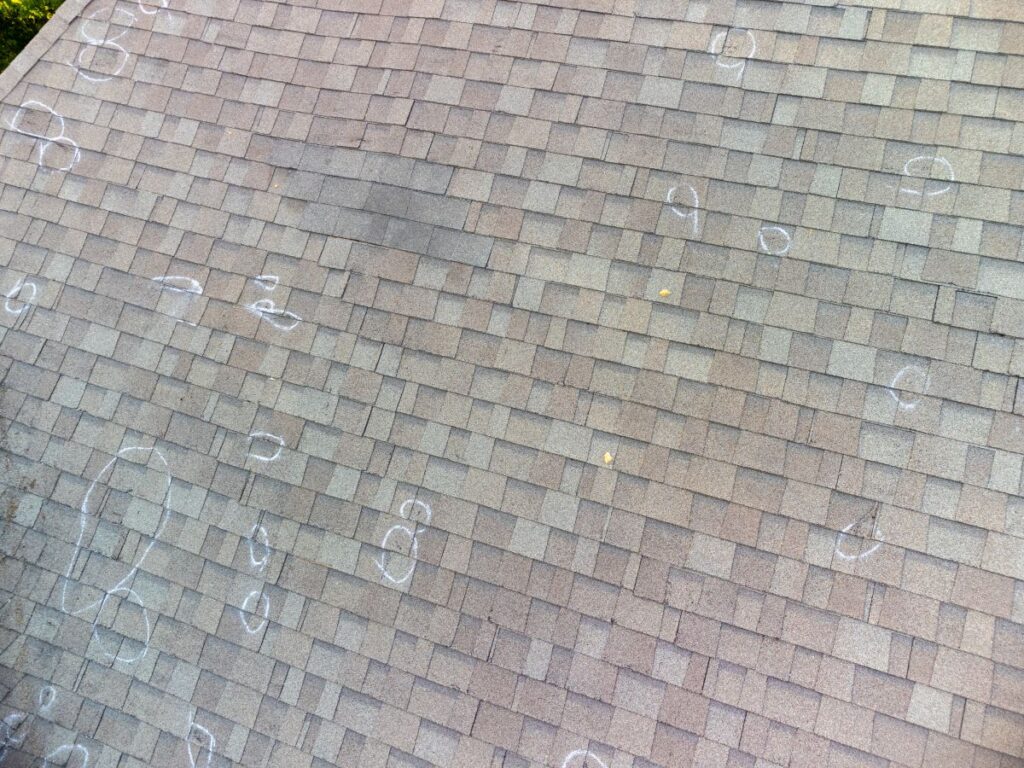
One of the most visible signs of hail damage is small dents or bruises on asphalt shingles or metal roofing. Hail strikes often leave circular patterns that loosen granules and weaken the surface.
- Granule loss: Exposed underlayment or darker patches
- Soft spots: Spongy texture that gives when pressed
2. Cracked or Broken Shingles
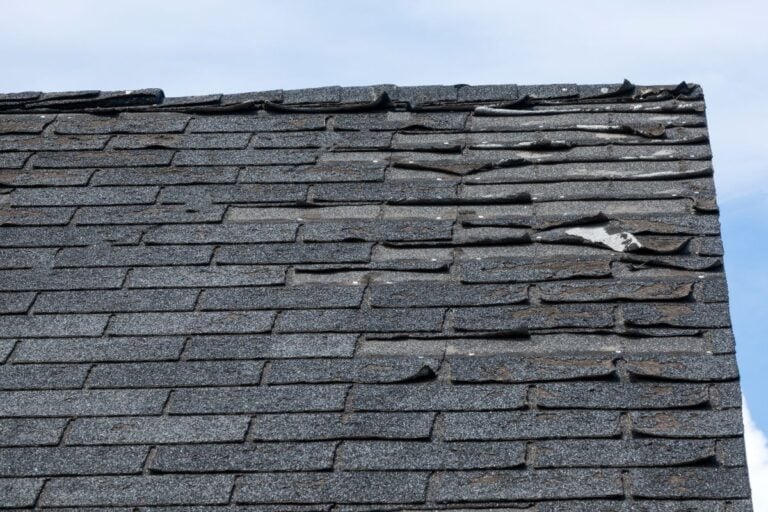
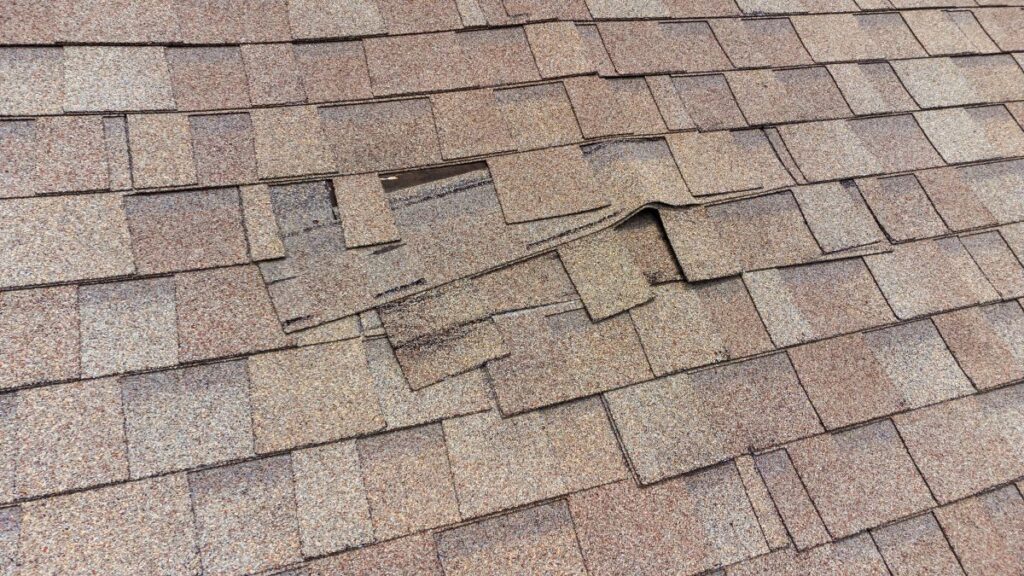
Hail can cause shingles to crack, split, or even break apart—especially if the shingles are older or already brittle.
- Edge fractures: Cracks near the edges or corners
- Texture changes: Curling, blistering, or flaking after the storm
3. Damage to Roof Flashing and Gutters
Metal flashing and gutters often show signs of hail before shingles do. Look for dents, bent sections, or torn seams.
- Gaps in flashing: May allow water to leak under the roof
- Gutter blockage: Caused by hail, debris, or broken roofing granules
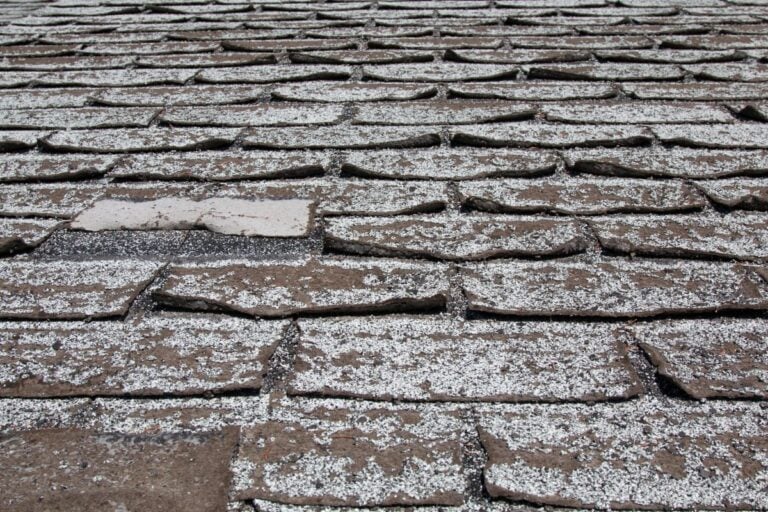
4. Granule Loss on Shingles
Hail can strip the top protective layer from asphalt shingles, exposing the fiberglass mat and reducing the shingle’s ability to shed water.
- Bald spots: Shiny, bare areas with missing granules
- Accelerated wear: Shingles age faster without protection
5. Debris Accumulation
Storms often leave behind leaves, twigs, or detached roofing materials that can hide hail damage or block proper drainage.
- Roof clutter: Check for buildup that may cover damage
- Drainage risks: Trapped moisture increases rot and mold
6. Interior Water Signs
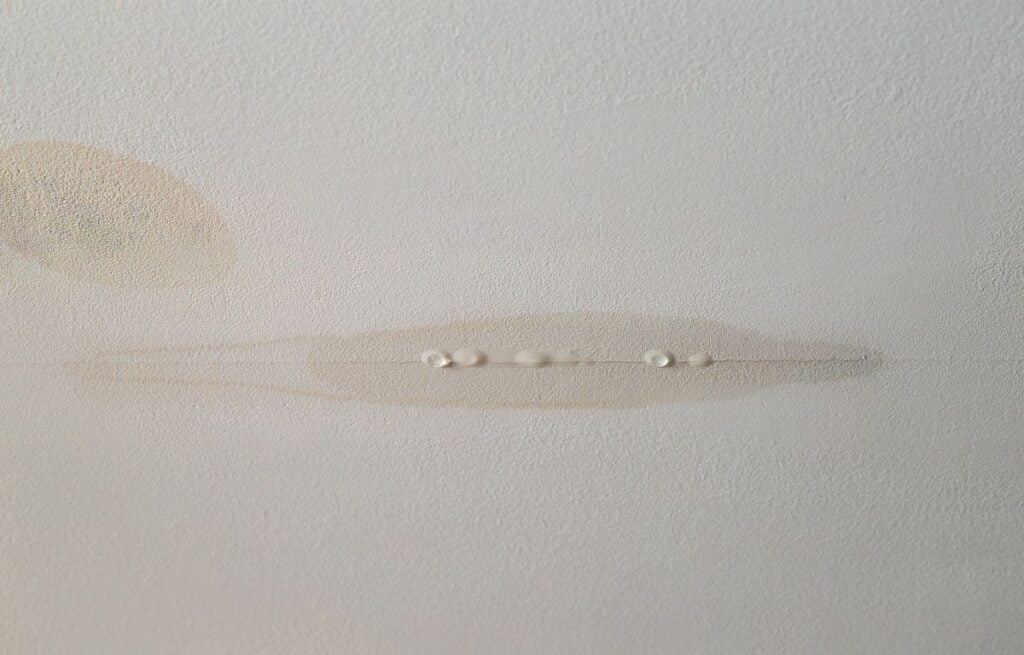
Not all hail damage is visible outside. Some signs appear inside the home as water stains, sagging drywall, or mildew odors.
- Attic stains: Discoloration on beams or insulation
- Ceiling drips: Leaks or dark spots inside the home
Best Practices for Assessing Roof Hail Damage
After a storm, it’s important to assess your roof safely and thoroughly—whether you’re doing it yourself or calling in professionals.
- Visual inspection: Use binoculars or a drone to check safely from the ground
- Hire certified inspectors: Trained eyes can catch damage you might miss
- Document everything: Take photos and notes for insurance
- Check roof edges: Damage often shows near flashing, vents, and valleys
- Watch for leaks: Reinspect after the next rain to confirm active issues
Hail Damage Repair Options: What Comes Next?
Once hail damage is confirmed, choosing the right next step depends on the scope of the damage and the age of your roofing system.
Spot Repairs
Minor issues like small dents or limited granule loss may only need localized fixes. Shingle swaps, flashing reseal, or surface patching can extend the life of the roof without major work.
Full Roof Replacement
Widespread shingle damage, severe granule loss, or older roofs often require a complete replacement. This protects the structure and may even improve energy efficiency with updated materials.
Insurance Help and Inspections
Partnering with a roofing contractor experienced in insurance work can make the claims process easier. Accurate inspections and clear documentation improve your chances of approval and full compensation.
Maintenance After Repairs
Ongoing inspections and seasonal checkups help preserve your roof after hail damage has been addressed. A proactive approach ensures long-term protection and fewer surprises.
Protect Your Home from Future Hail Damage
While hailstorms can’t be prevented, the damage they cause can be minimized with some proactive steps. Strengthening your roof and staying alert to seasonal risks helps protect your home and reduce future repair costs.
- Install impact-resistant shingles approved for hail zones
- Trim tree limbs that hang over the roofline
- Reinforce flashing, gutters, and vulnerable edges
- Schedule professional roof inspections annually
- Clear leaves and granules from gutters and valleys after storms
Being proactive today means fewer headaches tomorrow — and it helps your roof stand up to whatever weather comes next.
Taking Action to Protect Your Roof Today
If you’ve recently experienced a hailstorm or noticed suspicious signs like shingle dents, roof debris, or interior stains, don’t wait for the problem to grow. Acting quickly protects your home from further damage and gives you the best shot at insurance coverage. Army Roofing offers fast, professional inspections and clear solutions tailored to your roof’s needs. Whether you need simple repairs or full roof replacement, our local team is ready to restore your peace of mind. Reach out today to schedule an inspection and let us help protect what matters most.
Recent Articles
The Roof Blog