



Best Attic Insulation Types for a Longer-Lasting Roof
Choosing the right attic insulation plays a major role in protecting your roof, improving your home’s energy efficiency, and preventing early deterioration from seasonal temperature swings. For homeowners in Delta, where cool coastal air and moisture can affect roofing systems, the right insulation material supports both comfort and long term roof performance.
This guide covers:
- Why attic insulation helps extend roof life
- The best insulation material options
- A comparison table to help you choose
- A detailed breakdown of top insulation types
- How to choose the right option for your attic floor
- Professional guidance for complex attics
We’re proud to serve home and business owners in Delta, BC, and nearby communities with reliable roofing inspections, repairs, and replacements that help support a healthier, longer lasting roof.
Why Attic Insulation Affects Roof Lifespan
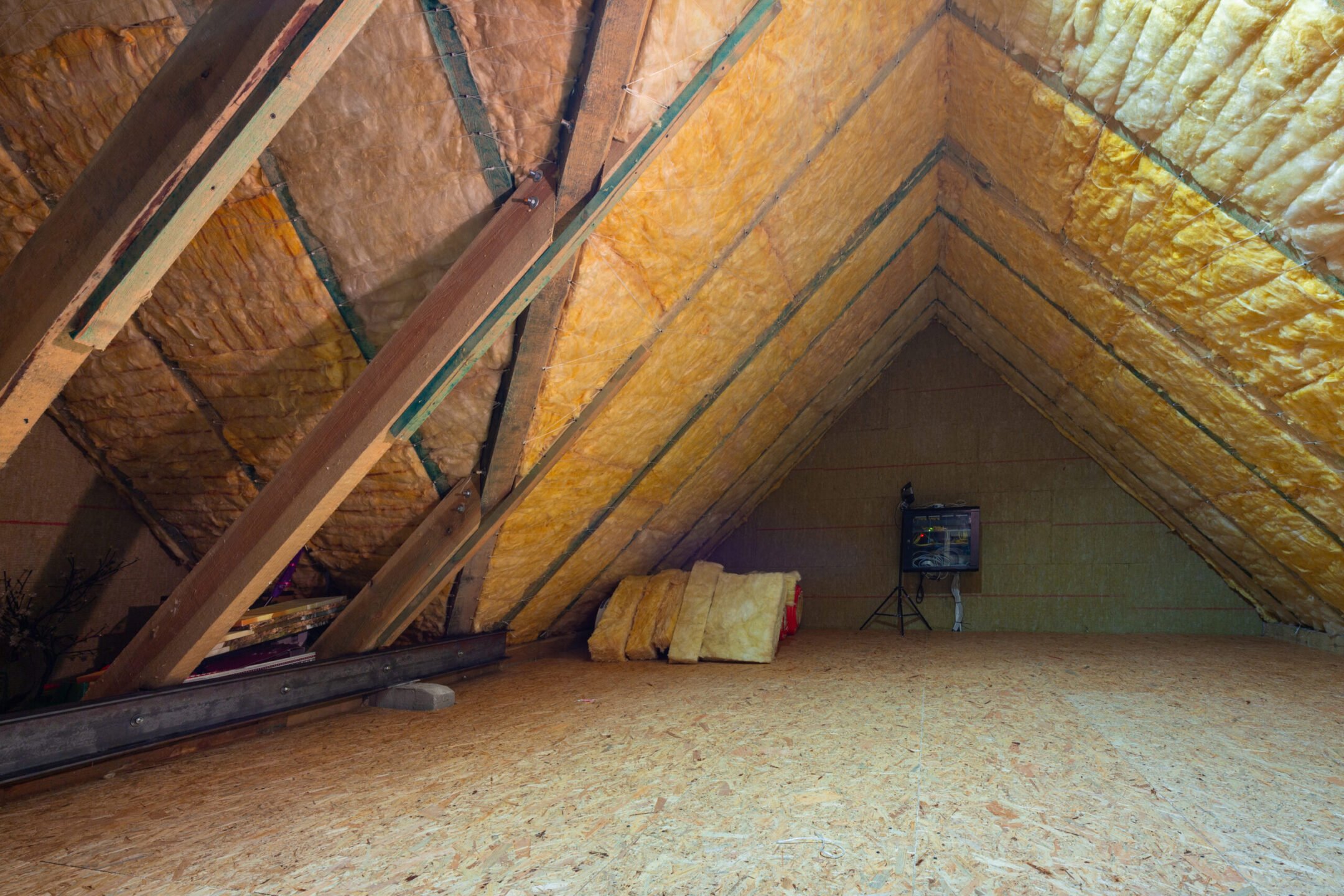
Insulation does more than regulate indoor temperature. It protects your attic floor and roof structure by reducing heat transfer, preventing moisture buildup, and stabilizing temperatures across the roof deck. Without proper coverage, excess heat rises into the attic, causing shingles to age faster, ventilation systems to overwork, and condensation to form on cold surfaces.
Good insulation works together with ventilation to seal air leaks, reduce strain on the roof, and keep your home more efficient. According to the Department of Energy, insufficient attic insulation leads to increased heat transfer that can accelerate roof wear in many homes, maintaining proper insulation levels directly supports long term roofing performance.
Most Common Types of Attic Insulation
Before choosing the best insulation for your home, it helps to understand how each type works. Some options are ideal for adding over existing insulation, while others are best for fully sealing attic cavities or addressing air leaks.
- Fiberglass batts: Affordable and easy to install.
- Blown in insulation: Great for filling gaps and uneven spaces.
- Spray foam insulation: (Open-cell or closed-cell) Creates an air seal and high efficiency results.
- Loose fill insulation: Often cellulose or fiberglass, excellent for covering irregular surfaces.
- Foam board: Rigid panels used in certain attic or roof deck applications.
- Mineral wool: Moisture resistant and fire resistant.
Insulation Comparison Table
| Insulation Type | Cost Level | Energy Efficiency | Moisture Resistance | Best For |
| Fiberglass Batts | Low | Moderate | Moderate | Basic attic floor installation |
| Blown-In Cellulose | Medium | High | High | Attics with gaps or existing insulation layering |
| Spray Foam (Open/Closed) | High | Very High | Very High | Air sealing and moisture control |
| Loose Fill Fiberglass | Medium | Moderate–High | High | Large open attics needing deeper coverage |
| Foam Board | Medium | High | Very High | Specialty areas or sloped roof decks |
| Mineral Wool | Medium | High | Very High | Fire resistance or damp climates |
6 Best Attic Insulation Types for a Longer-Lasting Roof
Choosing the right insulation depends on your attic’s layout, ventilation setup, and whether you’re installing insulation over existing layers or starting fresh.
1. Fiberglass Batt Insulation
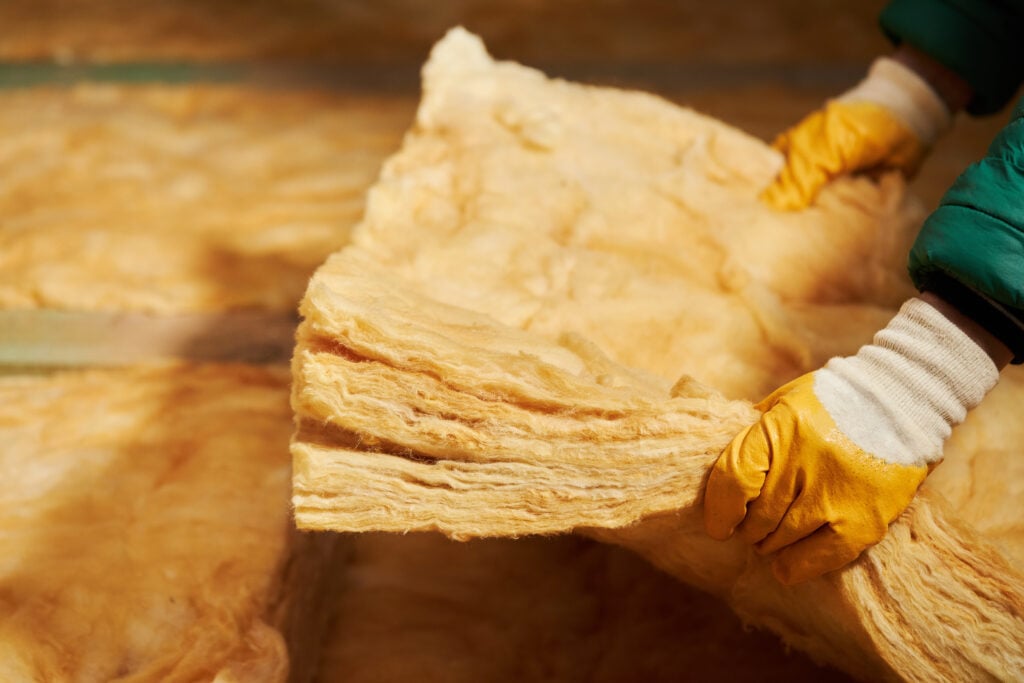
Fiberglass batts are one of the most common choices for straightforward attics with accessible joists. They are cost effective and easy to place across the attic floor.
- Straightforward installation: Ideal for homeowners comfortable with installing insulation themselves.
- Widely available: Comes in various R-values for different climate needs.
- Compatible with existing insulation: Useful when adding depth without removing old layers.
2. Blown-In Cellulose Insulation
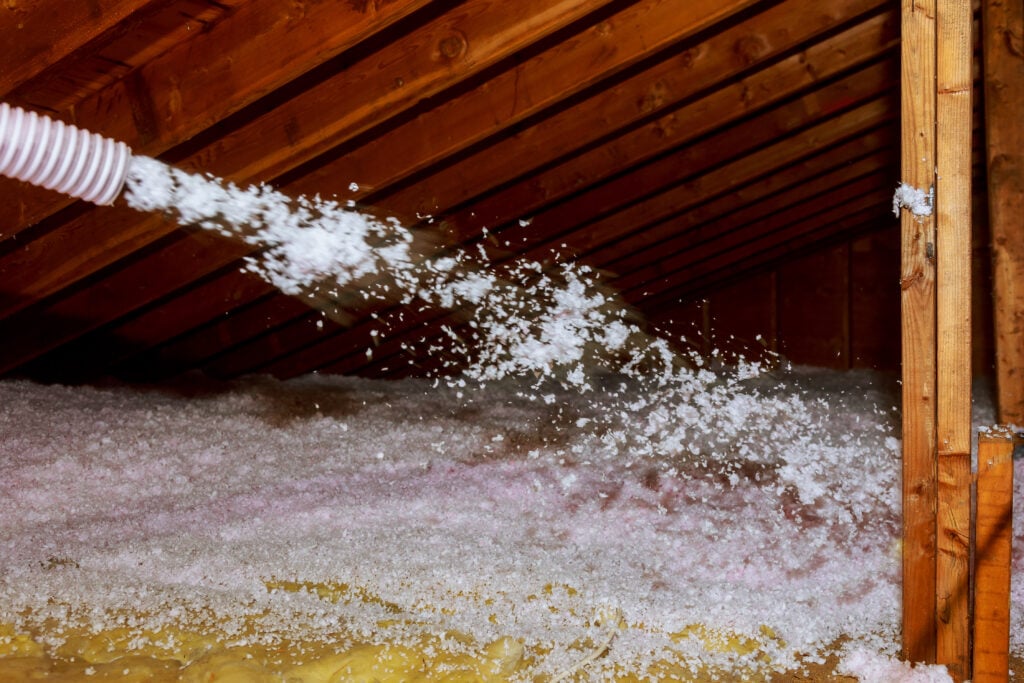
Blown in insulation allows for excellent coverage and is especially beneficial when the attic includes irregular spacing or obstacles.
- Gap filling performance: Dense particles settle into cracks around attic framing.
- Moisture resistance: Helps reduce condensation risk in humid climates.
- Ideal for upgrading: Works well when topping off existing insulation.
3. Loose Fill Fiberglass Insulation
Loose fill insulation offers flexibility and ease of installation in larger attic spaces that require even coverage at varying depths.
- Lightweight application: Suitable for attics with delicate framing.
- Covers uneven surfaces: Provides a uniform thermal barrier.
- Affordable upgrade option: Often used during energy efficiency improvements.
4. Open-Cell Spray Foam
Open-cell spray foam (often mistaken as “spare foam” due to common wording errors) expands rapidly, creating full coverage and noise reduction.
- Excellent air sealing: Reduces air leaks that weaken roof efficiency.
- Flexible expansion: Fills cavities that other insulation cannot reach.
- Strong acoustic benefits: Helps quiet upper floors and attic movement.
5. Closed-Cell Spray Foam
Closed-cell spray foam is rigid, moisture resistant, and highly efficient for homes needing maximum control over attic humidity and temperature.
- High R-value: Provides superior insulation in compact areas.
- Moisture barrier: Reduces condensation risk on cold surfaces.
- Structural support: Adds stability to roof decks and walls.
6. Foam Board and Hybrid Systems
Foam board insulation is often used in specialty areas like kneewalls or sloped roof decking, and combining materials creates high performance results.
- Rigid insulation material: Provides consistent R-values and moisture control.
- Useful for unique spaces: Ideal for cathedral ceilings or limited clearance areas.
- Hybrid options: Spray foam + batts or foam board + blown in cellulose deliver optimized performance.
How to Choose the Right Insulation for Your Home
Your ideal insulation depends on budget, attic accessibility, and how well your home currently performs during temperature changes. Homes with severe air leaks benefit from spray foam or foam board, while older homes with simple layouts often perform well with blown in insulation or batts.
Key considerations include:
- Air leak control: Sealing attic air leaks before installing insulation improves effectiveness.
- Existing insulation: Some types can be layered while others require a full reset.
- Climate demands: Delta’s moisture makes spray foam and mineral wool great long term choices.
- Attic layout: Tight spaces work better with loose fill insulation or foam.
FAQs About Attic Insulation
Before choosing a material, homeowners often have questions about installation, compatibility, and cost savings.
Does insulation really help extend the life of my roof?
Yes. Proper insulation reduces attic heat buildup, easing stress on shingles and roof decking.
Can insulation go over existing insulation?
In many cases, blown in insulation, loose fill insulation, and fiberglass batts can be added over existing insulation as long as it is dry and mold free.
Should I seal air leaks before installing insulation?
Absolutely. Sealing air leaks maximizes insulation performance and reduces moisture risks.
What type works best for air sealing?
Spray foam insulation is the most effective because it fills gaps and creates a tight barrier.
Is DIY insulation installation safe?
Fiberglass and loose fill products can be DIY, but spray foam or foam board systems are best handled by professionals.
Why Homeowners Trust Army Roofing for Roof Protection and Long-Term Performance
Proper attic insulation is just one part of maintaining a healthy roofing system, but protecting the roof itself requires expert evaluation and reliable workmanship. At Army Roofing, we help homeowners safeguard their roofs by identifying ventilation issues, checking for moisture concerns, and ensuring the roof structure performs well season after season. Our team understands how Delta’s climate affects roofing materials and offers guidance that supports long term durability.
Homeowners throughout Delta trust us because we prioritize transparency, quality, and responsive service. Whether your roof needs an inspection, repairs, or a full replacement, we provide clear recommendations and dependable solutions that keep your home protected. Contact Army Roofing today to schedule a free consultation and ensure your home stays safe and resilient year round.
Recent Articles
The Roof Blog