



How to Get Rid Of Ice Dams On Roof (9 Step Process)
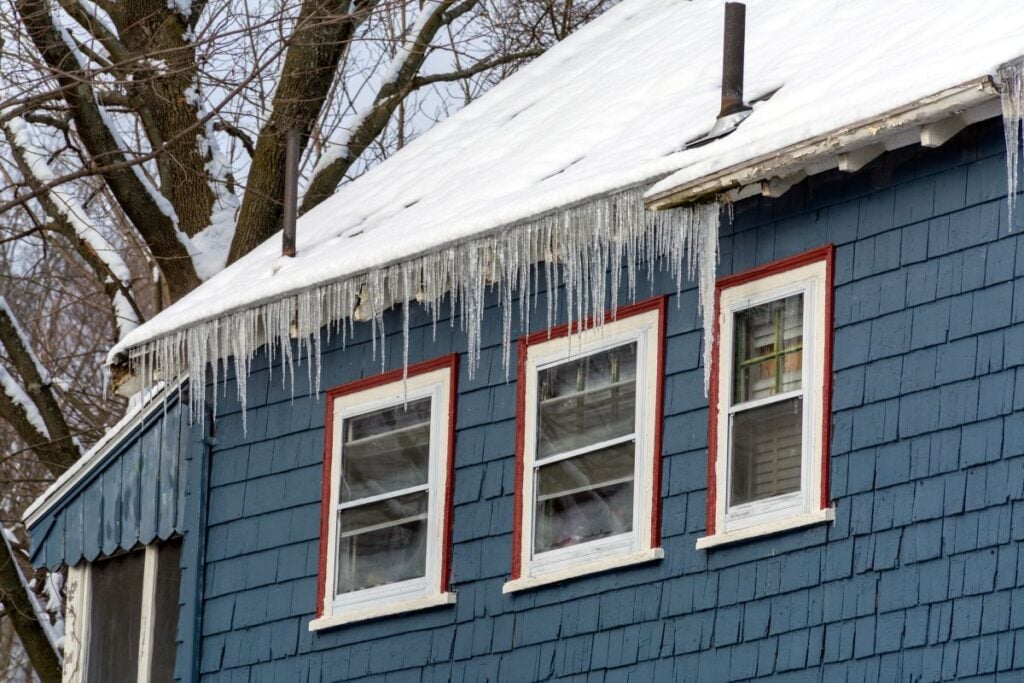
Ice dams on roof surfaces can cause serious winter damage when melting snow refreezes along colder sections of the roof and traps water behind a ridge of ice. As water backs up, it can slip beneath shingles and eventually show up inside the home as water stains on ceilings or walls. If ignored, the trapped moisture may continue causing damage to roof decking, interior finishes, and structural framing.
Understanding how to handle ice dam removal safely and how to prevent ice dams from returning can help homeowners reduce winter repair costs and maintain a stronger roofing system.
- Winter temperature swings: Uneven roof temperatures contribute to ice forming along lower roof sections.
- Interior warning signs: Water stains may indicate moisture backing up under shingles.
- Structural strain: Thick ice buildup adds extra weight to roofing materials.
- Long term prevention: Proper insulation, ventilation, and maintenance reduce recurring winter problems.
Homes in colder climates that experience heavy snowfall are especially vulnerable during freeze and thaw cycles. Addressing buildup early can reduce interior leaks and help prevent expensive structural repairs.
What Causes Ice To Build Up On Roofs?
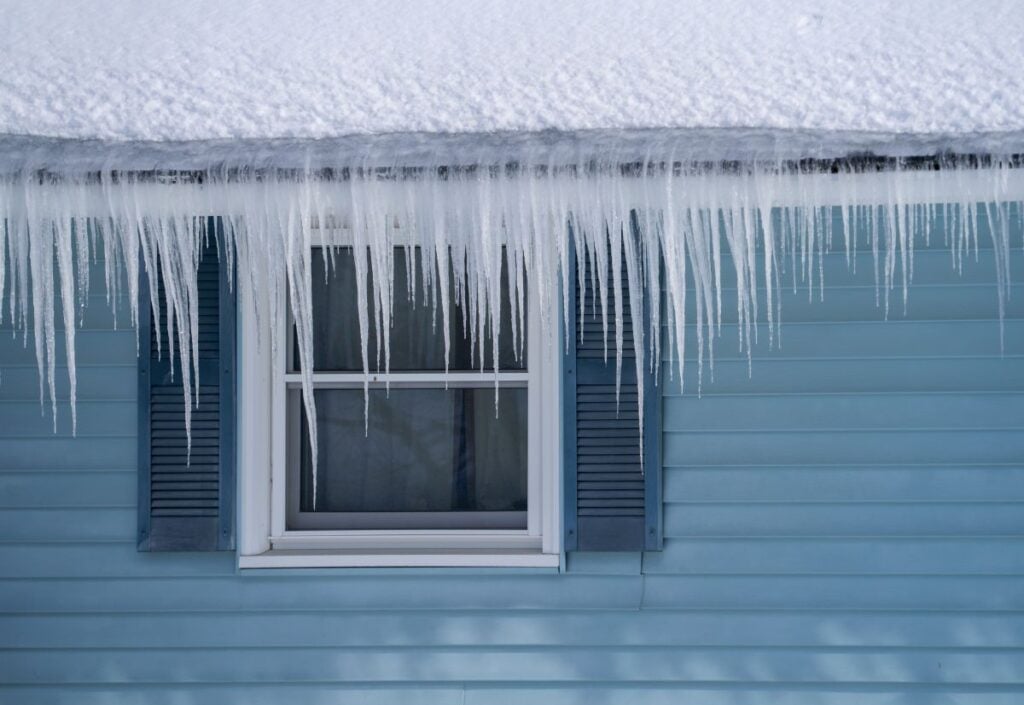
Ice buildup typically starts when warm air escapes from the living space and creates uneven temperatures across the roof surface. Snow melts on warmer upper sections and flows downward. When that water reaches colder overhang areas, it refreezes and gradually forms a thick ridge that blocks proper drainage.
According to the U.S. Department of Energy’s Building America Solution Center, ice dams form when heated air from the house escapes into the attic, warms the underside of the roof deck, and melts snow that then refreezes at the colder eaves, highlighting how important balanced insulation and ventilation are during winter months. Several conditions increase the likelihood of this problem:
- Insufficient insulation: Heat loss through the ceiling warms sections of the roof unevenly.
- Limited ventilation: Poor airflow allows warm air to collect beneath the roof deck.
- Heavy snowfall accumulation: More snow creates more melting water during daytime temperature shifts.
- Clogged gutters: Debris can slow runoff and encourage freezing near lower roof areas.
9 Step Process To Get Rid Of Ice Dams On Roof
Removing ice buildup requires care to avoid damaging shingles or putting yourself at risk. If conditions appear unsafe, contacting a roofing contractor for professional ice damn removal is strongly recommended.
1. Inspect The Roof From The Ground
Begin by evaluating visible buildup without climbing onto icy surfaces. Slippery conditions can make roof access extremely dangerous.
- Look for thick ice ridges: Especially along lower roof sections.
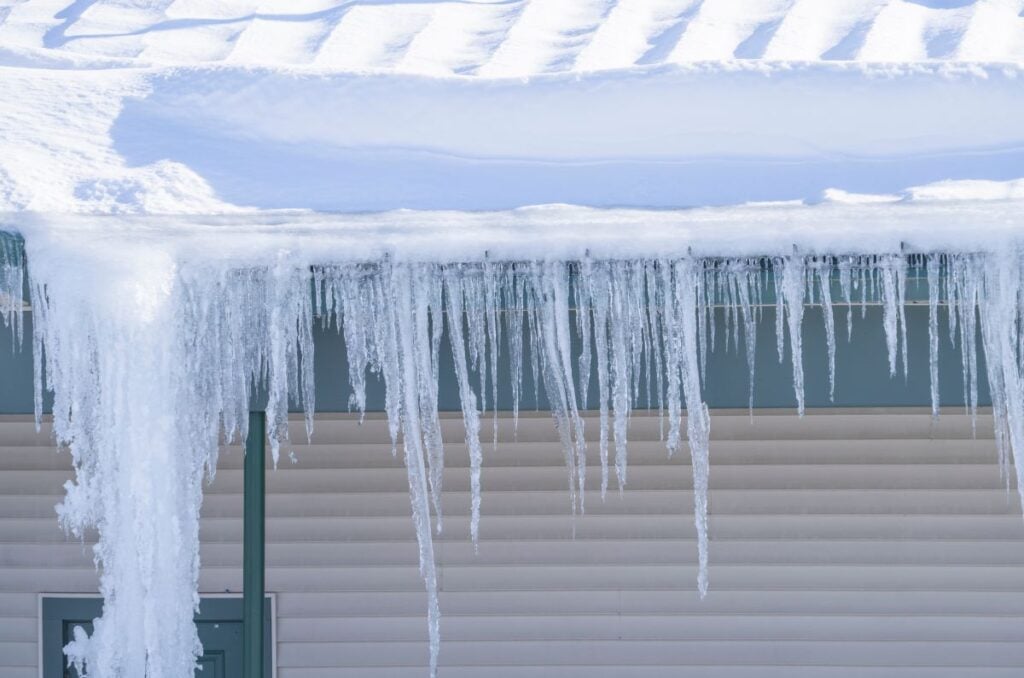
- Watch for large icicles: These often signal trapped water behind frozen areas.
- Check interior ceilings: Water stains may confirm leakage.
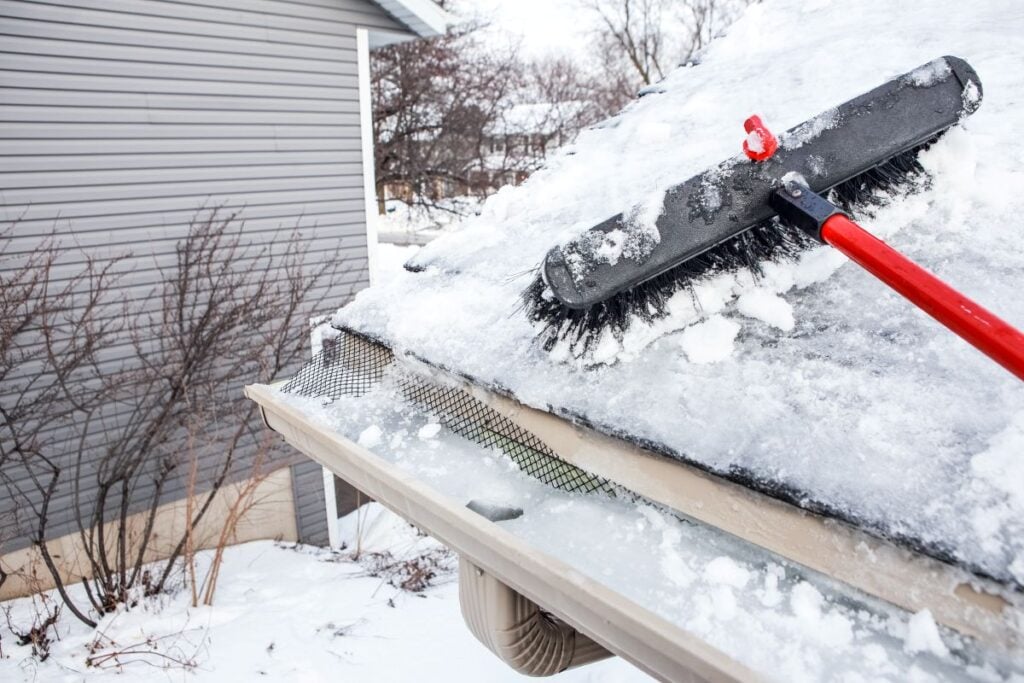
2. Remove Excess Snow With A Roof Rake
Reducing snow accumulation lowers the amount of melting water feeding the ice ridge. A long handled roof rake allows snow removal while standing safely on the ground.
- Clear several feet above buildup: Focus on the lower roof sections.
- Work gently: Avoid damaging shingles.
- Remove snow evenly: Prevent uneven melting patterns.
3. Create Drainage Channels Through The Ice
Allowing trapped water to escape reduces pressure behind frozen ridges.
- Use calcium chloride: Place it in a fabric tube to melt vertical channels.
- Lay tubes perpendicular to the ridge: This helps water drain safely.
- Avoid rock salt: It can corrode metal components and harm roofing materials.
4. Improve Insulation Levels
Consistent roof temperatures reduce uneven melting and refreezing cycles that contribute to recurring issues.
- Add insulation where gaps exist: Focus above living spaces.
- Upgrade insulation in older homes: Many lack sufficient coverage.
- Reduce heat transfer upward: This helps prevent ice forming again.
5. Minimize Warm Air Leakage
Warm air escaping into upper spaces contributes to uneven roof temperatures.
- Seal gaps around fixtures: Use foam or caulk to close openings.
- Insulate access panels: Prevent warm air from rising.
- Inspect ductwork connections: Limit heated air leakage.
6. Improve Roof Ventilation
Balanced airflow helps maintain a more consistent surface temperature during winter.
- Install ridge vents if needed: Allow warm air to exit.
- Add soffit vents: Encourage cool air intake.
- Keep airflow paths clear: Ensure ventilation openings remain unobstructed.
7. Clear And Maintain Drainage Systems
Proper drainage reduces freezing along lower roof areas.
- Clean gutters before winter: Remove leaves and debris.
- Inspect downspouts: Confirm water flows freely.
- Repair loose components: Prevent water backup during storms.
8. Schedule A Professional Roof Inspection
If winter buildup continues year after year, have the roof inspected by a qualified roofing contractor. A professional evaluation can identify insulation gaps, ventilation problems, or structural weaknesses that may be contributing to the issue.
- Check roofing materials: Ensure shingles and flashing are intact.
- Evaluate structural framing: Identify weakened sections.
- Review ventilation balance: Confirm proper airflow distribution.
9. Invest In Long Term Preventative Upgrades
If repeated freezing has already caused damage, long term improvements may be necessary to prevent ice dams in the future.
- Install ice and water barrier underlayment: Adds protection beneath shingles.
- Upgrade ventilation and insulation systems: Reduce uneven heating patterns.
- Repair damaged decking promptly: Prevent ongoing moisture intrusion.
Why Ice Buildup Should Be Addressed Quickly
Ignoring winter ice buildup can allow moisture to seep beneath roofing materials and into interior ceilings. Over time, trapped water may weaken decking and framing, increasing the likelihood of costly structural repairs.
| Problem | Potential Impact |
| Trapped moisture | Roof deck deterioration |
| Interior leaks | Ceiling and wall damage |
| Excess weight | Structural strain |
| Repeated freeze cycles | Ongoing winter repair costs |
Taking steps to prevent ice dams early can significantly reduce the risk of interior water damage and maintain the overall performance of the roofing system.
Army Roofing Helps Homeowners Manage Winter Roof Issues
Ice dams on roof surfaces can quickly escalate from a minor winter nuisance into a serious structural problem. Taking proactive steps and addressing early signs such as ice forming along lower roof sections or interior water stains helps minimize long term repairs.
At Army Roofing, our experienced team provides winter inspections, preventative maintenance, and professional ice damn removal services to address seasonal roofing concerns. We’re proud to serve home and business owners in Langley, BC, and nearby communities with reliable roofing solutions designed for cold weather conditions.
If you are noticing signs of winter buildup or suspect moisture may be causing damage to your roof, contact Army Roofing today to schedule a professional inspection and keep your home protected throughout the season.
Recent Articles
The Roof Blog