




10 Common Damages & Repairs: Flat Roof Repair Guide
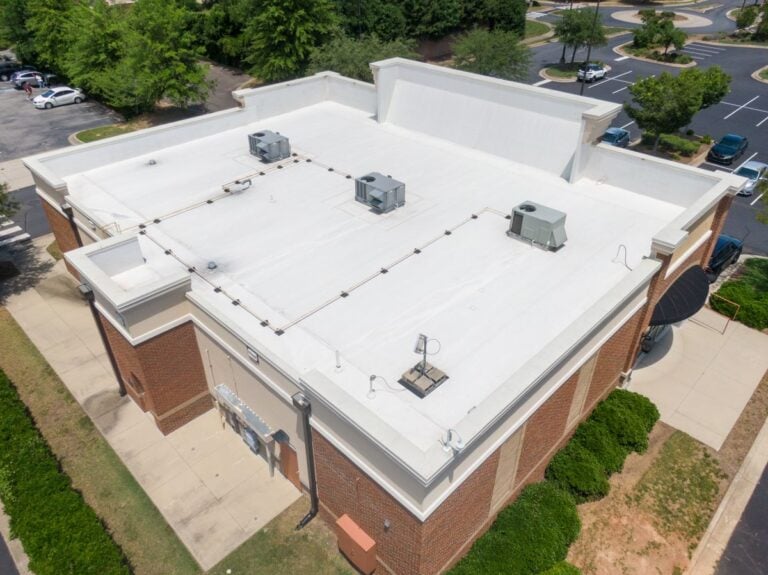
Flat flat roof repair is one of the most important parts of keeping a low-slope roofing system durable, watertight, and energy-efficient. Because flat roofs experience standing water, intense UV exposure, and frequent foot traffic, issues can develop faster than on pitched roofs. For property owners in Delta, seasonal moisture and coastal weather make it essential to understand the most common flat roof problems and how they are repaired. The condition of your roofing material, the age of your existing roof, and how quickly a leaking flat roof is addressed all play major roles in long-term performance and roof’s lifespan.
This guide covers:
- Frequent sources of flat roof damage
- How to spot issues before they spread
- A repair difficulty comparison table
- Ten common flat roof damages and how each is repaired
- Preventative maintenance strategies
- Flat roof repair costs and expectations
- When to call a professional roofing contractor
We’re proud to serve home and business owners in Delta, BC, and nearby communities with trusted inspections, repairs, and replacements that keep flat roofs performing safely year round.

Why Flat Roofs Require Prompt Repairs
Flat roofs are built for stability, but their minimal slope makes them vulnerable to pooling water, membrane wear, and drainage issues. When damage is not addressed promptly, leaks develop beneath the surface, leading to mold, structural deterioration, and costly emergency repairs. Reacting early reduces flat roof repair costs and prevents minor issues from spreading across the entire flat roof.
- Higher exposure risks: Flat roofs experience more foot traffic, UV contact, and mechanical pressure, increasing susceptibility to wear.
- Drainage challenges: Even small blockages or design flaws can trap water for days, triggering flat roof leak repair needs.
- Material sensitivity: Roofing material on flat systems ages faster when water cannot run off efficiently.
- Accelerated damage progression: Once water infiltrates, moisture spreads quickly across the existing roof and saturates insulation.
Early Warning Signs of Flat Roof Damage
Before repairs become extensive, flat roofs often show subtle signs of developing issues. Recognizing these early warnings helps property owners address problems before they affect the entire system.
- Surface discoloration: Often indicates moisture absorption or membrane wear.
- Soft or spongy spots: Suggest trapped water beneath the roofing material.
- Unexplained odors indoors: May point to hidden leaks or mold development.
- Slow drainage: A sign that debris or drains are restricting water flow.
- Peeling or lifting edges: Early indication of seam failure or adhesive breakdown.
10 Common Flat Roof Damages and How They Are Repaired
Before reviewing each damage type, perform a ground-level inspection and look for obvious signs such as discoloration, sagging, or slow drainage. Flat roofs often show subtle symptoms before major failure occurs.
1. Ponding Water
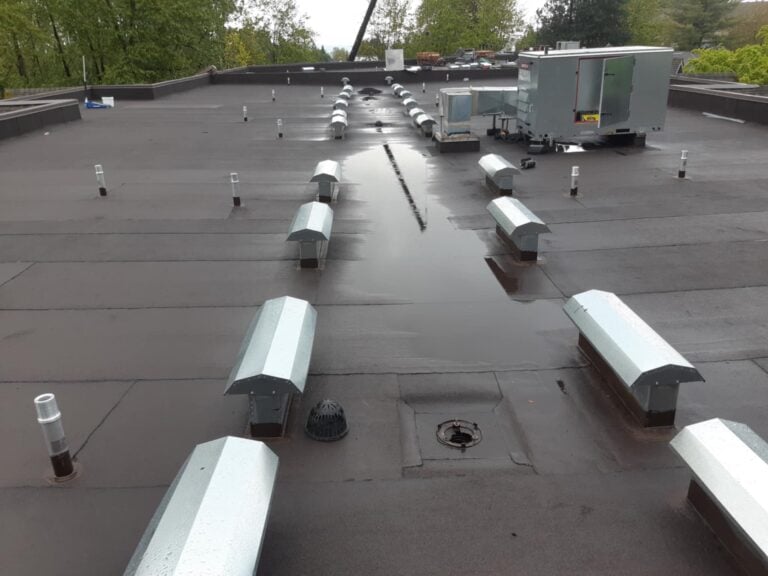
Ponding happens when water sits for more than 48 hours due to poor drainage systems. Repairs include clearing drains, installing tapered insulation, or reworking the slope.
- Rework drainage: Clears pathways for faster water movement.
- Add tapered insulation: Helps redirect standing water.
2. Membrane Cracking
UV exposure and aging cause membrane surfaces to crack, increasing leak potential. Repairs include patching or applying coatings.
- Clean and patch cracks: Stops water penetration.
- Apply reflective coating: Slows UV aging.
3. Blistering
Blisters form when moisture is trapped beneath the membrane. Repairs involve cutting, drying, and resealing.
- Remove damaged blister: Releases trapped moisture.
- Reseal properly: Prevents recurrence.
4. Flashing Separation
Flashing protects roof transitions. When gaps form, serious leaks develop. Repairs require resecuring or replacing flashing.
- Reattach flashing: Restores watertight barriers.
- Replace worn sections: Ensures durable protection.
5. Punctures and Holes
Foot traffic, dropped tools, or hail cause punctures. Repairs involve patching and reinforcing vulnerable areas.
- Install reinforced patch: Prevents expansion of puncture damage.
- Add walkway pads: Reduces impact from foot traffic.
6. Seam Failure
Membrane seams weaken as adhesives age. Repairs include resealing or heat-welding.
- Heat-weld or reseal seams: Restores waterproofing.
- Reinforce with membrane strips: Prevents future separation.
7. Mold and Algae Growth
Moisture buildup causes mold and algae, compromising roof health. Repairs involve cleaning and moisture control.
- Use roof-safe cleaners: Eliminates harmful growth.
- Improve drainage: Prevents moisture retention.
8. Blocked Drains
Debris clogs drain openings, causing overflow. Clearing blockages is essential to prevent further damage.
- Clean drain bowls: Restores proper function.
- Install strainers: Prevents recurring buildup.

9. UV Degradation
UV exposure breaks down roofing material over time. Repairs include adding protective coatings or replacing damaged sections.
- Add UV-resistant coating: Slows membrane decay.
- Replace degraded spots: Prevents leaks and further deterioration.
10. Structural Sagging
Significant sagging indicates compromised structure and requires immediate professional evaluation.
- Assess framing integrity: Identifies necessary repairs.
- Rebuild affected areas: Restores proper roof slope.
Preventative Maintenance Strategies for Flat Roofs
Preventative maintenance helps extend the life of your flat roofing system and reduce long-term flat roof repair costs. By taking small steps throughout the year, property owners ensure early problem detection and prevent widespread damage.
Regular Cleaning and Visual Monitoring
Keeping the surface clear of debris and standing water protects the roofing material and prevents premature wear. Regular checks help identify issues before they impact the entire flat roof.
Seasonal Maintenance Scheduling
Planning maintenance around seasonal changes ensures drainage systems work properly, membranes remain flexible, and protective layers such as roofing cement or coatings perform as designed.
Flat Roof Maintenance Cost Expectations
Understanding potential costs helps owners budget confidently and prioritize repairs. The table below outlines common flat roof issues and typical cost ranges.
Typical Repair Cost Ranges for Flat Roof Issues
| Repair Type | Typical Cost Range | Severity Level | Notes |
| Drain Clearing | Low | Low | Prevents ponding and overflow |
| Membrane Patching | Low–Medium | Medium | For cracks, small punctures, and tears |
| Flashing Repair | Medium | High | Critical for preventing water entry |
| Seam Reinforcement | Medium | High | Protects against water intrusion |
| Structural Sagging Repair | High | Critical | Requires structural correction |
Flat roof repair costs vary based on roof size, material type, and severity of damage. Early detection keeps expenses lower and supports a longer roof’s lifespan.
Why Property Owners Trust Army Roofing for Flat Roof Repairs

Flat roofing systems require detailed inspections, prompt repairs, and long-term maintenance to stay fully functional. Army Roofing provides dependable evaluations, targeted repair solutions, and expert workmanship built for Delta’s climate. Our team focuses on building longevity so your roof remains secure and weather resistant throughout the year.
Whether your property needs routine care or urgent flat roof leak repair, Army Roofing delivers reliable service backed by expertise and clear communication. Contact Army Roofing today to schedule a flat roof assessment.
Recent Articles
The Roof Blog