



8 Step Guide: How to Measure a Roof for Shingles (Full Process)
Learning how to measure a roof for shingles helps homeowners plan accurate material quantities, avoid unexpected costs, and ensure proper shingle coverage during installation. In Delta, where rain, wind, and seasonal storms frequently test roofing systems, accurate measurements make all the difference in long term performance and budgeting.
This guide covers:
- How to understand roof sections and shapes
- Tools needed for a precise measurement
- An 8 part, homeowner friendly measurement process
- Waste calculations and pitch adjustments
- FAQs homeowners commonly ask
- When to call a professional
We’re proud to serve home and business owners in Delta, BC, and nearby communities with roofing estimates, inspections, and more.
Why Understanding Your Roof’s Shape Matters
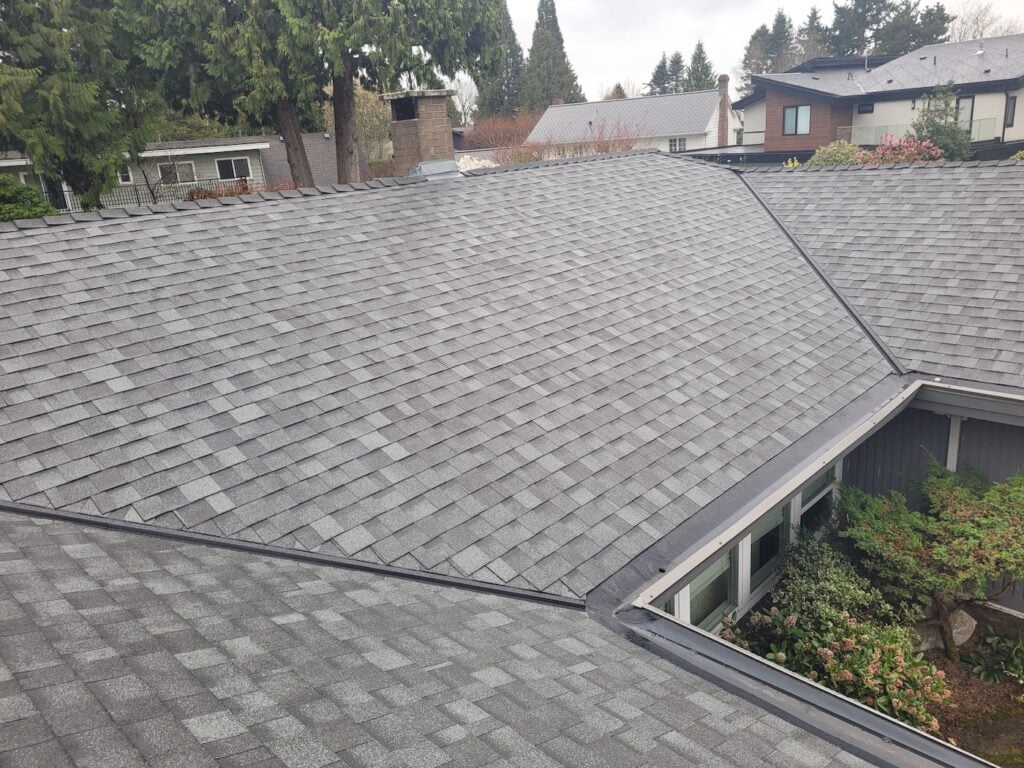
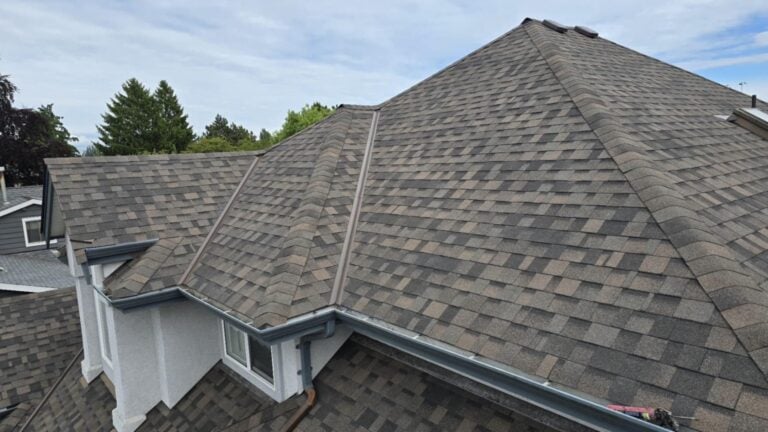
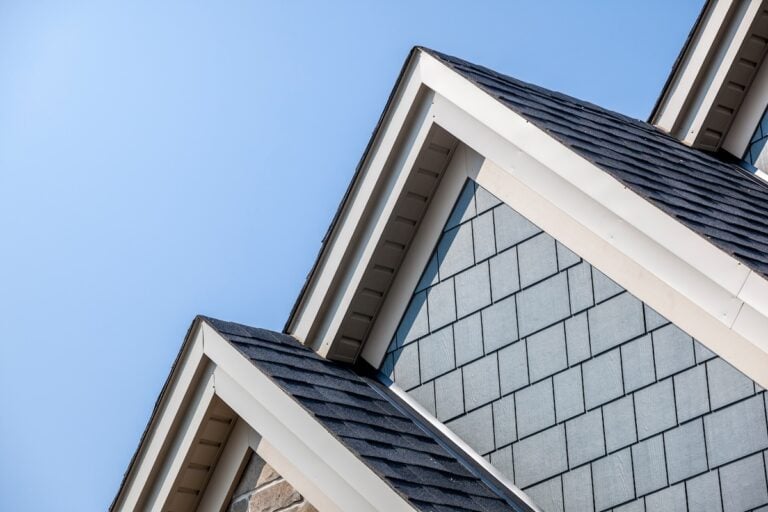
Every roof design impacts how measurements should be taken. Simple gable roofs may only require two basic calculations, while roofs with hips, valleys, dormers, and steep pitches require more detail. Recognizing how your roof is structured helps you avoid missed areas and prevents ordering the wrong amount of shingles.
Accurate measurements also streamline installation, reduce waste, and provide clarity when comparing contractor estimates or planning a DIY project.
Tools You’ll Need Before You Start
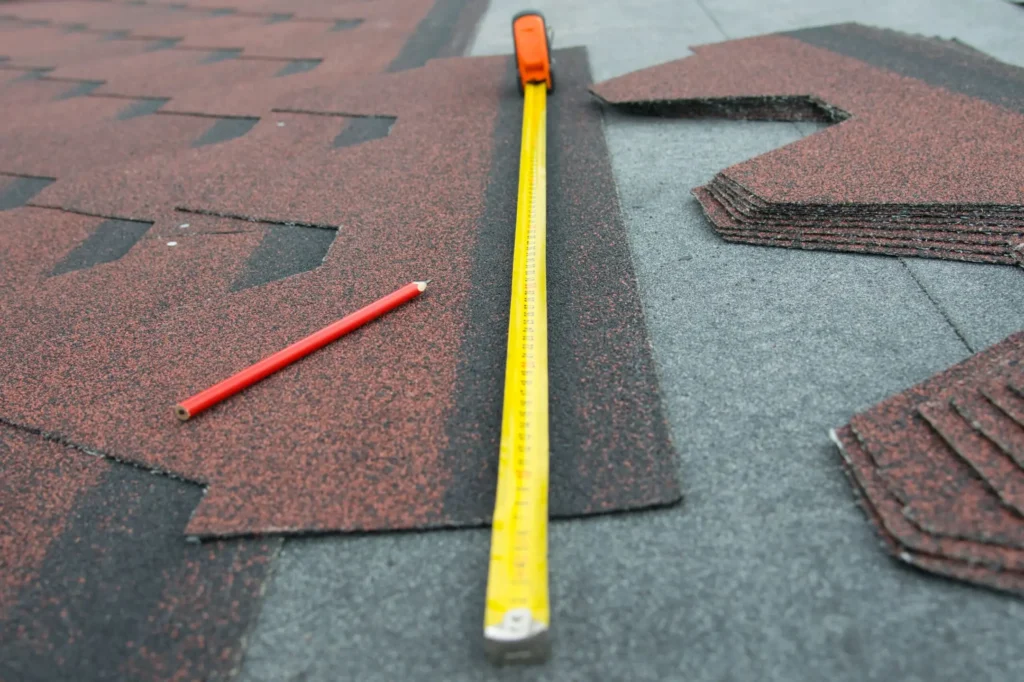
Before measuring, gather tools that make the process smoother, safer, and more consistent. These items support both ground based and on roof measurements.
- Sturdy ladder: Needed for safe access to roof edges.
- Measuring tape: At least 25 feet long for extended edges.
- Pitch gauge or smartphone tool: Determines roof slope accurately.
- Calculator: Used to convert dimensions into roofing squares.
- Sketch pad or notes app: Helps organize plane by plane measurements.
Roof Pitch Multiplier Reference Table
Pitch affects surface area. Use the proper multiplier from the table below after measuring your roof’s slope.
| Roof Pitch | Multiplier | Typical Roof Type |
| 3/12 | 1.06 | Low slope |
| 4/12 | 1.06 | Standard slope |
| 6/12 | 1.12 | Common residential |
| 8/12 | 1.20 | Moderately steep |
| 10/12 | 1.30 | Steep roof |
Apply these multipliers when adjusting your total roof area.
8 Step Process for Measuring a Roof for Shingles
Before you begin the measurement process, walk around your home and observe overhangs, roof lines, and intersections. Familiarizing yourself with the layout makes each step easier and reduces the chance of overlooking a section.
1. Map Out the Roof Layout
Even a rough diagram helps you visualize each section that needs measurement. Most roofs can be broken into rectangles, triangles, and trapezoids, which simplifies the process.
- Sketch each plane: Include areas like porches, additions, and dormers.
- Label roof shapes: Helps track totals when calculating.
2. Measure Horizontal Runs Along the Eaves
Measure the bottom edges of every roof plane. This creates the base dimension for calculating surface area.
- Measure each eave separately: Roofs rarely match perfectly on both sides.
- Write results immediately: Quick notes prevent mix ups later.
3. Measure the Vertical Rise (Ridge to Eave)
This dimension shows the height of each roof plane from top to bottom, forming the second value needed for area calculations.
- Take measurements at multiple points: Helps account for slight variations.
- Use the largest value: Ensures enough material coverage.
4. Calculate Individual Plane Areas
Multiply length by width to determine square footage for each roof plane. Break complex sections into simple shapes for accuracy.
- Use basic geometry: Rectangles, triangles, and trapezoids cover most cases.
- Organize results by number: Makes final tallies easier.
5. Determine Roof Pitch
Pitch increases the actual surface area because steeper roofs cover more space than their flat dimensions indicate.
- Use a pitch gauge or level method: Measure rise over a 12 inch run.
- Match reading to the pitch table: Each pitch has a different multiplier.
6. Apply Pitch Multipliers to Each Plane
Using multipliers ensures your measurements reflect the true roof surface, not just flat calculations.
- Multiply each section individually: Roofs rarely have uniform pitch.
- Round calculations up: Better to have extra shingles than run short.
7. Add Waste Allowance Based on Complexity
Waste accounts for cuts, angles, starter shingles, and ridge caps. Roof shape determines how much extra material you need.
- Gable roofs: Add approximately 10% waste.
- Roofs with valleys or hips: Add 15–20% depending on complexity.
8. Convert Total Area Into Roofing Squares
Shingles are sold in squares, each covering 100 square feet. Converting makes ordering materials simple.
- Divide total square footage by 100: Always round up.
- Account for ridge, starter, and accessory shingles: Some require separate bundles.
FAQs About Measuring a Roof for Shingles
Homeowners often have additional questions when taking on roof measurement for the first time. These answers provide clarity before you begin.
Do I have to climb onto the roof to measure it?
Not always. Many roofs can be measured from the ground using pitch tools and horizontal measurements, though complex roofs benefit from on roof verification.
How accurate do measurements need to be?
Within a few inches is typically acceptable, but more complex roofs require greater precision to avoid shortages or excessive waste.
How many bundles of shingles do I need per square?
Most dimensional shingles require three bundles per square, though some manufacturers package them differently.
Should overhangs be included?
Yes. Shingles extend past the wall line, so always include eave and rake overhangs.
Can roof pitch really change shingle quantity that much?
Absolutely. Steeper roofs have more surface area than flat measurements suggest, increasing total material needs.
Why Homeowners Trust Army Roofing for Accurate Roof Measurements
Accurate roof measurements prevent costly errors, ensure smooth installation, and help you select the right materials for your home. At Army Roofing, our team brings decades of real world experience, advanced measurement tools, and local climate knowledge to every project. We take the guesswork out of estimating by providing precise calculations, clear explanations, and reliable recommendations that match your roofing goals.
Homeowners throughout Delta trust us because we prioritize transparency, safety, and long term performance. Whether you’re planning a small repair, comparing quotes, or preparing for a full reroofing project, we’re here to help you make confident decisions. Contact Army Roofing today for accurate roof measurements, expert insights, and a free roofing consultation.
Recent Articles
The Roof Blog