



Sagging Roof Warning Signs: 7 Issues You Shouldn’t Ignore
Sagging roof problems are one of the clearest warning signs that something may be wrong with your home’s structural support system. While minor roofing problems can sometimes be repaired quickly, sagging often points to deeper issues involving framing, moisture damage, or excessive weight on the roof. When sections of the roof begin to dip or appear uneven, it can indicate that the materials supporting the roof are no longer maintaining the strength needed to safely hold the structure.
Understanding the early warning signs of roof sagging can help homeowners act quickly before the issue becomes dangerous or expensive to repair. In severe situations, widespread structural damage may even require a full roof replacement if the roof framing becomes too compromised.
- Structural stress indicators: Sagging often signals weakened rafters, trusses, or roof decking.
- Moisture related deterioration: Long term leaks can weaken the materials that support the roof.
- Drainage disruption: Sagging areas may trap water instead of allowing proper runoff.
- Safety concerns: Severe sagging can threaten the stability of the home.
Homes in regions that experience heavy rainfall or heavy snowfall may place additional stress on roofing systems over time. Routine maintenance and having the roof inspected regularly can help prevent roof sagging and catch early structural concerns before they lead to larger repairs.
What Causes A Sagging Roof?
Several factors can contribute to roof sagging, and many of them develop gradually over time. Roof structures are designed to support the weight of roofing materials, but moisture damage, excess weight, and aging construction materials can weaken that support. When these problems occur together, the roof may begin to bend or dip in certain areas.
- Water damage: Long term roof leaks can cause roof decking and structural wood to weaken or rot.
- Excess roofing layers: Adding multiple layers of shingles during repairs increases the weight placed on the structure.
- Heavy snowfall: Large snow loads during winter storms can place significant pressure on rafters and trusses.
- Poor construction practices: Improper framing or undersized structural members can struggle to support the roof.
- Aging materials: Older homes may experience sagging as framing components naturally weaken over decades.
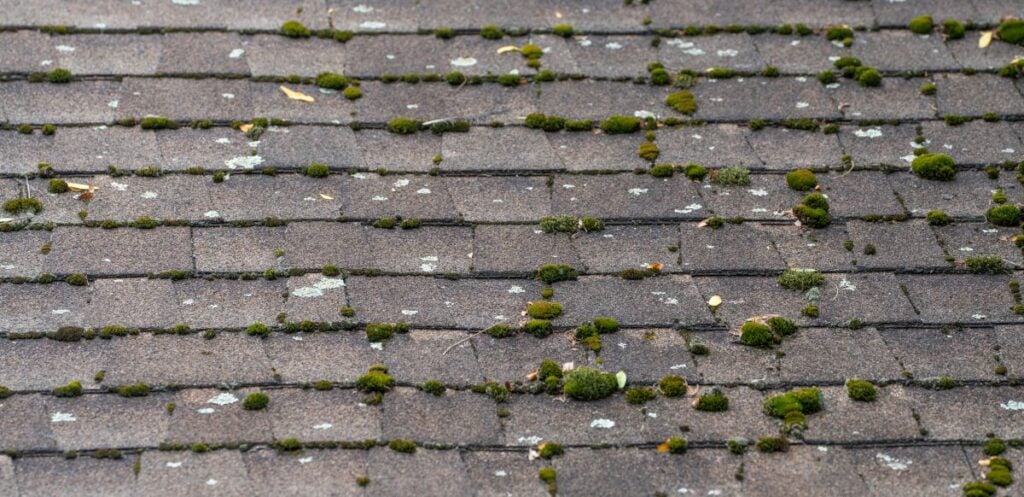
7 Sagging Roof Warning Signs Homeowners Should Watch For
Sagging roofs rarely develop overnight. In many cases, small warning signs appear long before major structural problems occur. Recognizing these indicators early can help homeowners schedule an inspection before significant repairs are needed.
1. Visible Dips In The Roofline
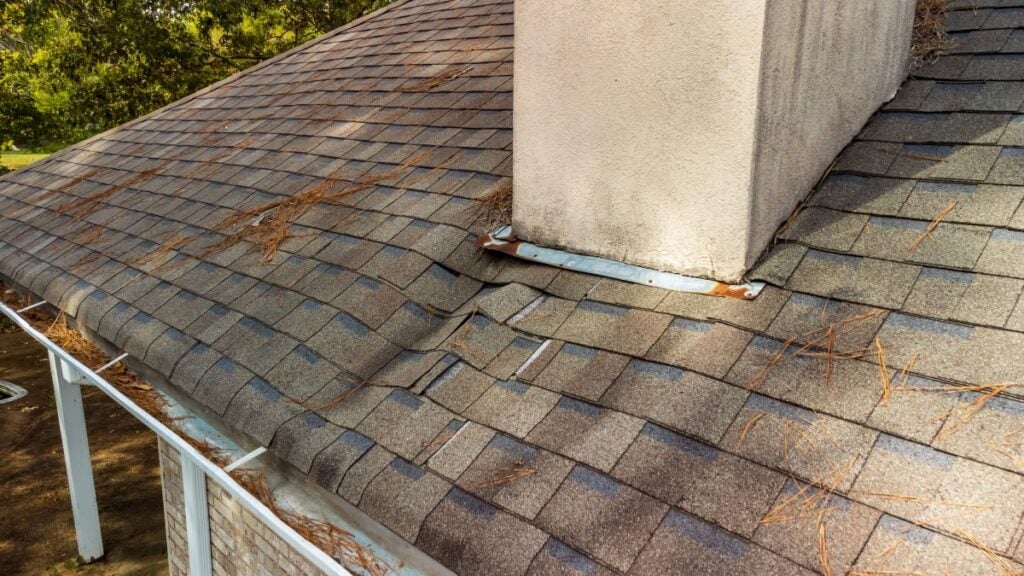
One of the most obvious signs of a sagging roof is a noticeable dip or uneven section along the roofline. A healthy roof should appear straight when viewed from the ground, so any visible curve or depression may indicate structural movement beneath the roofing materials.
- Uneven roof surfaces: Portions of the roof appear lower than surrounding areas.
- Shingle alignment issues: Roofing materials may appear wavy or misaligned.
- Sagging valleys: Roof valleys may dip if structural supports weaken.
2. Bowed Roof Ridge
The ridge line is the highest point where two roof slopes meet. When the ridge begins to bow or curve downward, it may indicate that the framing beneath the roof deck is experiencing structural stress. This issue may occur when roof joists or rafters begin to weaken under long term pressure.
- Curved ridge line: The roof peak appears bent instead of straight.
- Structural strain: Framing components may be supporting more weight than intended.
- Gradual movement: The ridge may continue bending if the issue is not repaired.
3. Interior Ceiling Sagging
Sagging ceilings inside the home can sometimes indicate structural problems within the roof system. When roof framing weakens, pressure can transfer to ceiling joists and other interior framing components.
- Drooping drywall: Ceiling sections may appear uneven or lower than normal.
- Cracks along ceiling seams: Structural movement may create visible cracks.
- Moisture stains: Water damage can weaken ceiling materials over time.
4. Standing Water On The Roof
A sagging roof can interfere with proper drainage across the roofing surface. When dips form along the roof deck, rainwater may collect in certain areas instead of flowing toward the gutters.
- Pooling water: Water may remain on the roof after storms.
- Interrupted drainage paths: Sagging sections prevent normal water runoff.
- Faster roof deterioration: Constant moisture exposure damages roofing materials.
5. Doors Or Windows Becoming Difficult To Open
Structural changes caused by roof sagging can sometimes affect other areas of the home. As pressure shifts within the structure, doors and windows may begin sticking or become harder to open and close.
- Misaligned door frames: Doors may rub against frames when closing.
- Window movement issues: Windows may become difficult to slide open.
- Uneven spacing: Door gaps may appear inconsistent.
6. Cracks In Interior Walls
Structural stress from a sagging roof can spread throughout the home’s framing system. This pressure may eventually appear as cracks in drywall or plaster surfaces.
- Diagonal cracks: Cracks may appear near doors and windows.
- Ceiling seam cracks: Stress may affect drywall joints.
- Recurring wall damage: Cracks may reappear if the structural issue remains.
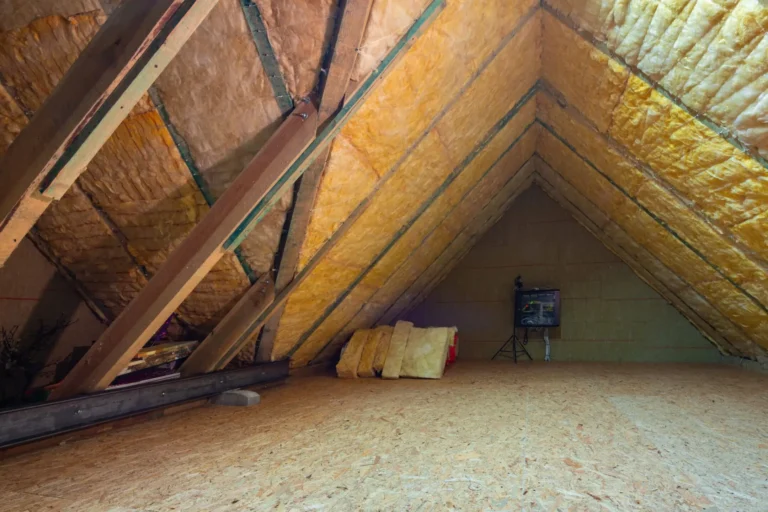
7. Water Damage In The Attic
The attic is often the first place where early signs of roof damage appear. When leaks develop, moisture can weaken rafters and structural wood over time, eventually contributing to sagging areas along the roof.
- Dark water stains: Discoloration may appear on rafters or sheathing.
- Soft roof decking: Wood surfaces may feel weak when pressed.
- Mold growth: Long term moisture can encourage biological growth.
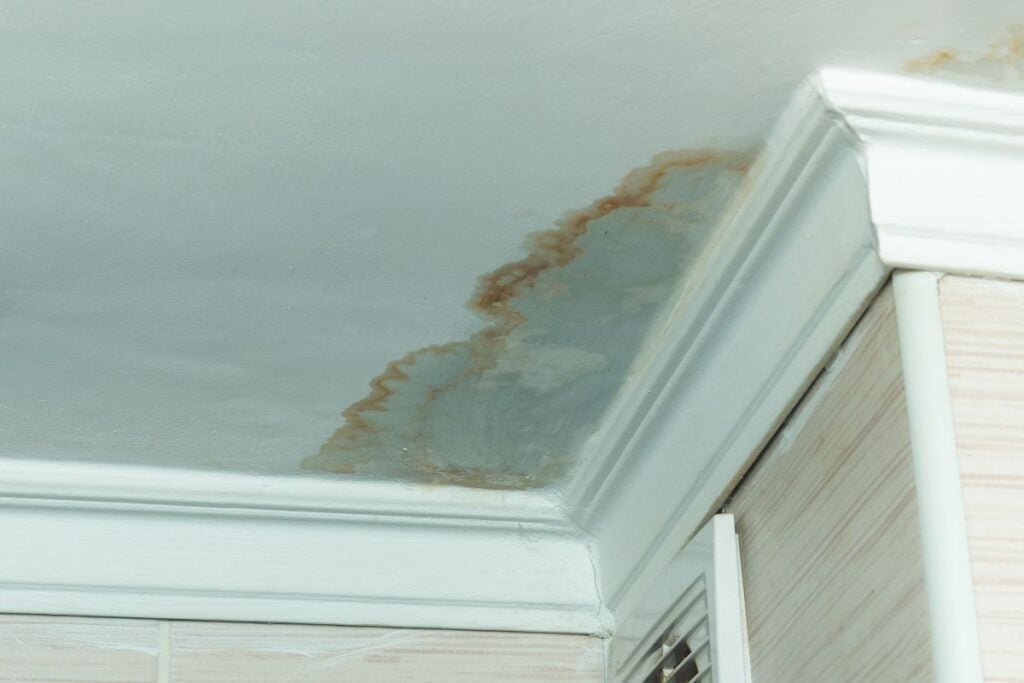
Why Sagging Roofs Should Be Addressed Quickly
Ignoring a sagging roof can lead to significant structural problems if the underlying cause is not repaired. Over time, weakened framing components may continue bending under the weight of roofing materials and environmental stress.
| Problem | Potential Impact |
| Structural wood rot | Reduced strength in roof framing |
| Poor drainage | Higher likelihood of roof leaks |
| Long term moisture exposure | Mold and attic damage |
| Severe structural failure | Potential need for major roof repairs |
Research shows that water damage and freezing account for nearly 24% of homeowner insurance claims in the United States, demonstrating how important it is to address roof leaks and structural moisture problems before they lead to serious damage.
Army Roofing Helps Homeowners Address Sagging Roof Problems
Recognizing the warning signs of a sagging roof early can help homeowners avoid serious structural damage and costly repairs.
At Army Roofing, our experienced team helps homeowners maintain strong roofing systems through professional inspections, repairs, and maintenance services. We’re proud to serve home and business owners in Surrey, BC, and nearby communities with inspections and structural roof repairs.
If you notice uneven rooflines or interior signs of structural movement, contacting a roofing contractor for an inspection can help determine the cause and the best repair solution for your home.
Recent Articles
The Roof Blog