



TPO Roofing Repair Timeline: What To Expect from a Pro
TPO roofing repair projects are often quicker than full roof replacements, but the timeline can still vary depending on the damage, roof size, and weather conditions. TPO roofing is a popular choice for commercial buildings because of its durability, energy efficiency, and cost effectiveness. When issues arise, understanding how the repair process works and how long it may take can help property owners plan ahead and avoid unexpected disruptions.
If you manage a commercial building or flat roof system, knowing what to expect from professional TPO roof repairs can make the process smoother.
- Quick minor repairs: Small membrane punctures or seam separations can often be repaired quickly by trained roofing technicians.
- Weather considerations: Rain or moisture can affect the timing of repairs, especially when membranes must be completely dry for proper welding.
- Roof size and complexity: Larger commercial roofs or roofs with multiple penetrations may take longer to inspect and repair.
- Preventative maintenance benefits: Addressing small issues early can extend the life of a TPO roofing system and reduce long term costs.
Flat roofing systems are common on commercial properties throughout the Vancouver area, where frequent rain and moisture can gradually impact roofing membranes if repairs are delayed.
What Is TPO Roofing And Why Repairs Matter
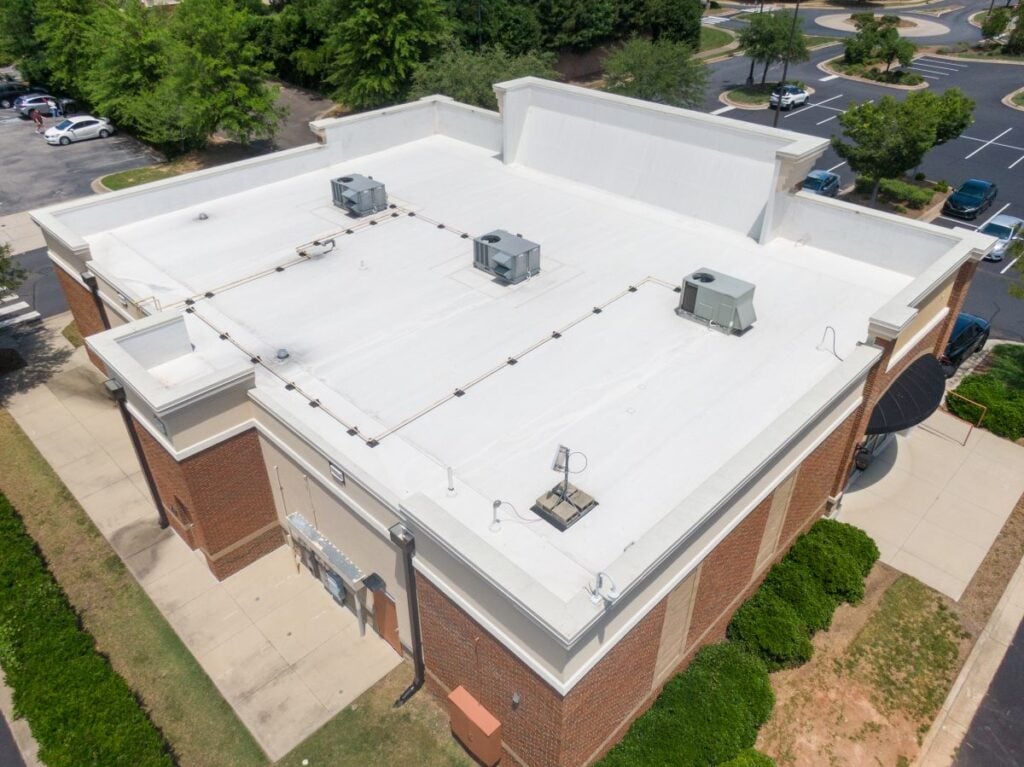
Thermoplastic polyolefin, commonly known as TPO, is a single ply roofing membrane widely used on commercial and flat roofs. It is designed to reflect heat, resist UV damage, and create a waterproof barrier for buildings. Even though TPO is durable, no roofing system is completely immune to wear and tear. Over time, seams may weaken, punctures can occur, or flashing around rooftop equipment may begin to deteriorate.
How TPO Roofing Systems Work
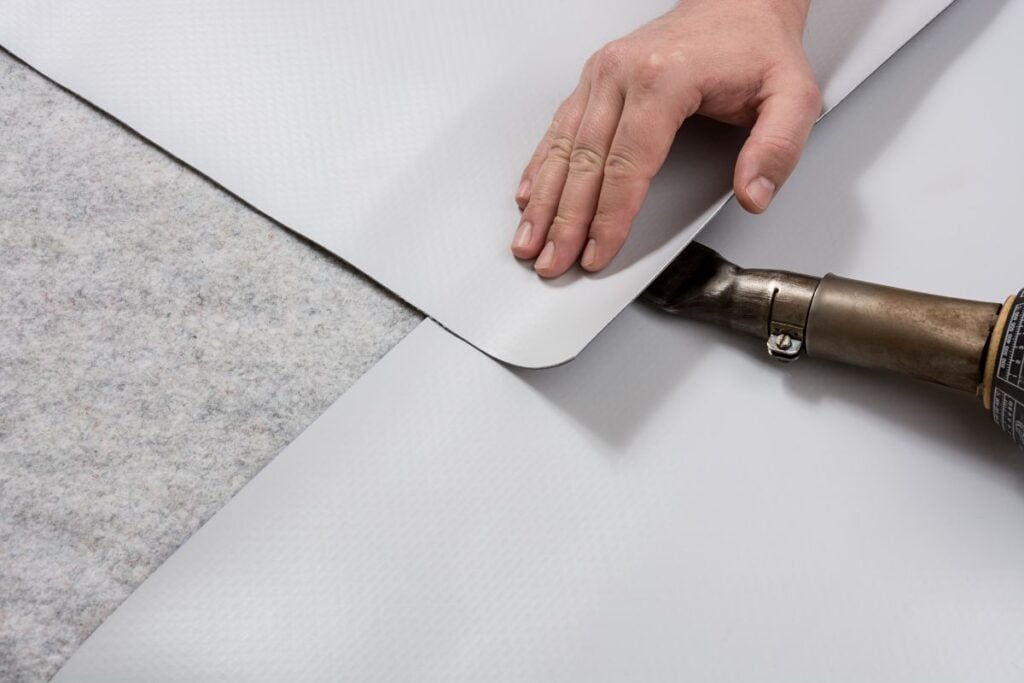
TPO roofing membranes are typically installed in large sheets that are heat welded together. These welded seams form a strong waterproof barrier that protects the building from moisture intrusion. The membrane is usually installed over insulation boards and secured either mechanically, with adhesives, or through ballast systems. Because the seams are heat welded, professional roofing contractors must use specialized equipment to properly repair damaged areas.
Common Causes Of TPO Roof Damage
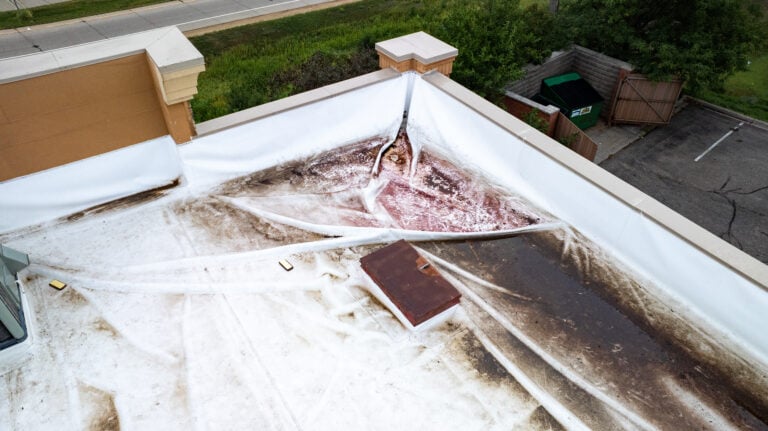
While TPO roofs are known for their longevity, certain conditions can lead to repairs over time. Foot traffic from HVAC maintenance crews, falling debris, severe weather, and aging materials can all cause small issues that require attention. In many cases, these problems start as minor punctures or seam separations but can eventually lead to leaks if left untreated. Regular inspections help identify these problems early so repairs can be completed quickly.
6 Stages Of A Typical TPO Roofing Repair Timeline
The repair timeline for a TPO roof generally follows a predictable process. While small repairs may be completed in a single day, larger repairs involving insulation or flashing replacement may take longer.
- Initial roof inspection: A professional roofing contractor evaluates the condition of the membrane, seams, flashing, and insulation to identify the source of the problem.
- Damage assessment: The contractor determines whether the issue requires a simple patch repair, seam welding, or replacement of larger membrane sections.
- Surface preparation: The damaged area is cleaned and prepared so that repair materials properly bond to the existing membrane.
- Membrane repair or patch installation: Technicians install a TPO patch or reweld seams using specialized heat welding equipment.
- Seam testing and inspection: The repaired area is tested to ensure the weld is watertight and secure.
- Final quality check: Contractors perform a final inspection to confirm that the repair is complete and the roof is properly sealed.
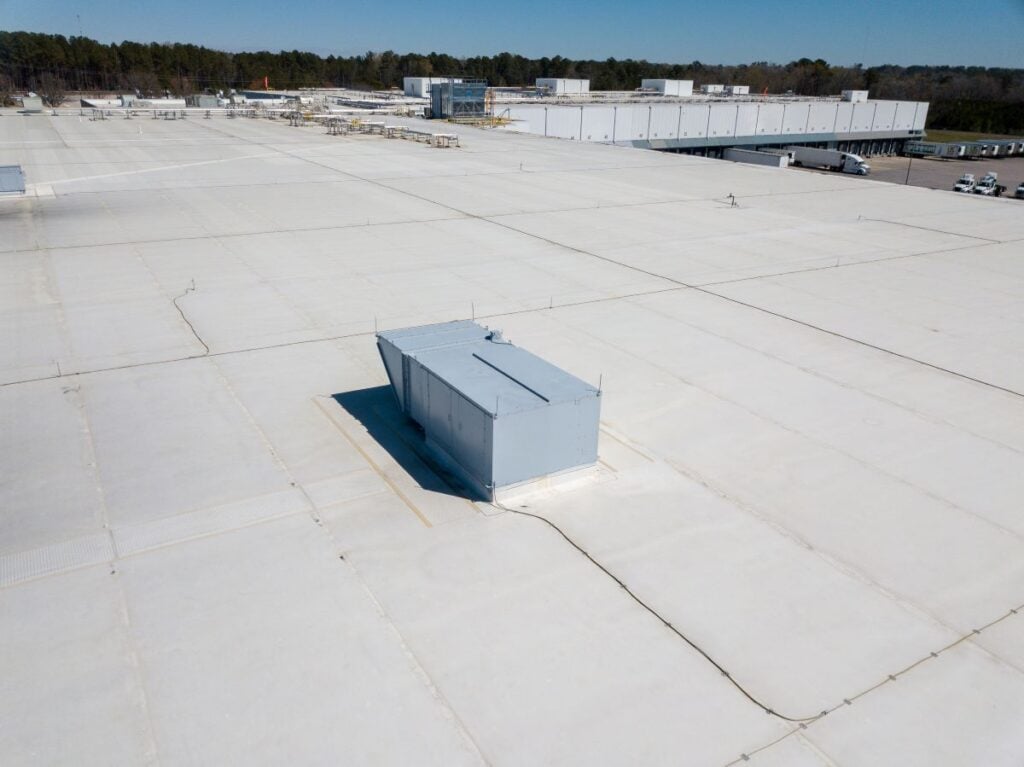
Typical Timeline For Different TPO Roof Repairs
Not all TPO roofing repairs take the same amount of time. The scope of damage plays a major role in determining how long the repair process will take.
| Type of TPO Repair | Typical Timeline |
| Small puncture patch | 1–2 hours |
| Seam rewelding | 2–4 hours |
| Flashing repair | Half day |
| Section membrane replacement | 1–2 days |
| Insulation replacement with membrane repair | 1–3 days |
In many situations, roofing contractors can complete small repairs during a single service visit.
Research shows that TPO roofing membranes are designed to be durable and energy efficient while maintaining long service lives on commercial roofs, which is why prompt repairs and proper maintenance are important for protecting the roofing system.
Signs Your TPO Roof May Need Repairs
Commercial property owners often overlook early signs of roof damage until leaks appear inside the building. However, identifying warning signs early can prevent costly structural damage.
Membrane Punctures Or Tears
Sharp debris, dropped tools, or heavy foot traffic can puncture a TPO membrane. Even small holes can allow water to seep into the roofing system. If left unrepaired, moisture can damage insulation and weaken the roof deck over time.
Open Or Weak Seams
The seams between TPO sheets are heat welded to create a waterproof seal. Over time, extreme temperature changes or installation issues can cause seams to separate.
When seams fail, water can easily travel beneath the membrane and lead to interior leaks.
Ponding Water
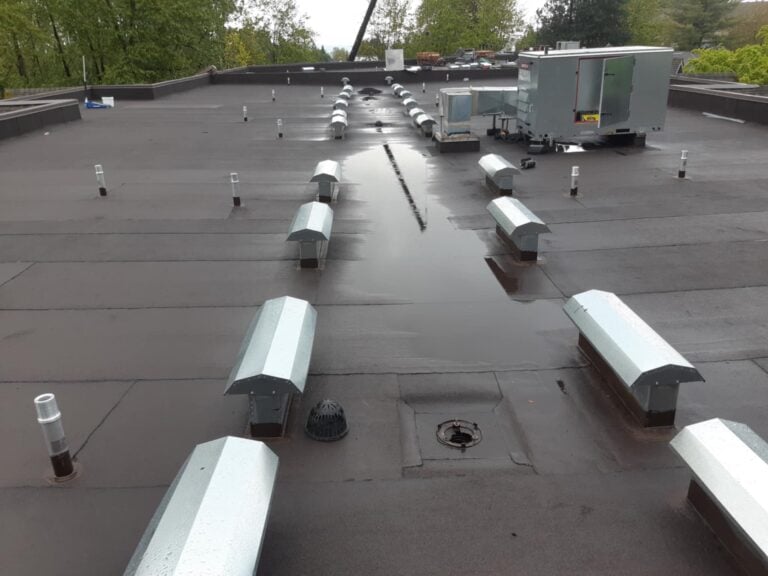
Flat roofs sometimes collect standing water after heavy rain. While TPO membranes are waterproof, long term ponding can place additional stress on the roofing system. Persistent ponding may indicate drainage problems that require professional evaluation.
How Professional Roofers Ensure Long Lasting Repairs
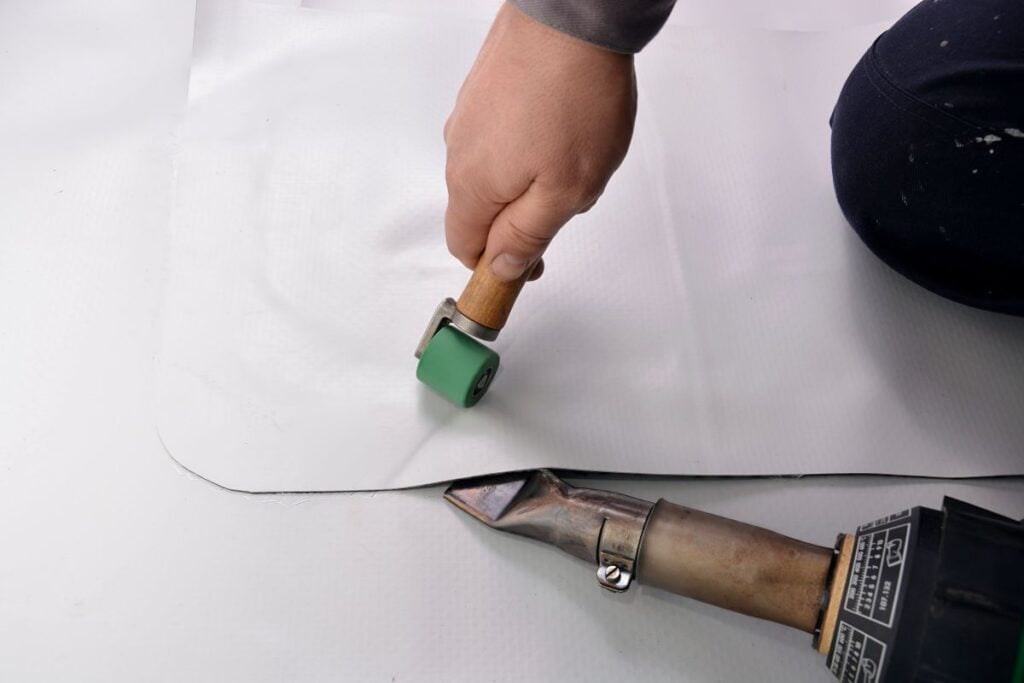
Professional roofing contractors use specialized tools and techniques to ensure that TPO repairs are durable and watertight. Unlike temporary patch jobs, professional repairs restore the membrane’s integrity and help prevent recurring leaks.
- Heat welding technology: Professional roofers use hot air welding machines to fuse TPO membranes together, creating a watertight seal that is stronger than many traditional roofing repairs.
- Proper membrane preparation: Cleaning and preparing the damaged area ensures the repair materials bond correctly with the existing membrane and last for years.
- Full roof inspection: Contractors often inspect the entire roof system during repairs to identify other weak areas that could eventually lead to leaks.
- Experienced installation techniques: Skilled roofing technicians understand how to manage seam welding, patching, and flashing repairs to maintain the roof’s structural integrity.
Army Roofing: Professional TPO Roofing Repair You Can Trust
Understanding the tpo roofing repair process and timeline can help building owners prepare for maintenance and avoid costly surprises. At Army Roofing, our experienced team provides reliable commercial roofing services designed to protect your property and extend the life of your roof. We’re proud to serve home and business owners in Burnaby, BC, and nearby communities with TPO roofing repair and more.
If your commercial roof has leaks, seam damage, or membrane punctures, our team can inspect the system and recommend the most effective repair solution. Contact Army Roofing today to schedule a professional roof inspection and keep your roofing system performing at its best.
Recent Articles
The Roof Blog