



Warehouse Roof Repair Timeline: Explained In 6 Stages
Warehouse roof repair is a more involved process than most business owners expect, and understanding the timeline before work begins can make the difference between a smooth project and one that disrupts operations for weeks longer than necessary. Whether you are dealing with roof leaks, membrane deterioration, or storm damage after a heavy BC winter, knowing what each stage of commercial roof repair involves helps you plan around your business and ask the right questions. Here is what this blog walks through:
- Why warehouse roofs require a different approach than residential jobs
- All 6 stages of a warehouse roof repair project
- A timeline comparison by repair type
- Frequently asked questions from commercial property owners
Why Warehouse Roofs Are Different
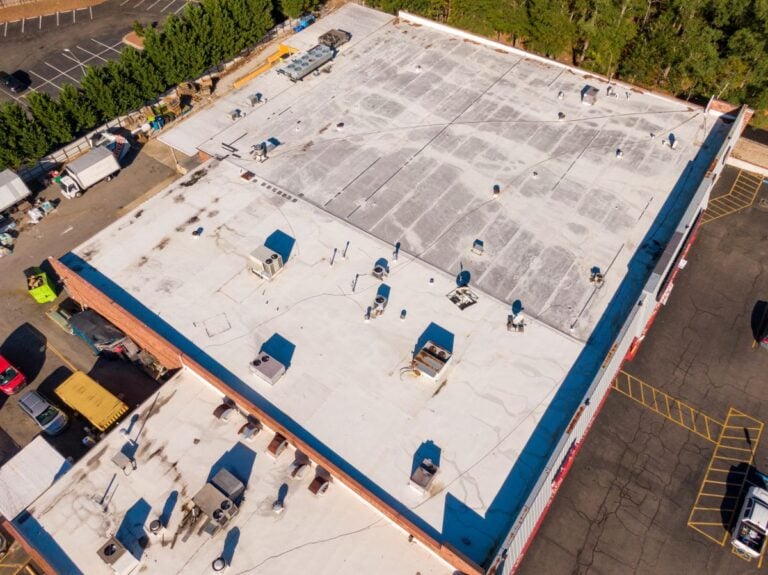
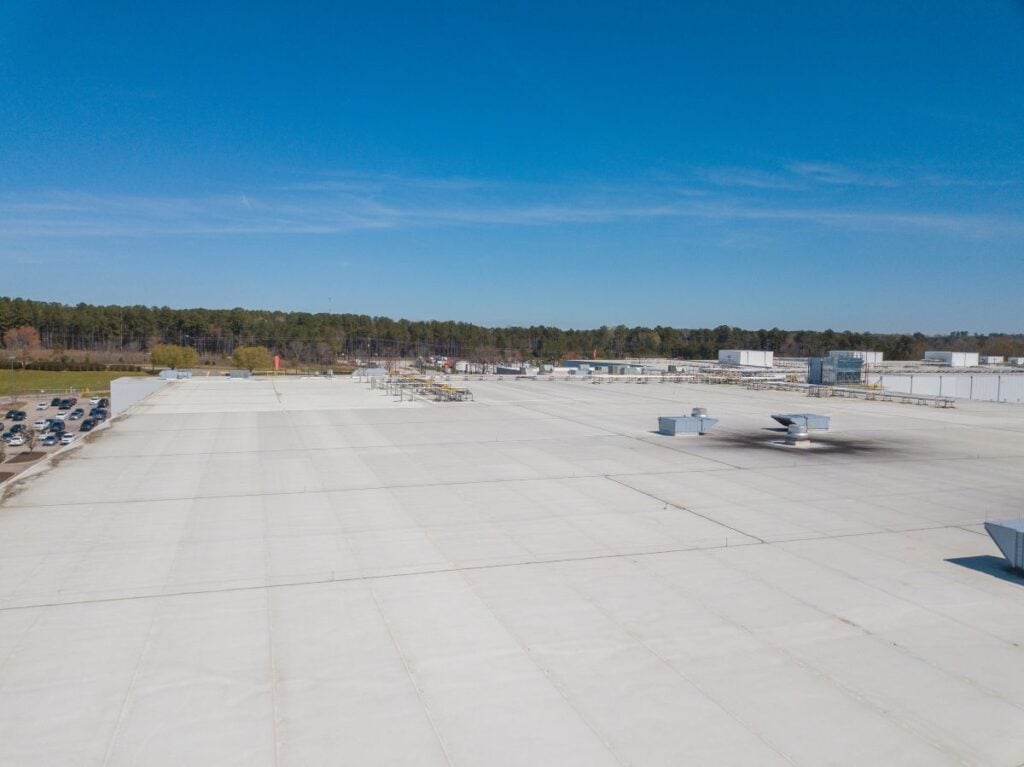
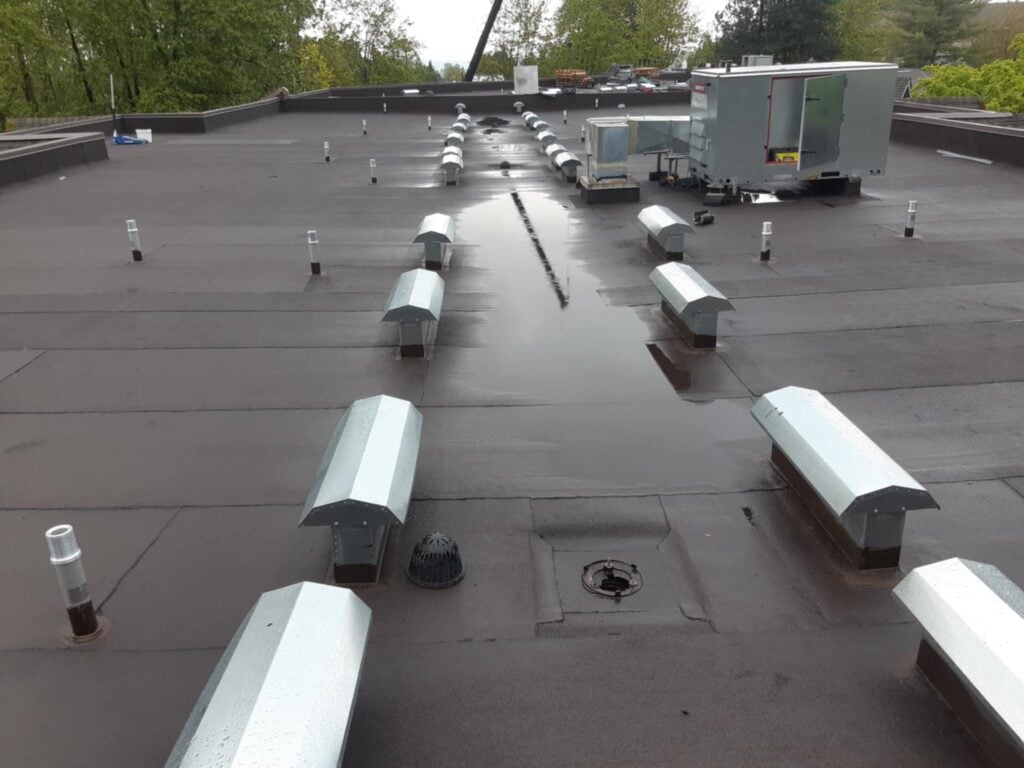
Warehouse roofs present a unique set of challenges that do not apply to residential work. The surface area is significantly larger, flat roof systems are more common, and there is usually active business happening directly below while repairs take place. Roof leaks in a warehouse are not just a structural concern — they threaten inventory, equipment, and the safety of workers on the floor. Experienced roofing contractors approach industrial roof repair differently than a standard residential job, scaling crew size and process to match the complexity and footprint of the building.
Most commercial roofs generally last 20 to 30 years, according to GAF, which means proactive commercial roof repair services at key intervals is what keeps a warehouse performing through its full expected life rather than requiring a commercial roof replacement ahead of schedule. Understanding how long repairs take at each stage is one of the best ways to stay ahead of problems before they escalate.
6 Stages of a Warehouse Roof Repair
The scope and speed of a warehouse repair depends on roof size, damage severity, and the roofing materials involved. However, the process follows a consistent sequence regardless of the system. Here is how a professional repair unfolds from start to finish.
1. Initial Inspection and Damage Assessment
Every warehouse roof repair starts with a thorough on-site inspection — not a quick walkthrough, but a detailed evaluation of the full roof surface, seams, flashing, penetrations, and drainage systems. For large flat roof systems, roofing contractors will often use infrared thermography to detect trapped moisture beneath the membrane that would be invisible to the naked eye. This step is what separates a targeted repair from a patch job that misses the underlying cause and compromises the roof’s integrity over time.
- What happens: Full surface walkthrough, infrared scan if needed, and assessment of membrane condition, flashing integrity, and drainage performance.
- Timeline: Half a day to one full day depending on roof size.
- Output: A written report with photographic documentation, scope of work, and a cost and timeline estimate.
2. Proposal Review and Scheduling
Once the inspection is complete, a reputable roofing company will prepare a detailed written proposal outlining exactly what will be repaired, what roofing materials will be used, and how long each phase will take. This document matters for commercial properties because it creates a clear record for building owners, property managers, and insurers. In Surrey and across the Lower Mainland, weather windows also play a significant role in scheduling, since most membrane and coating work requires dry conditions to cure properly.
- What happens: Proposal review, contract sign-off, material ordering, and project scheduling.
- Timeline: Two to five business days, with potential extension if specialty roofing materials need to be sourced.
- Output: A confirmed start date and project schedule built around your business operations.
3. Site Preparation and Safety Setup
Before any repair work begins, the site needs to be prepared properly. On a commercial warehouse, this means establishing safe rooftop access, setting up fall protection systems, and coordinating with building management to ensure the work areas below are cleared or covered. This stage is often underestimated but is critical for protecting workers, inventory, and equipment during active commercial roofing services.
- What happens: Access setup, fall protection installation, and interior protection of vulnerable areas below the repair zone.
- Timeline: Usually completed the morning of the first repair day.
- Output: A fully staged, code-compliant worksite ready for active repair.
4. Tear-Off and Substrate Inspection
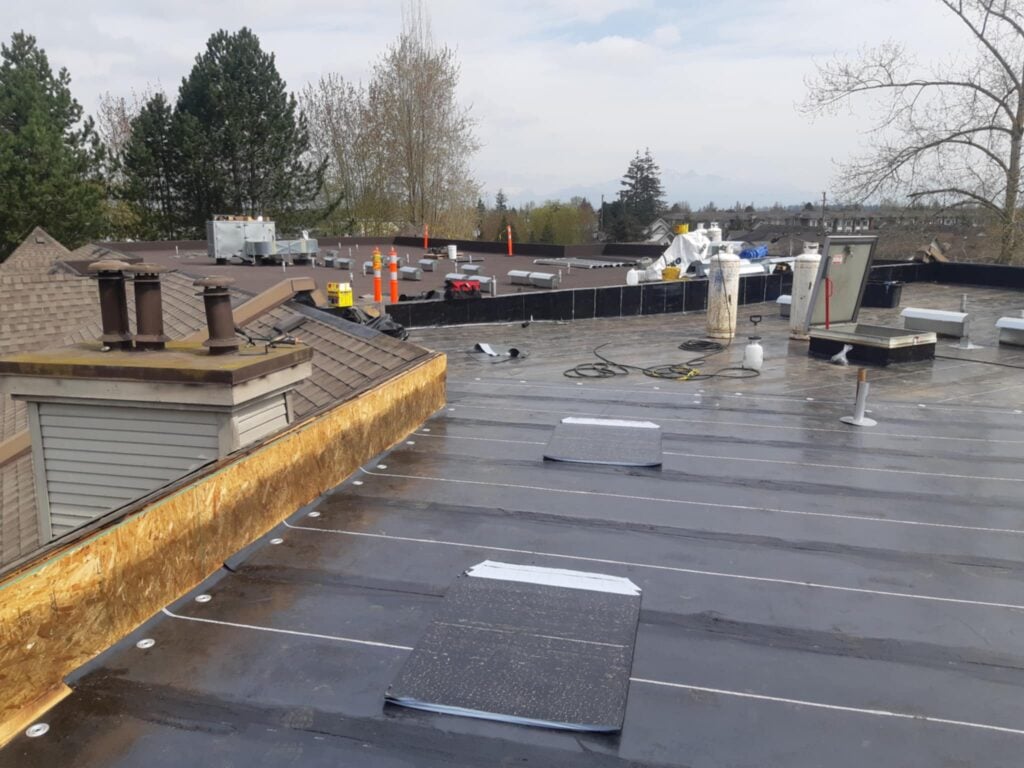
For repairs involving membrane replacement or significant section work, the existing roofing materials in the affected area are removed to expose the substrate underneath. This is where surprises sometimes emerge — deck rot, saturated insulation, or structural damage that was not visible from the surface. A professional crew will assess the substrate as they go and flag any additional work needed to restore the roof’s integrity before new materials go down.
- What happens: Removal of damaged membrane sections, inspection of insulation and decking, and repair or replacement of compromised substrate.
- Timeline: One to three days depending on what is uncovered.
- Output: A clean, structurally sound substrate ready for new material installation.
5. Repair and Material Installation
This is the active phase where new roofing membranes, flashing, coatings, or other roofing materials are installed. The method depends entirely on the existing roofing system. Modified bitumen, TPO, EPDM, and torch-on flat roof systems each have their own installation requirements, and matching the repair to the existing roofing system is essential for long-term compatibility and warranty coverage. Skilled roofing contractors will also address secondary issues found during tear-off — failed lap joints, corroded flashing, or compromised drainage — rather than leaving them for a future service call.
- What happens: New membrane installation, flashing repairs, seam sealing, and coating application where applicable.
- Timeline: One to five days for most warehouse repairs; larger industrial roof repair projects can take one to two weeks.
- Output: Fully installed repair with sealed seams, integrated flashing, and restored waterproofing across the affected zone.
6. Final Inspection and Sign-Off
Once installation is complete, a final walkthrough confirms that all repairs meet manufacturer specifications and that no issues were missed. A quality roofing company will check every seam, penetration, and flashing point before declaring the job complete. Army Roofing backs all commercial work with a written workmanship warranty, so the final inspection is not a formality — it is the last line of defence before the roof goes back into service.
- What happens: Full post-repair inspection, drainage test if applicable, documentation of completed work, and warranty issuance.
- Timeline: Half a day.
- Output: Signed-off repair with warranty documentation and a maintenance recommendation going forward.
We are proud to serve home and business owners in Surrey, BC, and nearby communities with professional warehouse and commercial roof repair, replacement, and inspection services and more.
Repair Timeline by Scope
| Repair Type | Typical Duration |
| Single leak or puncture patch | Half a day to one day |
| Flashing repair or replacement | One to two days |
| Section membrane replacement | Two to four days |
| Multi-section repair or rehabilitation | One to two weeks |
| Full warehouse roof replacement | Two to four weeks |
Common FAQs
Do I need to shut down my warehouse during repairs?
In most cases, no. Professional roofing contractors work to minimize disruption to operations below, and for many repair types the work can be staged so that only a small portion of the facility is affected at any one time. That said, there are situations where certain areas need to be temporarily vacated, particularly during tear-off or when working around overhead equipment. A good roofing company will coordinate well in advance to plan the work around your schedule.
How do I know if my warehouse needs repair or full replacement?
A thorough inspection is the only reliable way to answer this question. General indicators that commercial roof repairs are sufficient include damage confined to a specific section, a flat roof that is under 15 to 20 years old, and a substrate that is structurally sound. When damage is widespread, the membrane is nearing end of life, or the substrate shows rot or saturation across multiple areas, replacement is typically the more cost-effective long-term decision.
What roofing systems does Army Roofing work with on commercial properties?
Army Roofing handles a full range of commercial roofing services including modified bitumen, torch-on, EPDM, TPO, flat roof systems, roof coatings, and metal roofing. Our team repairs and matches existing systems rather than recommending unnecessary replacements, which keeps costs manageable and minimizes disruption to your business.
What causes most warehouse roof failures?
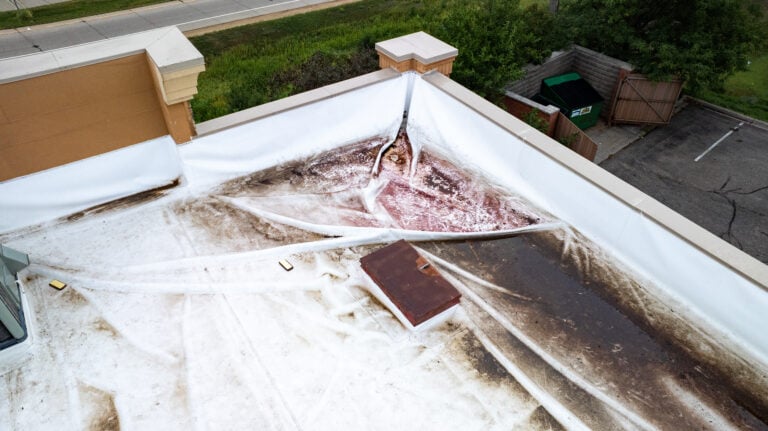
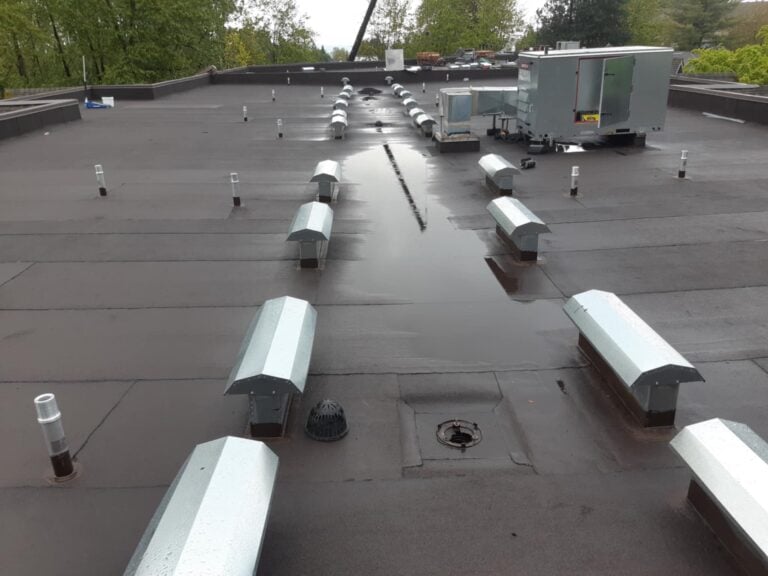
The most common culprits are ponding water that accelerates membrane breakdown, failed seams and lap joints, deteriorated flashing around HVAC units and skylights, and physical damage from rooftop foot traffic. In BC’s climate, freeze-thaw cycles through winter also stress roofing materials significantly, making fall inspections particularly valuable for catching roof leaks and membrane issues before the wet season sets in.
How often should a warehouse roof be inspected?
Most roofing contractors recommend at least two professional inspections per year — one in the fall before the wet season and one in the spring after it. For warehouses with heavy rooftop foot traffic or older membranes, quarterly checks are worth considering. Catching small issues early consistently results in lower overall repair costs and a longer useful life for the roof system.
Army Roofing: Commercial Repairs Done Right
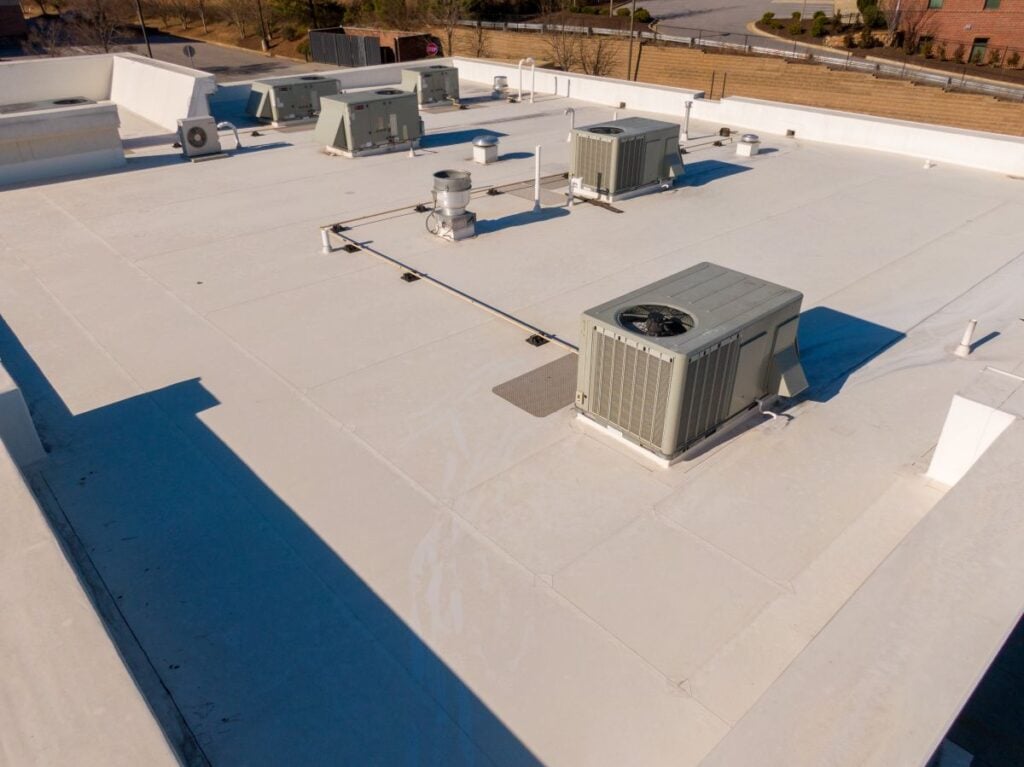
A warehouse roof failure is not just an inconvenience — it is a business risk. Inventory, equipment, and your team all depend on a roof that holds up through BC’s rainy season and beyond. At Army Roofing, we approach every industrial roof repair and commercial job with the same precision and accountability we bring to residential work, backed by clear timelines, honest assessments, and a workmanship guarantee that means something. Contact Army Roofing today to schedule your free commercial roof inspection and get a straight answer on what your warehouse actually needs.
Recent Articles
The Roof Blog