



When To Use Peel And Stick Roof Underlayment: 6 Cases
Peel and stick roof underlayment is one of the most effective waterproofing tools in a roofer’s arsenal, but it is also one of the most misunderstood — many homeowners are not sure when it is required, when it is simply recommended, and when standard felt or synthetic underlayment will do the job just as well. Getting this decision right matters because underlayment is the last line of defence between your roof deck and water infiltration, and in BC’s wet coastal climate that defence needs to be built correctly. Army Roofing uses advanced underlayment systems on every installation, engineered specifically for the moisture and wind conditions of the Pacific Northwest. Here is what this blog covers:
- What peel and stick underlayment is and how it works
- 6 cases where it is the right choice
- How it compares to other underlayment types
- Frequently asked questions homeowners ask about underlayment
What Peel and Stick Underlayment Is and How It Works
Peel and stick roof underlayment — also known as self-adhering membrane or ice and water shield — is a rubberized, polymer-modified bitumen sheet that bonds directly to the roof deck without mechanical fasteners. Unlike felt paper or synthetic underlayment, which are nailed or stapled in place, peel and stick membrane adheres to the deck surface, features a slip-resistant surface for safer installer footing, and self-seals around nail penetrations when shingles are installed on top. According to IKO, one of Army Roofing’s trusted material partners, ice and water protector is a waterproof roof underlayment membrane developed to protect vulnerable areas on a roof from ice and water damage, with a modified bitumen adhesive back surface that bonds to the roof deck and forms watertight laps and seals at every penetration point.
That self-sealing characteristic is what sets it apart from other underlayment types and makes it the right choice in specific high-risk applications — particularly in climates like Delta, BC, where wind-driven rain, freeze-thaw cycles, and heavy seasonal moisture put real pressure on the roofing system throughout the year. Because no nailing is required, peel and stick underlayment may reduce labour costs compared to mechanically fastened alternatives, though this advantage depends on the scope and layout of the project. One important installation condition to be aware of: temperature conditions for applying peel and stick underlayment should be between 40°F and 120°F — outside this range the adhesive does not bond properly to the deck, which is one reason professional installation matters in BC’s cooler shoulder seasons.
6 Cases Where Peel and Stick Underlayment Is the Right Choice
Peel and stick membrane is not always necessary across the entire roof deck — in many standard residential applications, quality synthetic underlayment performs well in the field areas. But there are specific locations and conditions where self-adhering membrane is either code-required or strongly recommended. It is worth noting that installation mistakes with peel and stick can increase overall project costs, since incorrectly applied membrane can be difficult to reposition and may compromise the watertight seal — another reason the application technique matters as much as the product itself. Here are the six cases where it belongs.
1. Along the Eaves for Ice Dam Protection
Ice dams form when heat escaping through the roof melts snow near the ridge, and that meltwater refreezes at the cold eave overhang. The resulting ice backup forces water beneath the shingles and into the roof assembly. Peel and stick membrane applied at the eave edge creates a waterproof barrier that prevents this infiltration even when ice dam conditions force water to back up significantly. In colder climates, most building codes require self-adhering membrane to extend from the eave edge to at least 24 inches past the interior wall line of the building — a minimum that many experienced contractors exceed in high-snowfall areas.
- Where it goes: Along the eave from the drip edge up the roof deck, extending at least 24 inches inside the exterior wall line.
- Why it matters in BC: Delta and the Lower Mainland experience freeze-thaw cycles through winter that create ice dam conditions on inadequately insulated roofs.
- Why standard underlayment falls short: Felt and synthetic underlayments are water-shedding, not waterproof — water forced upward by ice dams can work its way through them.
2. In Roof Valleys
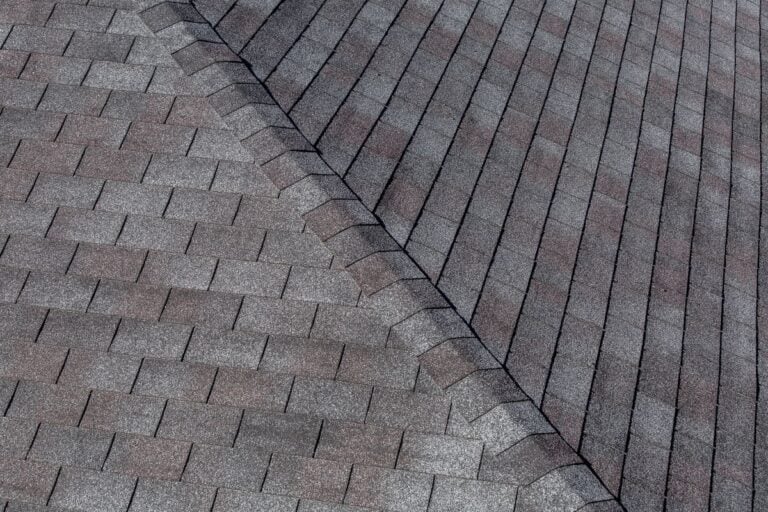
Valleys are the V-shaped channels where two roof planes meet, and they carry the highest volume of water of any area on the roof surface. That concentrated water flow creates significant pressure on the underlayment and roofing materials in the valley, and any failure at this point leads directly to leaks in the interior. A minimum 36-inch-wide strip of peel and stick membrane centered in each valley provides a continuous waterproof layer beneath the shingles and valley flashing, protecting against both heavy rain events and debris-related blockages.
- Where it goes: Centered in the valley, minimum 36 inches wide, running the full length of the valley from eave to ridge.
- Why it matters in BC: High annual rainfall in the Lower Mainland means valleys on local roofs carry substantial water volume for much of the year.
- Why standard underlayment falls short: Nailed or stapled underlayments in valleys leave fastener holes that can become leak points under the sustained water pressure valleys experience.
3. Around Roof Penetrations and Flashing
Every penetration through the roof deck — pipe boots, vents, skylights, chimneys, HVAC curbs — is a potential entry point for water. Peel and stick membrane applied around these penetrations creates a watertight transition that integrates with the flashing above it, providing a secondary barrier if the flashing is ever damaged, displaced, or begins to fail with age. In a climate like BC’s, where flashing sealants are under constant stress from thermal movement and persistent moisture, this secondary layer is a valuable safeguard.
- Where it goes: Applied to the roof deck around every penetration, beneath the flashing, extending several inches beyond the flashing footprint in all directions.
- Why it matters in BC: Thermal expansion and contraction from BC’s seasonal temperature swings accelerates flashing joint failure over time, making a self-adhering backup layer especially worthwhile.
- Why standard underlayment falls short: Conventional underlayment does not self-seal around fasteners or conform tightly to irregular penetration shapes the way peel and stick membrane does.
4. On Low-Slope Roof Sections
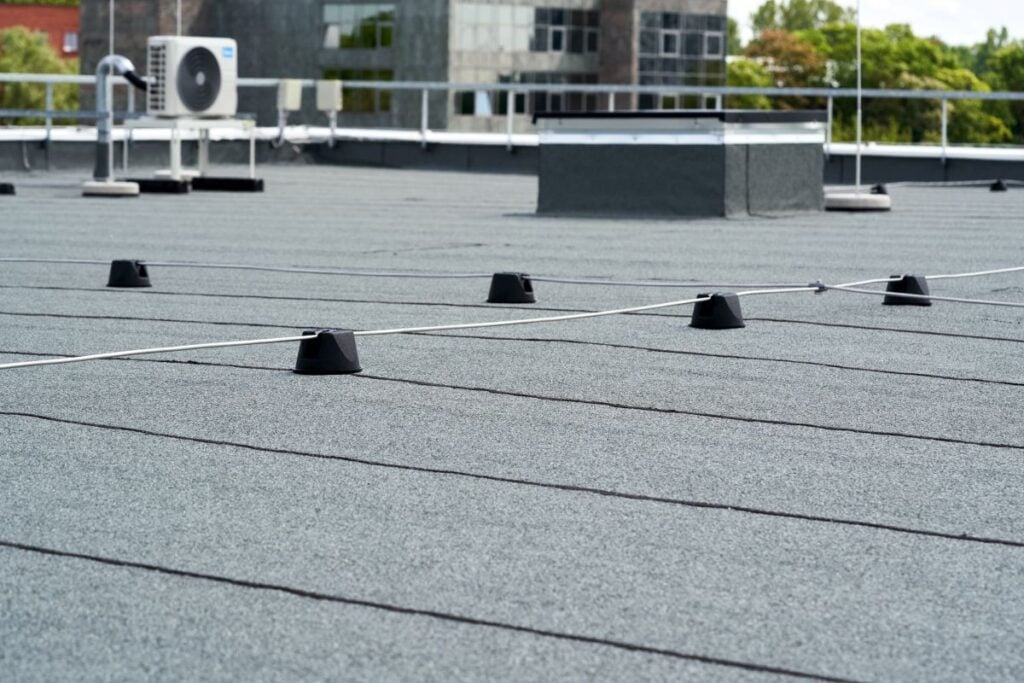
Any roof section with a pitch between 2:12 and 4:12 is considered low-slope, and water moves across these surfaces slowly enough that standard water-shedding underlayment may not perform adequately during heavy rain or when debris partially blocks drainage. Full-coverage peel and stick membrane on low-slope sections ensures the deck remains fully waterproofed regardless of how slowly water is evacuating the surface — a critical consideration for flat or gently pitched sections that are common on additions, garages, and sections of complex residential rooflines.
- Where it goes: Full coverage across the entire low-slope section of the roof deck.
- Why it matters in BC: BC’s sustained rainfall events are exactly the conditions under which slow-draining low-slope sections are most at risk without waterproof underlayment.
- Why standard underlayment falls short: At pitches below 4:12, water can back up under shingle laps during heavy rain — a condition standard underlayment is not designed to withstand.
5. Along Rake Edges in High-Wind Zones
Rake edges — the sloped perimeter edges of the roof at the gable ends — are among the most vulnerable points for wind-driven rain infiltration. In areas with significant wind exposure, water driven horizontally by wind can force its way under shingles at the rake and into the roof assembly. Applying peel and stick membrane along rake edges adds a waterproof layer at this vulnerable perimeter that standard underlayment alone cannot reliably provide in high-wind conditions.
- Where it goes: Along the rake edge, typically 18 to 24 inches wide, running the full length of the gable.
- Why it matters in BC: The Lower Mainland experiences significant windstorms through fall and winter, and coastal exposure in areas like Delta increases wind-driven rain intensity.
- Why standard underlayment falls short: Nailed synthetic underlayment at rake edges can be lifted or displaced by high winds, while self-adhering membrane stays bonded to the deck regardless of wind conditions.
6. Full Deck Coverage on High-Risk or High-Value Properties
In some situations — severe coastal exposure, high-value properties where the cost of underlayment is minor relative to the building value, or roofs in regions where extreme wind-driven rain is a recurring issue — full deck coverage with peel and stick membrane is the right choice. A fully adhered membrane provides a continuous waterproof barrier across the entire roof deck, meaning that even if shingles are blown off in a severe storm, the deck remains protected until repairs can be made.
- Where it goes: Across the entire roof deck surface, from eave to ridge on every slope.
- Why it matters in BC: Coastal properties and homes in exposed locations in the Lower Mainland face weather conditions that justify the higher material cost of full-coverage self-adhering membrane.
- Why standard underlayment falls short: Partial underlayment coverage leaves field areas of the roof dependent on the shingles alone for waterproofing, which is not sufficient in extreme weather events.
We are proud to serve home and business owners in Delta, BC, and nearby communities with professional roof installation, underlayment selection, and repair services and more.
Peel and Stick vs. Other Underlayment Types
| Feature | Peel and Stick | Synthetic | Felt (Tar Paper) |
| Waterproof | Yes | Water-resistant | Water-resistant |
| Self-sealing at nails | Yes | No | No |
| Slip-resistant surface | Yes | Varies | No |
| Wind uplift resistance | Excellent | Good | Poor |
| Labor cost impact | May reduce labor | Standard | Standard |
| Best application | High-risk zones, full coverage | Field areas, standard slope | Low-risk, dry climates |
| Material cost | Higher | Moderate | Lower |
| Lifespan exposed | Limited (UV sensitive) | Moderate | Limited |
Common FAQs
Homeowners and contractors frequently ask about when peel and stick underlayment is required versus recommended, and how it interacts with other roofing components. Here are the most common questions.
Is peel and stick underlayment required by code in BC?
BC’s building code requirements for self-adhering membrane are primarily triggered by climate zone and roof pitch. In areas with a documented history of ice dam formation — which includes much of the Lower Mainland — self-adhering membrane at the eaves is required to extend at least 24 inches inside the interior wall line. Low-slope sections below 4:12 pitch also typically require waterproof underlayment rather than standard water-shedding products. Some homeowner insurance providers offer discounts for using peel and stick underlayment given its superior waterproofing performance — worth checking with your insurer when planning a replacement. Your roofing contractor should be familiar with the specific requirements for your municipality.
Can peel and stick underlayment be used on the entire roof?
Yes, and in some situations it is the recommended approach. Full-deck coverage with self-adhering membrane provides the highest level of waterproofing available for a sloped roof system, and is particularly appropriate for high-wind coastal locations, high-value properties, and roofs with complex geometry. One consideration worth factoring in: peel and stick underlayment is difficult to remove during a future roof replacement because of how firmly it bonds to the deck, which can add labour time and cost at end of life. The main trade-off is cost — peel and stick membrane is significantly more expensive than synthetic underlayment, so most residential projects use it at vulnerable zones and synthetic in the field areas.
Does peel and stick underlayment replace flashing?
No. Peel and stick membrane works alongside flashing, not instead of it. At penetrations and transitions, flashing directs water away from the joint above the membrane. The self-adhering membrane beneath provides a secondary waterproof barrier in case the flashing ever fails. Both components are required for a properly waterproofed roof assembly.
How long does peel and stick underlayment last?
When covered by shingles or other roofing material, peel and stick membrane can last the life of the roof above it — 20 to 50 years depending on the roofing system. When left exposed to UV light, most self-adhering membranes degrade within 60 to 180 days, which is why they should always be covered promptly after installation. Always confirm the exposure limit with the specific product manufacturer before leaving membrane uncovered on the deck.
Army Roofing Builds Every Roof From the Deck Up
The right underlayment in the right location is not a minor detail — it is the foundation of a roof system that holds up through BC’s wet, windy winters for decades. At Army Roofing, our team selects underlayment based on your specific roof geometry, pitch, exposure, and the materials going above it, using products from trusted manufacturers like IKO, GAF, CertainTeed, and Malarkey that are proven in Pacific Northwest conditions. Contact Army Roofing today to book your free estimate and get a roofing system engineered for where you actually live.
Recent Articles
The Roof Blog