



When Commercial Reroofing Becomes Urgent: 7 Signs
Commercial roof replacement decisions often get delayed because business operations cannot easily pause for a major project, but waiting too long turns a planned replacement into an emergency one — and emergency commercial roof replacement cost is always higher than a scheduled one. Knowing the difference between a roof that can be monitored and one that needs immediate action is critical for protecting your building, your inventory, and the tenants who rely on it. Here is what this blog covers:
- Why commercial roofs reach crisis points differently than residential ones
- 7 signs your commercial reroofing has become urgent
- Planning considerations for urgent commercial roof replacement projects
- Frequently asked questions about commercial reroofing timelines
Why Commercial Roofing Crises Develop Differently
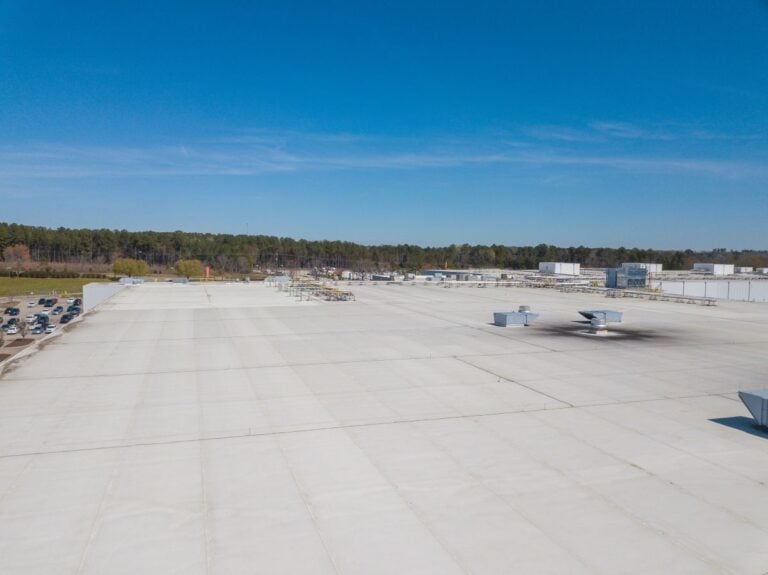
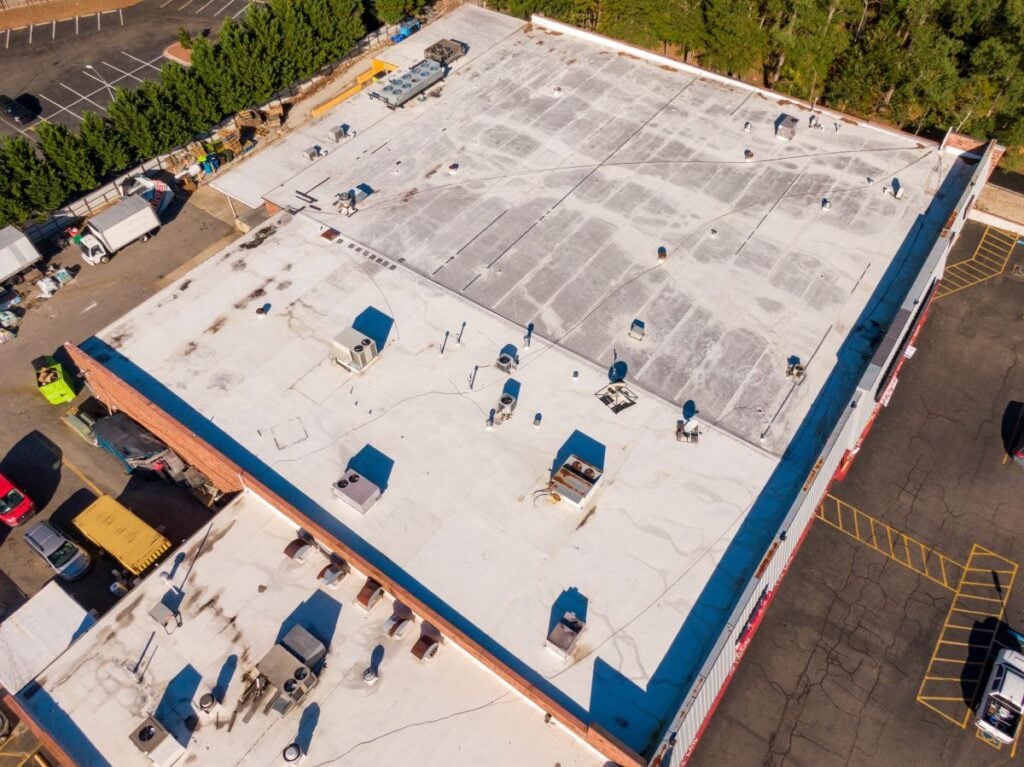
Most commercial roofs on a commercial building are flat or low slope roofs that cover much larger surface areas and support equipment like HVAC units that residential roofs never deal with. These factors mean problems often progress silently for longer before becoming visible, and by the time they are obvious, the damage is frequently more extensive than an equivalent residential issue.
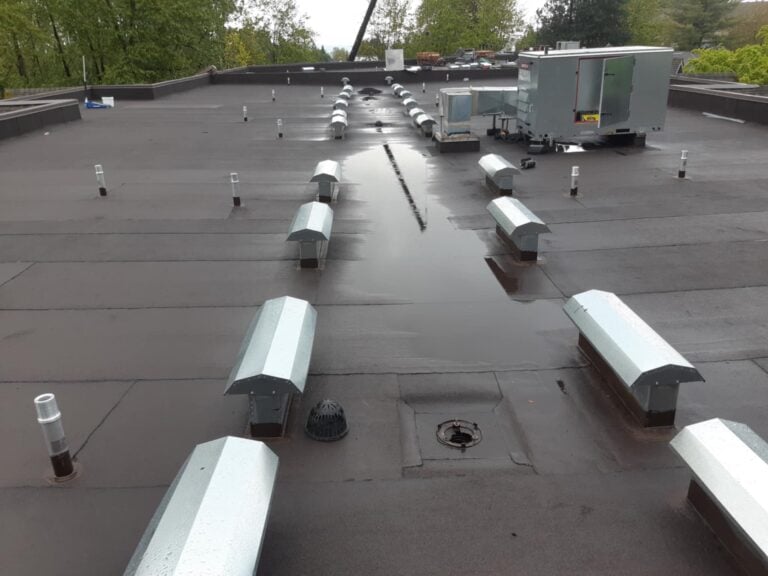
One of the most common and underappreciated triggers is ponding water. The National Roofing Contractors Association defines ponding water as water that remains on a roof for 48 hours or more after rainfall, and beyond that window, membrane deterioration, structural deck stress, and warranty issues all start to compound. In Coquitlam and across the Lower Mainland, where rainfall is frequent and sustained through much of the year, a drainage problem that would resolve quickly in a drier climate can linger long enough to cause real damage.
7 Signs Commercial Reroofing Has Become Urgent
Not every commercial roofing issue requires an emergency response, but certain signs indicate the situation has moved past routine maintenance into urgent territory. Here are seven signs it is time to call commercial roofing contractors and treat your reroofing as a priority.
1. Water Is Actively Entering the Building
An active leak inside the building is the clearest sign a commercial roofing issue has become urgent. Once water is getting through to the interior, the membrane has already failed, and every additional rainfall compounds the damage to insulation, structural elements, and whatever equipment or inventory sits below. Any delay between noticing an active leak and calling for commercial roof repair directly increases the total cost and scope of the fix.
- What to look for: Dripping water, wet or sagging ceiling tiles, visible water stains spreading across the ceiling, or pooling on interior floors.
- Why it is urgent: Active water intrusion threatens electrical systems, inventory, and structural integrity, and the damage accelerates with every subsequent rain event.
- What happens next: Emergency tarping or temporary patching stabilizes the situation while a permanent repair or replacement plan is developed.
2. Ponding Water Persists Beyond 48 Hours
If water regularly stands on your roof for more than two days after rainfall, the drainage system or roof slope has a problem that needs addressing before it becomes a membrane failure. Ponding water is one of the most overlooked precursors to a full commercial roof emergency, frequently developing gradually as drains clog, insulation compresses, or the building settles over time.
- What to look for: Visible pools that remain long after the rain has stopped, particularly in the same low spots repeatedly.
- Why it is urgent: Standing water accelerates membrane breakdown, voids most manufacturer warranties, and adds substantial structural weight to the roof deck.
- What happens next: A professional assessment determines whether the fix is drain clearing, tapered insulation, a reflective coating to improve energy efficiency, or a more significant repair.
3. The Roof Membrane Shows Widespread Blistering or Cracking
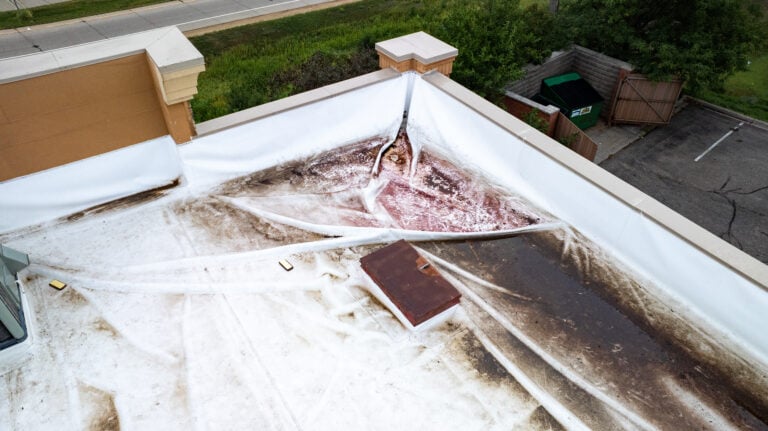
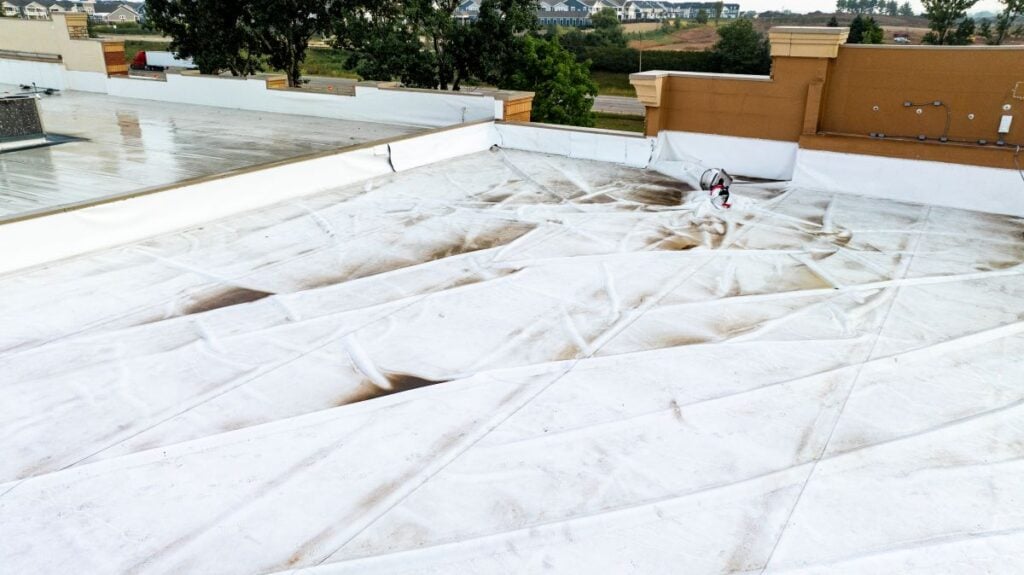
A few isolated blisters or small cracks in a commercial roof membrane are a maintenance item. Widespread blistering, cracking, or alligatoring across large sections signals the membrane has reached the end of its useful life and is failing broadly. At this stage, patching individual areas no longer addresses the underlying issue, and the commercial roof replacement cost of a planned reroof is almost always lower than the cumulative cost of repeated emergency patch repairs.
- What to look for: Bubbling or raised sections across multiple areas, cracking in patterns rather than isolated spots, or a membrane that has visibly lost flexibility.
- Why it is urgent: Widespread membrane failure means new leaks can develop anywhere at any time, making the building vulnerable to multiple simultaneous failure points.
- What happens next: A full reroofing project is typically the right call, with roofing material selected based on the building’s use, foot traffic, exposure, and budget.
4. Storm Damage Has Compromised a Significant Portion of the Roof
Severe wind, hail, or fallen debris can compromise large sections of a commercial roof in a single event, immediately elevating the situation from routine maintenance to urgent. Storm damage often affects flashing, membrane seams, and rooftop equipment simultaneously, and the combination of multiple failure points significantly increases the risk of water intrusion during the next rain event.
- What to look for: Visible membrane tears, displaced or damaged flashing, debris on the roof surface, or damage to rooftop HVAC units and their seals.
- Why it is urgent: Multiple simultaneous points of vulnerability mean the building is exposed on several fronts at once, and the next storm or rainfall could cause rapid, compounding damage.
- What happens next: Emergency response teams deploy temporary protection like tarps or emergency coatings within hours, followed by a full damage assessment and repair plan.
5. The Roof Is Approaching or Past Its Expected Lifespan With Visible Wear
Most commercial roofing systems have an expected lifespan in the range of 15 to 30 years depending on the roofing material, and a roof nearing or past that mark combined with visible wear is a strong signal that reroofing should move from a future consideration to a near-term priority. Waiting for total failure typically means dealing with a crisis rather than a planned commercial roof replacement project, and choosing the right roofing system based on your commercial roof needs upfront prevents this scenario from repeating.
- What to look for: A roof approaching or exceeding its expected lifespan combined with visible signs like surface cracking, seam separation, or repeated repair calls to the same areas.
- Why it is urgent: An aging roof becomes increasingly unpredictable, and the commercial roof replacement cost in an emergency context consistently exceeds what a planned project would have required.
- What happens next: A comprehensive assessment determines remaining useful life and helps the business plan a replacement on a schedule rather than reacting to a failing roof.
6. Rooftop Equipment Penetrations Are Failing
Flashing and seals around HVAC units, vents, and other rooftop penetrations are among the most common failure points on commercial roofs. When multiple penetration points show signs of compromised flashing or deteriorated sealant simultaneously, it often indicates that the entire roofing system is aging out, not just the specific seals in question.
- What to look for: Cracked or lifted flashing around HVAC units, deteriorated sealant at multiple penetration points, or recurring leaks specifically near rooftop equipment.
- Why it is urgent: Each failing penetration is an active entry point for water, and multiple simultaneous failures suggest the broader system is no longer performing adequately.
- What happens next: An inspection determines whether targeted roof repair will hold or whether the scope needs to expand into a broader reroofing project.
7. A Professional Inspection Reveals Deck or Structural Damage
If a commercial roofing contractor’s inspection uncovers deck rot, structural sagging, or compromised insulation beneath the membrane, the situation has moved well beyond surface-level repair. Structural issues mean the roof’s ability to safely support its own weight, let alone snow loads or rooftop equipment, may already be compromised.
- What to look for: This is typically identified during a professional inspection rather than visible from the ground, which is why periodic inspections matter even when a roof appears fine on the surface.
- Why it is urgent: Structural compromise is a safety issue, not just a waterproofing one, and delaying action risks further deterioration or even partial roof failure.
- What happens next: A detailed structural assessment determines the scope of repair needed before a new commercial roof can be installed.
We are proud to serve home and business owners in Coquitlam, BC, and nearby communities with professional commercial roofing, emergency response, and reroofing services and more.
Planning Considerations for Urgent Commercial Roof Replacement Projects
Even in an urgent situation, a few planning decisions significantly affect both the outcome and the final commercial roof replacement cost. Commercial replacement projects vary considerably by square footage, and larger buildings with complex drainage systems or significant rooftop equipment generally require more preparation time even when the situation is urgent.
- Schedule around mild, dry weather: Plan the roofing project in mild weather to avoid delays — most commercial membranes require dry conditions to cure correctly, and freezing temperatures can compromise the finished result.
- Evaluate roofing material carefully: Select commercial roofing materials based on budget, climate, and building structure, factoring in foot traffic and chemical exposure when choosing between TPO, modified bitumen, EPDM, asphalt shingles for lower-slope sections, built-up roofing — which consists of multiple protective layers and offers excellent waterproofing — or spray foam roofing, which provides superior waterproofing and insulation in a single seamless application.
- Budget for the full scope: Include costs for debris removal and new insulation upfront — these are frequently underestimated but nearly always required when replacing an aging commercial roof. Note that energy codes regulate insulation requirements and roof reflectivity, so your contractor should confirm your new system meets current BC code before installation begins.
- Choose energy-efficient materials: Select materials that improve energy efficiency, such as roof coatings or lighter-coloured membranes, which reduce cooling loads over the life of the new commercial roof.
- Consider targeted repair vs. full replacement: Not every urgent situation requires a full replacement — a high quality roof in an otherwise sound system may only need targeted repair or custom solutions in specific sections, so getting a professional assessment before committing to scope is essential.
- Plan for a final quality inspection: Once the project is complete, a final quality inspection ensures the new roof meets manufacturer specifications and workmanship standards before the building is handed back over.
- Coordinate with tenants: For multi-tenant commercial buildings, coordinate replacement services scheduling with tenants to minimize disruption during the project.
Common FAQs for Coquitlam Business Owners
Commercial roofing emergencies raise urgent, practical questions for property owners and managers. Here are the questions we hear most often from business owners in Coquitlam and across the Lower Mainland.
Can my business stay operational during an urgent reroofing project?
In most cases, yes. Commercial roofing contractors experienced in urgent work typically stage projects to minimize disruption, and temporary protective measures like tarping keep the building secure while permanent work is carried out. The approach depends on the extent of the damage and whether the affected area can be isolated from the rest of the operation. Coordinating roof replacement scheduling with tenants in advance makes this significantly smoother.
Is roof coating an alternative to full reroofing in an urgent situation?
Sometimes. Roof coatings are one of the most cost-effective commercial roofing materials available — they apply a liquid membrane over an existing roof to seal leaks, improve energy efficiency, and extend a roof’s lifespan by 10 to 20 years at significantly lower cost than full replacement. However, coatings are not viable when the underlying membrane or deck has failed structurally, making a new roof the only appropriate solution. A professional assessment from an experienced roofing company is essential before choosing this route.
What documentation should I gather before calling commercial roofing contractors?
Photos of the damage, both from the interior and roof level if safe, along with the date the issue was first noticed and any relevant storm events, give contractors a clear starting point. This documentation is also valuable if an insurance claim becomes part of the process.
Army Roofing Responds When It Matters Most
A commercial roofing emergency does not wait for convenient timing, and neither should the response. At Army Roofing, we treat urgent commercial reroofing situations with the speed they require, from rapid temporary stabilization through to a permanent solution that protects your building and operations. Contact Army Roofing today for an urgent commercial roof assessment and a clear plan for what your building needs.
Recent Articles
The Roof Blog