



Residential Roof Trusses Common Problems (6 To Watch)
Residential roof trusses are the triangular engineered frameworks that carry the weight of your entire roofing system, and because they sit hidden in the attic, most homeowners never think about them until something goes visibly wrong. By that point, what started as a minor issue has often progressed into a structural problem that costs significantly more to fix than early intervention would have. If you notice any of the warning signs below, Army Roofing offers professional roofing inspections that assess structural concerns alongside the surface condition of the roof. Here is what this blog covers:
- What roof trusses are and how they work
- 6 common truss problems to watch for
- When problems require professional attention
- Frequently asked questions about roof truss issues in Vancouver
What Roof Trusses Are and How They Work
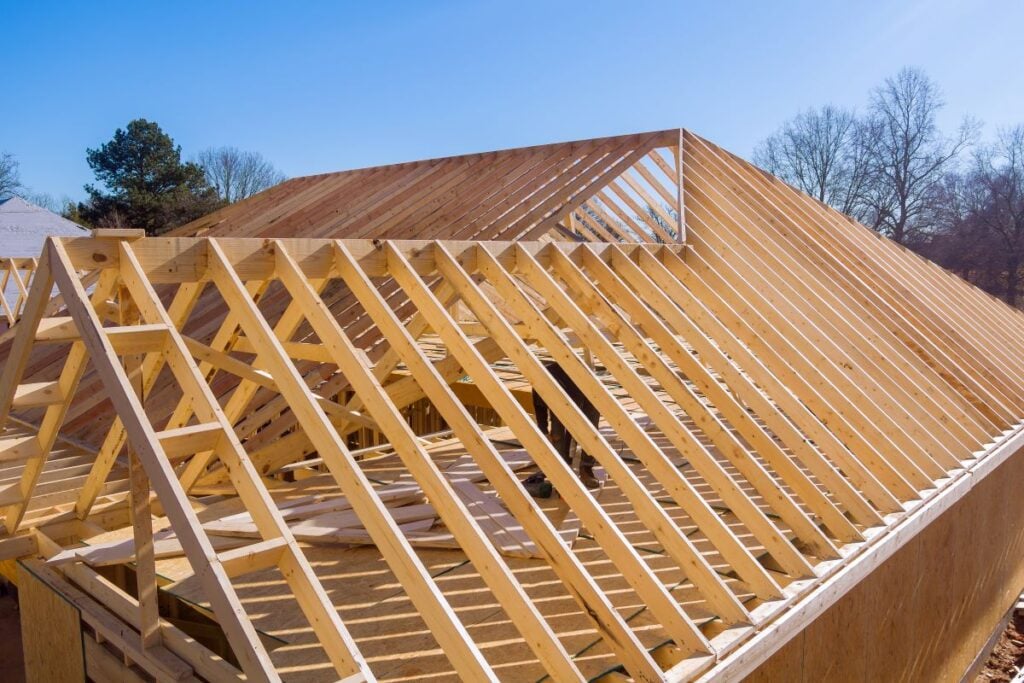
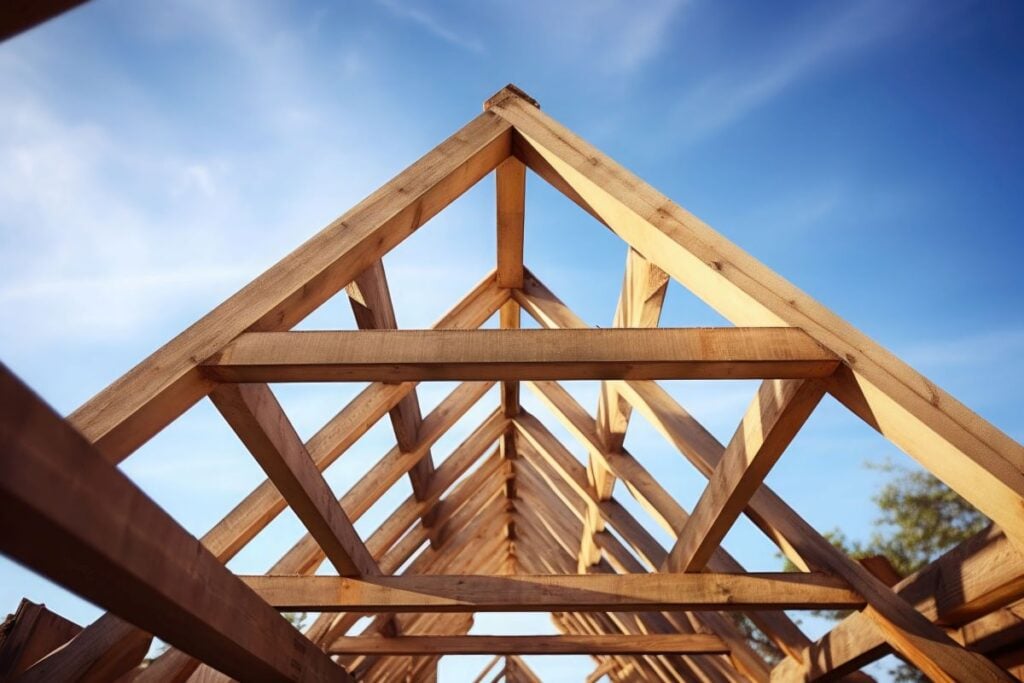
A roof truss is a pre-engineered triangular framework made from dimensional lumber connected by metal plates pressed into the wood at every joint. As the primary supporting structure beneath the roofing system, trusses in residential buildings distribute roof loads through top and bottom chords and interior web members. The top chords follow the roof pitch, the bottom chords span the ceiling line, and this triangular geometry maintains structural integrity under load while spanning longer distances than traditional rafters.
Timber trusses are cost-effective and sustainable, making them the dominant choice for residential roofs. Steel trusses are used for heavy-duty applications, including large commercial construction spans where exceptional load capacity is required. According to the National Association of Home Builders, wooden roof trusses are expected to last 80 to 100 years when properly installed and maintained. That lifespan assumes the truss remains unaltered, stays dry, and is not subjected to loads beyond its engineered design.
Common Types of Roof Trusses
In modern residential construction, virtually all trusses are manufactured as prefabricated trusses off-site and delivered ready to install, which reduces labour time significantly compared to stick-framed roofs. Unlike traditional rafters that rely on interior walls for intermediate support, prefabricated wood trusses span the full width of a building from exterior wall to exterior wall, giving homeowners more freedom to open up floor plans.
- King post truss: Features a central vertical post connecting the apex to the bottom chord. One of the oldest and simplest designs, best suited for short spans.
- Queen post truss: Uses two vertical posts to accommodate longer spans while maintaining a clear central opening.
- Howe truss: Adds diagonal members in compression and vertical members in tension for added stability across wider spans.
- Mono truss: A single-slope design used for shed roofs, covered additions, or where one side of the roof connects to a taller wall.
- Gable trusses: Form the triangular end walls at each side of a gable roof and are typically installed as the first and last truss in a run.
- Attic trusses: Designed with a raised bottom chord to create usable living or storage space inside the truss itself, popular in residential construction where attic conversion is a goal.
- Scissor trusses: Slope both the top and bottom chords to create dramatic vaulted ceilings, allowing for open ceiling configurations without interior walls below.
How Truss Design Affects Performance and Cost
Each truss type is matched to the roof shape, roof pitch, span requirements, and intended ceiling configuration. Truss design also impacts energy efficiency and insulation flow. Open-web designs allow continuous insulation across the attic floor, while raised-heel trusses create clearance for full-depth insulation at the eave edge. Complex truss designs increase material and installation costs, so the right choice involves balancing structural needs, aesthetic goals, and budget.
6 Common Residential Roof Truss Problems
Most truss problems trace back to moisture, excess load, poor installation, pest activity, or unauthorized alterations. Here are the six issues that show up most frequently.
1. Moisture Damage and Wood Rot
Moisture is the single most common cause of truss deterioration. Even slow leaks through damaged shingles, failed flashing, or ice dams saturate the wood over months or years, creating conditions for rot and mold. Because trusses are hidden, this damage often goes undetected until the wood has lost significant structural capacity. In Vancouver and across the Lower Mainland, truss deterioration from water infiltration is a particularly common finding during professional inspections.
- What to look for: Dark staining on truss members, soft or spongy wood when pressed, musty smell in the attic, or visible mold on the bottom chord or web members.
- Why it matters: Rotted sections cannot be dried and restored, they must be removed and replaced.
- What to do: Address the moisture source first, then have a roofing professional assess which members need repair before new roofing goes back on.
2. Overloading
Trusses are engineered for a specific load rating covering roofing materials, snow loads, and attic equipment. When exceeded by adding heavy roofing layers, installing HVAC without reinforcement, using the attic beyond its designed storage capacity, or experiencing unusually heavy snow, trusses can sag, crack, or fail.
- What to look for: Visible sagging in the ceiling, a bowing ridge line viewed from outside, or cracking sounds during heavy snow.
- Why it matters: A failure in one truss shifts load to adjacent members, creating a potential cascade effect across the roof construction.
- What to do: Never add roofing layers without a structural assessment, and consult a professional before placing equipment on the roof structure.
3. Unauthorized Modifications or Cuts
This is one of the most serious and most preventable truss problems. It occurs when someone cuts, notches, or removes a truss member to create attic access or convert living or storage space without understanding that residential roofs rely on every member as part of a load-sharing system. Scissor trusses designed for vaulted ceilings are particularly sensitive because their geometry is already optimised for a specific load path. Even a small notch can reduce a member’s capacity significantly.
- What to look for: Cut, notched, or partially removed web members or chords near access hatches or mechanical penetrations.
- Why it matters: Unauthorized cuts can create a slow failure that only becomes apparent under heavy load conditions.
- What to do: Any modification must be designed by a structural engineer and repaired using engineered repair plates or sister members.
4. Failed or Corroded Gusset Plates
Gusset plates are the toothed metal plates pressed into the wood at every joint and are what hold the supporting structure together. Over time in humid or coastal environments, metal plates can corrode, pull away from the wood, or lose their grip. The problem is more pronounced on steep roofs where gravity adds stress to joints. In commercial construction, steel connector plates are often used, but in residential buildings toothed metal plates remain the standard.
- What to look for: Plates lifting from the wood surface, visible rust, or gusset plates that move when pressed.
- Why it matters: Gusset plate failure is often invisible until a significant load event reveals the weakened joint.
- What to do: Loose or corroded plates require engineered repair, typically replacement plates or supplemental fastening by a structural professional.
5. Pest Damage
Wood-boring insects including termites and carpenter ants can hollow out truss members from the inside while leaving the exterior looking intact. In BC’s coastal climate, carpenter ants are a particular concern due to the prevalence of moisture-softened wood that attracts them. By the time pest damage is visible externally, the interior may already be significantly compromised.
- What to look for: Small holes in truss members, fine sawdust-like frass below the trusses, hollow sound when tapping, mud tubes, or visible insect activity.
- Why it matters: A member can appear sound while being completely hollowed, leaving it unable to carry its share of the roof load.
- What to do: Pest damage requires both professional extermination and structural repair, eliminating insects does not restore the wood’s strength.
6. Improper Installation
Trusses installed incorrectly from the outset carry long-term vulnerabilities. Common errors include insufficient bracing during erection, incorrect bearing where the truss is not properly supported at both ends, and fasteners placed in the wrong position relative to the metal plates. These reduce the system’s capacity from day one.
- What to look for: Trusses that lean or are not plumb, uneven ceiling heights, or gaps between the bottom chord and the top plate.
- Why it matters: Installation errors affect the structural integrity of the entire roof from the moment the home is built.
- What to do: If you suspect errors, particularly in an older home with unexplained structural movement, a professional assessment is the appropriate first step.
We are proud to serve home and business owners in Vancouver, BC, and nearby communities with professional roofing inspection, repair, and replacement services and more.
When Truss Problems Require Professional Attention
Several situations require prompt professional assessment rather than monitoring.
- Visible sagging in the roofline or ceiling, particularly if it has appeared or worsened recently
- Active moisture damage where rot is present or suspected in truss members
- Evidence of unauthorized cuts or modifications to web members or chords
- Pest damage that may have compromised the structural capacity of one or more members
- Any separation at a gusset plate joint, which should never be left unaddressed
Truss repair is not a DIY project. Repairs must restore the full load path through the structure, not simply make the damaged area look intact.
Common FAQs for Vancouver Homeowners
Can a damaged roof truss be repaired or does it need to be replaced?
In many cases, repair is possible through techniques like sistering, adding a new member alongside a damaged one, or engineered gusset plate repairs. For context, a new set of roof trusses typically costs between $7,500 and $12,000 for a standard residential home, so targeted repair is almost always the more cost-effective path when damage is localized. A structural engineer or experienced roofing contractor should assess the damage before any approach is chosen.
How do I know if my roof trusses have been modified?
Inspect the attic. Look for cut, notched, or partially removed web members or chords near access hatches, plumbing penetrations, or in areas where attic space has been converted. Any modification without an accompanying engineered repair detail should be evaluated by a professional.
Do roof trusses need regular maintenance?
Trusses themselves do not require maintenance the way shingles or gutters do, but the conditions around them do. Keeping the roof watertight, ensuring attic ventilation is adequate, addressing moisture promptly, and avoiding storage weight beyond the attic’s designed capacity all protect truss longevity. An annual visual inspection looking for staining, soft spots, or movement at joints is a low-effort way to catch problems early.
What causes ceiling cracks near the walls in winter?
This is often truss uplift rather than a structural failure. When the bottom chord of a truss bows upward in cold weather due to differential moisture content, it pulls the ceiling away from the wall junction, creating a crack that typically closes or reduces in warmer months. Floating ceiling connections address this without structural repair.
Army Roofing Sees What Others Miss
Roof truss problems are almost always invisible until they become serious. At Army Roofing, our inspection process looks beyond the shingles and into the structural health of the roof system, because a roof that looks fine on the outside can be hiding truss damage that needs attention. Contact Army Roofing today to book your free roof inspection and get a clear picture of what is actually happening above your ceiling.
Recent Articles
The Roof Blog