



Are Curling Shingles A Serious Issue? 7 Facts
If you have spotted edges lifting or surfaces dipping on your roof, you are likely dealing with curling shingles, and it is worth understanding what that means before the problem progresses. Curling is one of the clearest visual signs that a shingle roof is under stress, whether from age, moisture, improper installation, or poor ventilation. What looks like a minor cosmetic issue from the ground can signal significant vulnerability above. Here is what this guide covers:
- What curling shingles are and the two main types
- The most common causes behind shingle curling
- How serious the problem actually is and what it leads to
- When repair is sufficient and when replacement is necessary
- How to prevent curling from developing in the first place
What Are Curling Shingles?
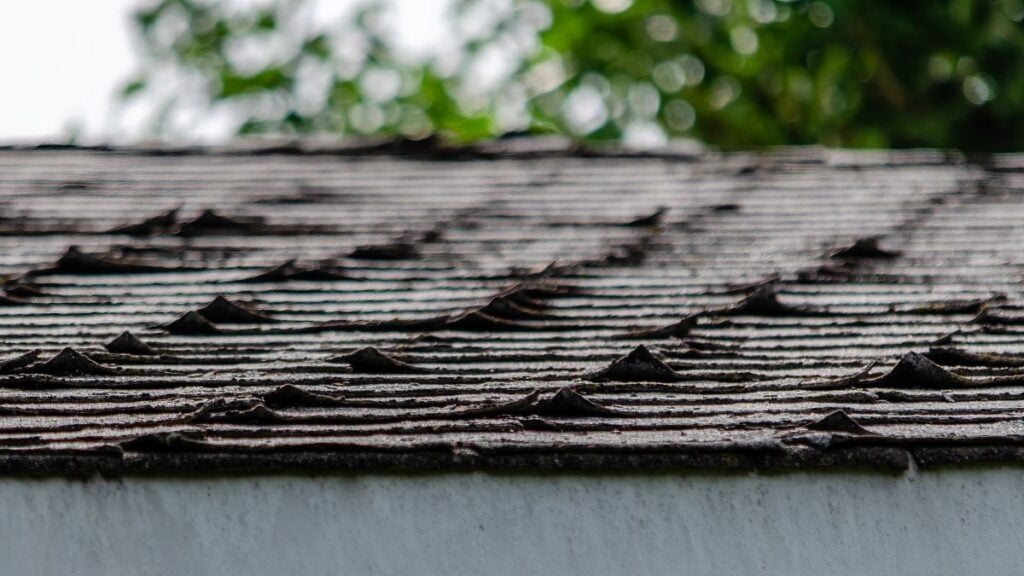
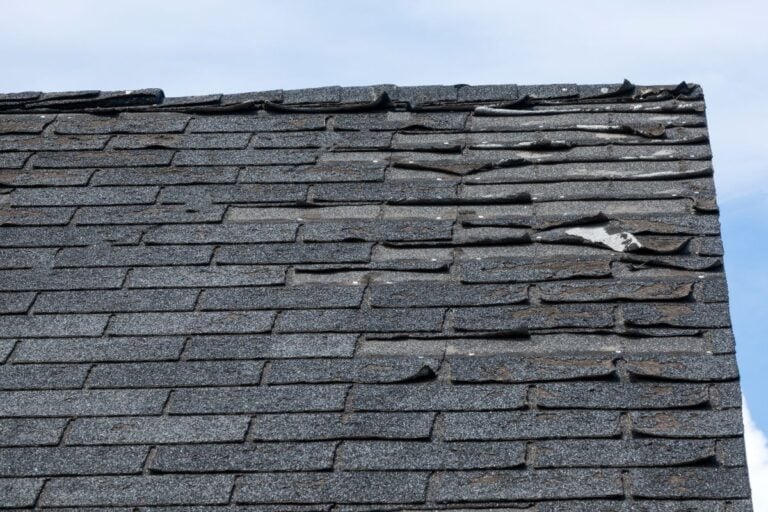
Curling shingles are asphalt shingles that have deformed away from their flat installed position. There are two distinct types, and recognizing which one you are dealing with helps narrow down the underlying issues driving the damage.
Cupping occurs when the edges of a shingle turn upward, creating a concave shape across the surface. This is most often associated with excess moisture imbalance, where the underside of the shingle absorbs more moisture than the top surface, causing the edges to lift. Clawing occurs when the center of the shingle lifts while the edges remain flat, creating a raised hump across the middle. This pattern is more commonly linked to improper installation or adhesive failure. Both types compromise roof integrity and the shingle’s ability to create the overlapping water-shedding barrier the roof depends on.
The Difference Between Curling and Buckling
Curling and buckling are related but distinct problems. Curling affects the shingle itself, deforming the material through moisture or aging. Buckling involves shingles appearing to ripple or wave across the roof surface, often caused by movement in the roof deck below rather than deterioration of the shingle itself. Both conditions weaken the roof’s protective barrier and warrant a professional inspection, but their causes and solutions can differ significantly.
7 Facts About Curling Shingles Every Homeowner Should Know
Understanding the full picture of curling shingles, from cause to consequence, helps homeowners respond appropriately rather than either ignoring the issue or overreacting to it. These seven facts cover the most important things to know.
1. Curling Is Rarely Just a Cosmetic Problem
Shingles are designed to lie flat and create a tight, overlapping barrier against water intrusion. When they curl, that barrier is compromised. Water can work its way beneath lifted edges during rainfall, leading to moisture penetration of the underlayment and roof deck. What appears as minor surface deformation from the ground often corresponds to active water vulnerability above.
- Lifted edges: Create entry points where strong winds and wind-driven rain can push water up and beneath the shingle course above.
- Cupped centers: Pool water on the shingle surface rather than shedding it, increasing excess moisture saturation time and penetration risk.
- Widespread curling: Signals that roof integrity is failing broadly, not just in isolated spots.
2. Poor Attic Ventilation Is One of the Leading Causes
Inadequate attic ventilation traps heat and moisture beneath the roof deck, which creates the uneven conditions that cause shingles to curl prematurely. When the roof ventilation system is not balanced between intake and exhaust, the attic runs significantly hotter than the exterior, driving the thermal stress that causes curling over time.
- Heat buildup: Trapped heat dries out the protective granules and asphalt in aging materials faster than normal, accelerating roof damage and deterioration.
- Moisture imbalance: Excess moisture rising from the living space into an attic without proper attic ventilation saturates the underside of shingles, contributing to cupping and shortening the roof’s lifespan.
- Early onset on newer roofs: Curling on a roof less than 12 years old is almost always a roof ventilation system or installation issue rather than normal aging.
3. Improper Installation Causes Premature Curling
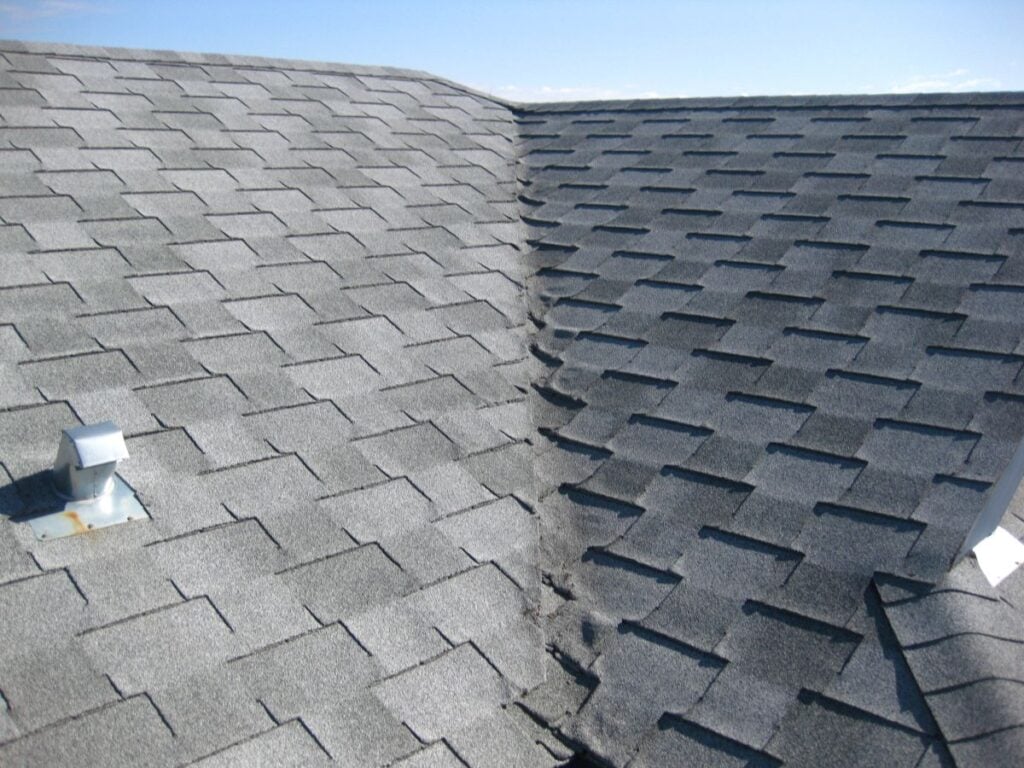
Shingles installed with incorrect nailing patterns, inadequate fastening, or misaligned courses are more likely to curl well before their expected lifespan. Overdriven nails break the shingle mat and reduce adhesion, while underdriven nails leave shingles loose enough to shift and deform under thermal cycling.
- Incorrect nail placement: Nails driven too high or too low on the shingle face reduce wind resistance and allow the free tab to lift and curl over time.
- Insufficient adhesive strips: Shingles rely on a heat-activated sealant strip to bond to the course below. If that bond does not form correctly, edges remain free to move.
- Wrong shingle type: Installing shingles rated for steeper slopes on low-pitch sections, or vice versa, creates conditions the material was not designed to handle.
4. Age and UV Exposure Are Natural Drivers
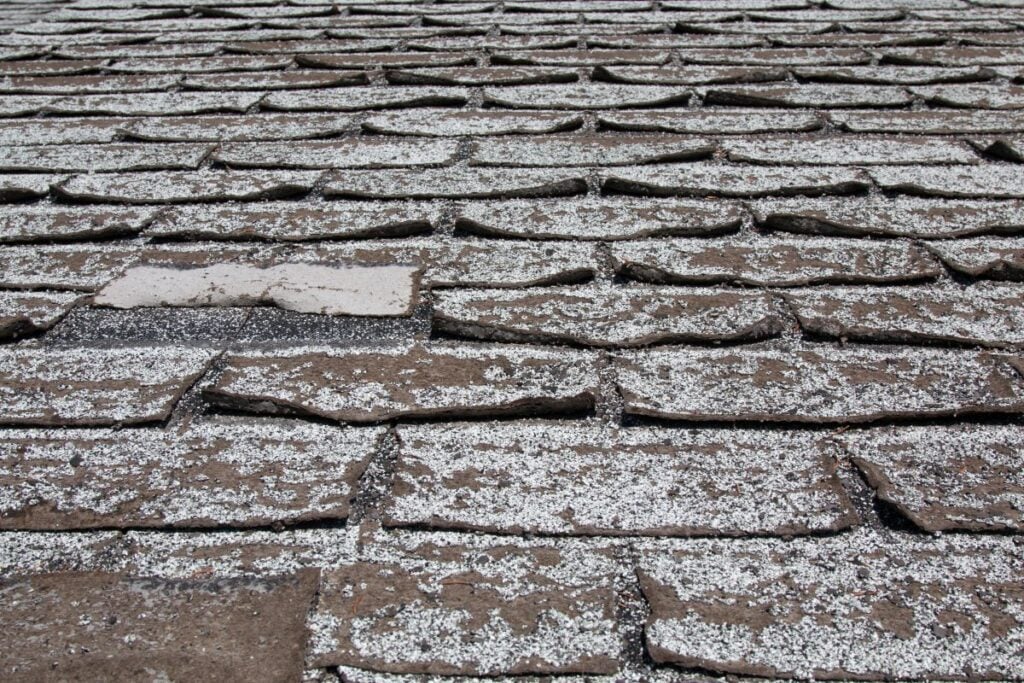
As asphalt shingles age, the oils within the material gradually dry out and protective granules begin to shed from the surface. This process, accelerated by prolonged UV exposure, causes aging materials to shrink and stiffen over time. Once flexibility is lost, thermal cycling creates the stress that eventually results in curling, cracking, or both — and costly repairs if left unaddressed.
- Second half of lifespan: Curling in shingles older than 12 to 15 years is a normal sign of aging, indicating the shingle has entered the accelerating deterioration phase.
- South-facing slopes: These sections receive the most direct sun exposure and typically show curling and granule loss before the rest of the roof.
- Dark-colored shingles: Absorb more heat than lighter colors and tend to dry out and curl faster in sun-intensive climates.
5. Curling Above 10 to 15 Percent of the Roof Surface Is a Serious Warning
According to the National Roof Certification and Inspection Association, if curling is visible on more than 10 to 15% of the roof surface, the roof has entered what they describe as a terminal phase, where targeted maintenance may extend its life briefly but full replacement is likely the most appropriate path forward. This threshold is a useful benchmark for homeowners trying to decide between repair and replacement.
- Below the threshold: Curling limited to a small section may be addressable with targeted shingle replacement and underlying cause correction to prevent costly repairs from spreading.
- At or above the threshold: Widespread curling across the entire roof or multiple sections typically means the system as a whole is failing and repair is unlikely to provide lasting value.
- Professional assessment required: A professional roof inspection can measure affected surface area accurately and give a clear recommendation based on actual conditions.
6. Curling Shingles Increase Wind Damage Risk Significantly
Flat shingles resist wind uplift because they lie tight against the course below and rely on their adhesive strips to stay bonded. Curled shingles have already lost that flat profile, meaning wind can get beneath the lifted edges and apply uplift force directly to the shingle. In Port Coquitlam, BC, and across the Lower Mainland, seasonal windstorms and atmospheric rivers create exactly the conditions that turn curling shingles into missing shingles very quickly.
- Uplift vulnerability: Lifted edges act as a catch point for strong winds, dramatically increasing the force applied to the fasteners and sealant strips below.
- Cascading loss: Once one shingle is removed by wind, the course above loses its lower support and becomes significantly more vulnerable to the next storm, further compromising the roof’s lifespan.
- Insurance implications: Wind damage claims may be complicated if an adjuster determines the roof was already in a deteriorated condition prior to the storm event.
7. Addressing the Root Cause Matters as Much as Replacing the Shingles
Replacing curled shingles without correcting the underlying cause is a temporary fix at best. If poor ventilation drove the curling, new shingles installed into the same ventilation conditions will curl again. If improper installation was the issue, matching replacement shingles to a surrounding field of incorrectly fastened shingles does not restore the roof’s full performance.
- Ventilation correction: Before replacing curled shingles, have a contractor assess attic airflow and confirm that intake and exhaust ventilation are balanced to protect your home from recurring issues.
- Deck inspection: Persistent excess moisture and curling often means the roof deck below has absorbed water. Inspect for soft spots or rot before installing new material to avoid underlying issues compounding over time.
- Full system evaluation with regular inspections: A professional inspection that looks at the entire roof, not just the curled sections, is the most reliable way to maintain roof integrity and ensure the replacement solution actually solves the problem.
Repairing Curling Shingles: What the Process Looks Like
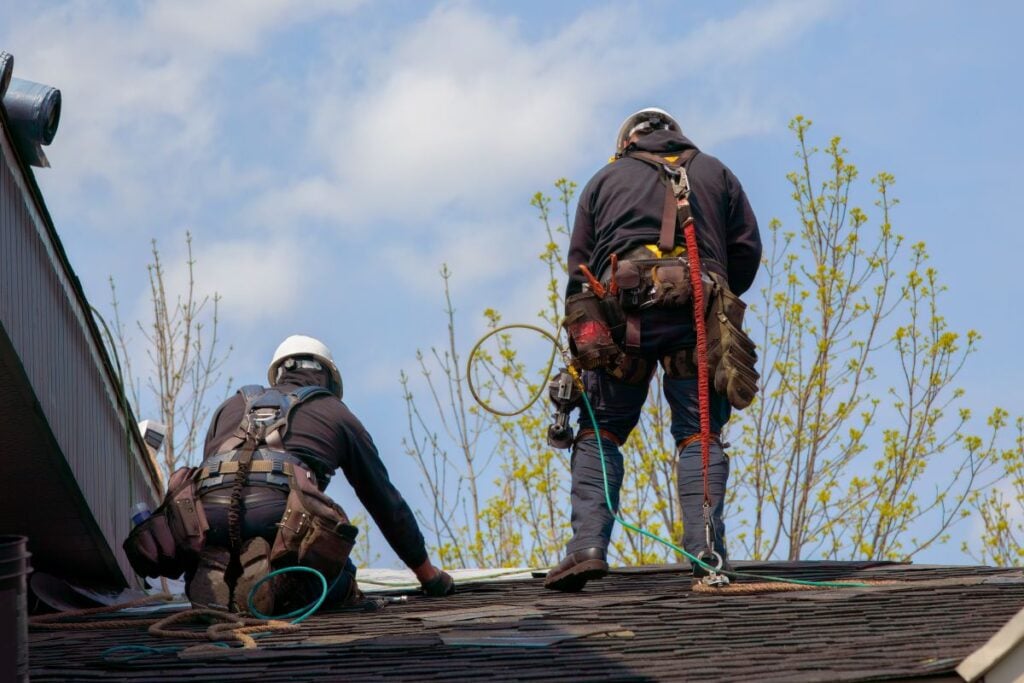
When curling is caught early and limited in scope, a roofing company can address the damage without replacing the entire roof. The repair process depends on the severity and underlying cause, but generally follows these steps:
- Identify and fix the root cause first: Regular inspections of shingles should be performed at least twice a year and after major storms to catch minor curling before it spreads.
- Remove and replace affected shingles: Curled shingles that have lost their shape cannot be flattened back into place permanently. A roofing company will remove the damaged material and install matching replacement shingles with correct nail placement and adhesive contact.
- Inspect the roof deck beneath: Aging materials that have been curling for some time may have allowed moisture into the deck below. Any soft or damaged decking must be addressed before new shingles go down to prevent roof damage from continuing beneath the surface.
- Check and rebalance attic ventilation: If the entire roof or large sections show curling, proper attic ventilation must be confirmed and corrected as part of the repair scope. Without it, new shingles will deteriorate under the same conditions.
- Seal and blend new shingles: Replacement shingles are sealed to the surrounding field and aligned to maintain consistent water-shedding performance. A quality repair should be nearly invisible from the ground while fully restoring protection.
When Repair Is Enough and When It Is Not
Not every instance of curling shingles requires a full roof replacement. Repair makes sense when curling is limited to a small, clearly defined section, the roof is less than halfway through its expected lifespan, and the underlying issues have been identified and corrected. Replacement becomes the stronger choice when curling is widespread, the roof is approaching or past 20 years of age, or the pattern of deterioration suggests the entire roof’s lifespan is nearly exhausted rather than an isolated area. Regular inspections are the most reliable way to catch curling early and protect your home before costly repairs become unavoidable.
We’re proud to serve home and business owners in Port Coquitlam, BC, and nearby communities with curling shingle inspections, repairs, and full roof replacements and more.
Army Roofing Gives You the Honest Answer
At Army Roofing, we do not recommend replacement when a repair will genuinely solve the problem, and we do not patch roofs that need to be replaced. If you have noticed curling shingles on your roof and are not sure what step to take next, our team will inspect the full roof, identify the root cause, and give you a clear, straightforward recommendation. Contact Army Roofing today for a free inspection and find out exactly where your roof stands.
Recent Articles
The Roof Blog