



Is Metal Roof Hail Damage Covered? (6 Things to Know)
If a hailstorm has recently rolled through your area, you are probably asking questions about metal roof hail damage and whether your insurance policy is going to help cover the cost. The short answer is that most standard homeowners policies do cover hail damage to metal roofs, but the details of what gets paid, how much, and under what conditions can vary significantly depending on your insurer, your coverage type, and the nature of the damage itself. Here is what this guide covers:
- How insurance handles metal roof hail damage
- The difference between cosmetic and functional damage
- Key coverage types and what they mean for your payout
- How to document damage and file a successful claim
- What disqualifies a claim and how to avoid common mistakes
How Metal Roofs Hold Up Against Hail
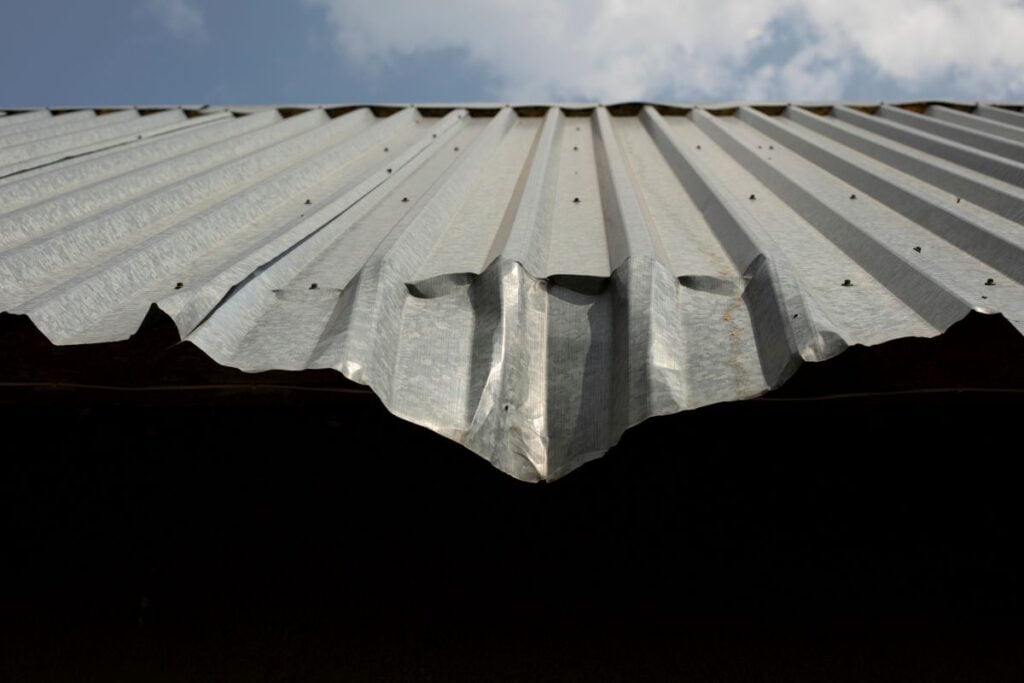
Before getting into coverage, it helps to understand how metal roofing actually performs when hail hits. Metal roofs are among the most impact-resistant roofing systems available, and most residential metal panels are tested and rated to withstand hailstones up to two inches in diameter. Hail at or below that size, which accounts for the majority of hailstorms, typically leaves little more than minor cosmetic marks on a metal surface.
That said, severe storms in regions prone to larger hailstones can cause more visible denting, especially on thinner gauge panels or flat-profile metal without ribbing. The thickness of the metal, the panel profile, and whether your system carries a Class 4 impact-resistance rating all factor into how much damage a storm actually causes. A thicker, ribbed 24-gauge metal panel is going to handle a hailstorm considerably better than a thinner 29-gauge flat panel.
6 Things to Know About Metal Roof Hail Damage Coverage
Understanding these six key points will help you navigate your insurance policy with confidence and avoid surprises when it matters most.
- Most policies cover hail damage: Standard homeowners insurance typically includes coverage for sudden damage caused by hail. Metal roofs are not excluded from this, but the specifics of your payout depend heavily on your policy type and any exclusions written into it.
- Cosmetic damage exclusions are common: This is the clause that catches many metal roof owners off guard. If your insurer has a cosmetic damage exclusion, they may deny coverage for visible dents that do not compromise the roof’s ability to keep water out, even if those dents are clearly visible.
- Functional damage is almost always covered: Damage that affects the waterproofing ability or structural integrity of your roof is considered functional damage, and virtually all standard policies cover it. If hail has caused leaks, cracked panels, or compromised seams, you have a strong basis for a claim.
- Wind and hail deductibles can be separate: Many policies carry a separate, higher deductible specifically for wind and hail events, often calculated as a percentage of your home’s insured value. This can mean your out-of-pocket responsibility is significantly higher than your regular deductible.
- ACV vs. RCV coverage changes your payout: Actual Cash Value coverage pays replacement cost minus depreciation, which can result in a smaller payout for an older roof. Replacement Cost Value coverage pays the full cost to replace your roof with comparable materials, which is the stronger protection for a metal system.
- Signing a hail damage waiver lowers your premium but limits your coverage: Some insurers offer the option to waive cosmetic hail damage coverage in exchange for a lower monthly premium. Whether that trade-off makes sense depends on your roof’s gauge, profile, and your local hail risk.
How Cosmetic vs. Functional Damage Affects Your Claim
The distinction between cosmetic and functional damage is where most metal roof insurance disputes happen. An insurance adjuster will assess whether the hail strike has affected the roof’s ability to perform its primary job of keeping water out. Dents that do not break the surface coating or affect drainage are typically classified as cosmetic. Damage that creates penetration points, lifts flashing, or causes cracks in the panel coating is functional and subject to coverage under nearly all standard policies.
If you believe your damage is functional but the adjuster classifies it as cosmetic, you have the right to request a second inspection or involve a licensed public adjuster who works on your behalf rather than the insurer’s.
How to Document and File a Hail Damage Claim
Filing a successful claim starts well before you call your insurance company. The more documentation you have, the stronger your position throughout the process. Here is a straightforward approach that helps protect your claim from the start:
- Inspect after every significant storm: Walk the property and look for visible dents, lifted flashing, damaged gutters, and any interior ceiling stains that may suggest water intrusion.
- Photograph everything before cleanup: Take wide shots of the full roof and close-up photos of each damaged area. Include something for scale, such as a coin or ruler, next to dents.
- Hire a roofing contractor before the adjuster arrives: A qualified roofing contractor can identify damage the adjuster may miss and provide a written assessment that supports your claim.
- Report the damage promptly: Most policies require you to report damage within a specific window after the storm. Delaying the claim can give the insurer grounds to reduce or deny it.
According to the National Oceanic and Atmospheric Administration, more than 4,000 major hailstorms occur across the United States each year, and that number is rising as severe weather patterns shift. Having a plan in place before a storm hits puts you ahead of the curve when it comes time to act.
What Can Disqualify a Metal Roof Hail Claim
Not every claim gets approved, and knowing what can disqualify yours helps you stay prepared. Insurance companies consistently deny claims for a few recurring reasons. Pre-existing damage or neglect is one of the most common, as insurers cover sudden storm events but not deterioration caused by years of deferred maintenance. If your roof had known issues before the storm, those areas may be excluded from the payout.
A lack of documentation is another frequent cause of partial or full denials. Without photos, contractor assessments, and storm date verification, it becomes difficult to prove the damage was caused by the specific hail event in question. Finally, filing a claim that falls below your deductible amount simply will not result in a payment, and submitting a small claim may still affect your future premiums.
Army Roofing Is Ready to Help After the Storm
Navigating insurance claims after hail damage is stressful enough without also trying to figure out whether your metal roof actually needs repairs. At Army Roofing, we inspect metal roofing systems thoroughly, document findings clearly, and work alongside your insurance process to make sure nothing gets missed. We’re proud to serve home and business owners in North Vancouver, BC, and nearby communities with metal roof hail damage inspections, repairs, and more. If your roof took a hit in a recent storm, contact Army Roofing today for a professional inspection and let us help you move forward with confidence.
Recent Articles
The Roof Blog