



Is A Modified Bitumen Roofing System Right? 8 Factors
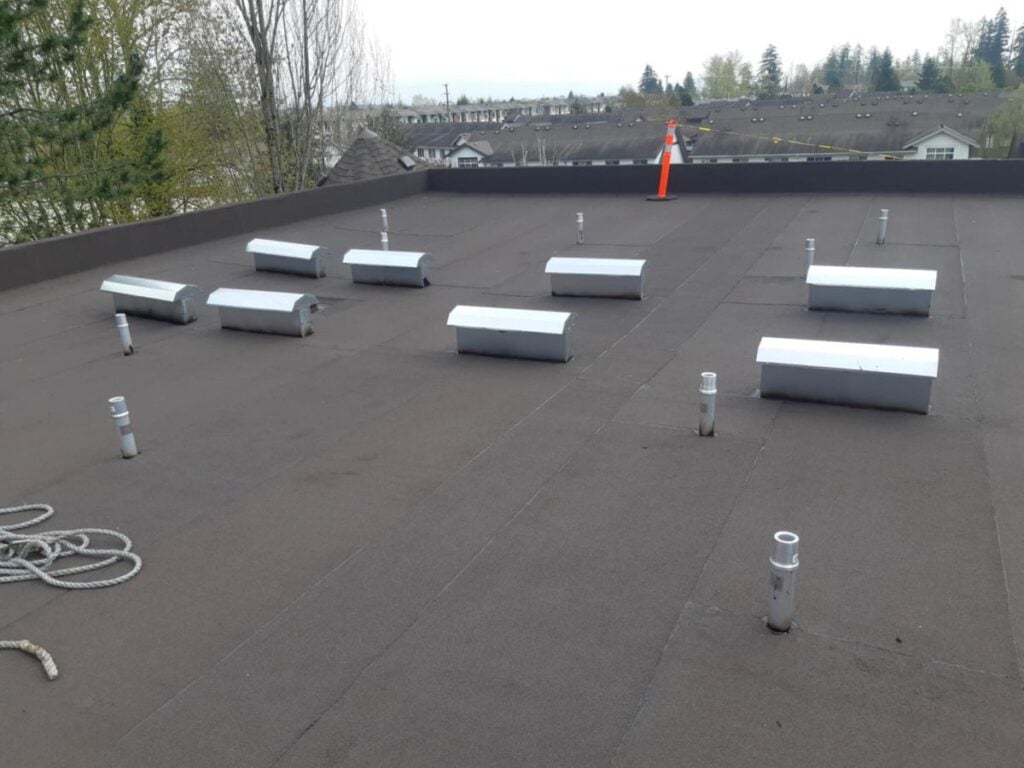
Choosing the right commercial or low slope roofing material requires understanding performance, lifespan, durability, and long term maintenance expectations. A modified bitumen roofing system is a widely used solution for flat and low slope roofs because it combines durability with flexibility. Originally developed as an evolution of built up roofing, modified bitumen membranes provide enhanced weather resistance and reinforced strength.
Before deciding whether this roofing system is right for your property, it is important to evaluate key factors such as climate conditions, building type, expected lifespan, and long term budget planning. A well informed decision helps reduce premature failures and protects your roof deck from moisture intrusion.
- Low slope compatibility: Designed specifically for flat or slightly pitched roofs.
- Multi layer protection: Reinforced roof membrane layers improve puncture resistance.
- Weather adaptability: Flexible materials handle seasonal temperature changes.
- Serviceability: Repairs are often localized and manageable.
Property owners in Burnaby, BC often select this roofing material for commercial buildings due to its durability in wet climates and ability to withstand steady rainfall throughout the year.
What Is A Modified Bitumen Roofing System?
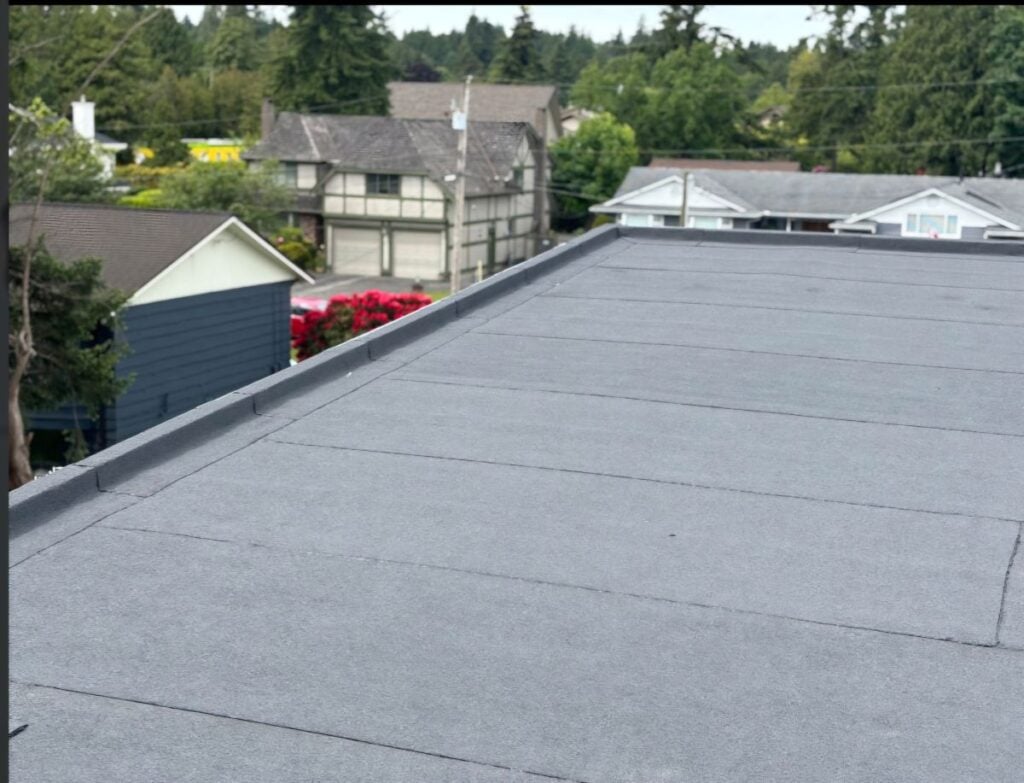
A modified bitumen roofing system is an asphalt based roof membrane enhanced with polymer modifiers to improve flexibility and resilience. These modifiers increase elasticity, impact resistance, and long term durability compared to traditional built up roofing systems. The membrane is typically reinforced with fiberglass or polyester, adding dimensional stability and strength.
There are two primary types of modified bitumen membranes:
- SBS modified bitumen: Offers rubber like flexibility and strong resistance to thermal expansion.
- APP modified bitumen: Provides improved UV resistance and heat tolerance.
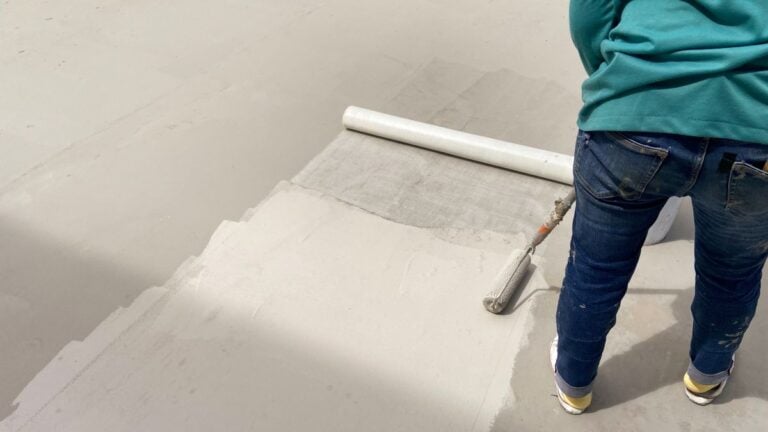
- Multiple application methods: Torch applied, self adhered, or cold applied systems available.
- Surface finishes: Smooth or granulated options, depending on protection needs.
Because of its layered design, this roofing system is often installed as a two ply assembly. The additional layer increases redundancy and helps protect the roof deck beneath from water infiltration. This evolution from traditional built up roofing gives property owners improved performance with simplified installation methods.
According to the U.S. Department of Energy, cool roof coatings applied to low slope roofing systems can reduce roof surface temperatures by up to 50°F, which can improve energy performance when reflective coatings are incorporated into modified bitumen assemblies.
8 Factors To Consider Before Choosing Modified Bitumen
Every roofing material has strengths and limitations. Reviewing these eight factors can help determine whether modified bitumen aligns with your building’s structural and operational needs.
1. Roof Slope
Modified bitumen performs best on flat or low slope surfaces where water drainage is slower. The continuous roof membrane forms a waterproof barrier that prevents moisture from penetrating the roof deck.
- Ideal for minimal pitch: Performs well on slopes under 3:12.
- Continuous coverage: Seam bonded layers reduce leak points.
- Not suited for steep roofs: Other roofing systems may perform better.
2. Climate Conditions
Climate heavily influences roofing performance. Modified bitumen works well in areas with frequent rainfall and moderate seasonal changes.
- Cold weather flexibility: SBS membranes resist cracking.
- UV durability: APP membranes perform well in sunny conditions.
- Moisture resistance: Sealed seams limit water intrusion.
In Burnaby, BC, where damp weather is common, selecting a roofing system designed for moisture control is essential.
3. Installation Process
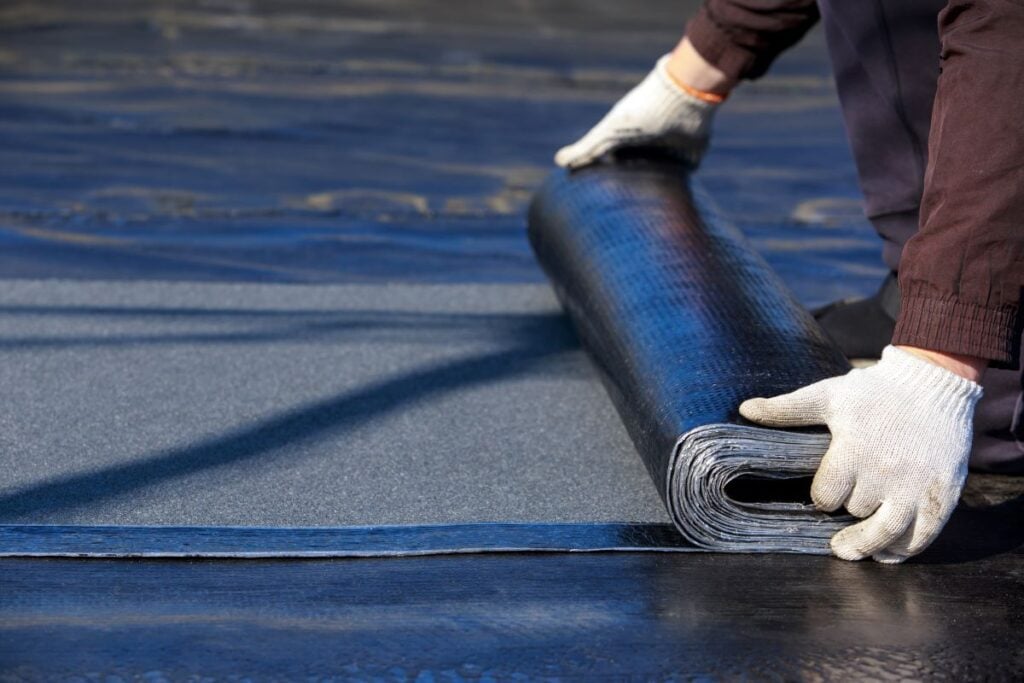
The installation process can vary depending on building occupancy, safety concerns, and contractor preference. Each method impacts project timeline and labor considerations.
- Torch applied systems: Heat fuses seams for strong adhesion.
- Self adhered membranes: Reduce open flame risk.
- Cold applied adhesives: Ideal for occupied buildings.
Professional expertise during the installation process ensures seam integrity and proper bonding across the roof membrane surface.
4. Longevity Expectations
Modified bitumen roofs generally last between 20 and 30 years with proper maintenance.
- Multi ply strength: Added durability against punctures.
- Repair flexibility: Damaged areas can often be patched.
- Extended lifespan: Routine inspections prevent premature deterioration.
Long term performance depends on drainage design and correct attachment to the roof deck.
5. Maintenance Requirements
Flat roofing systems require periodic inspection to maintain performance. Modified bitumen is relatively easy to inspect compared to some single ply systems.
- Biannual inspections: Recommended for commercial properties.
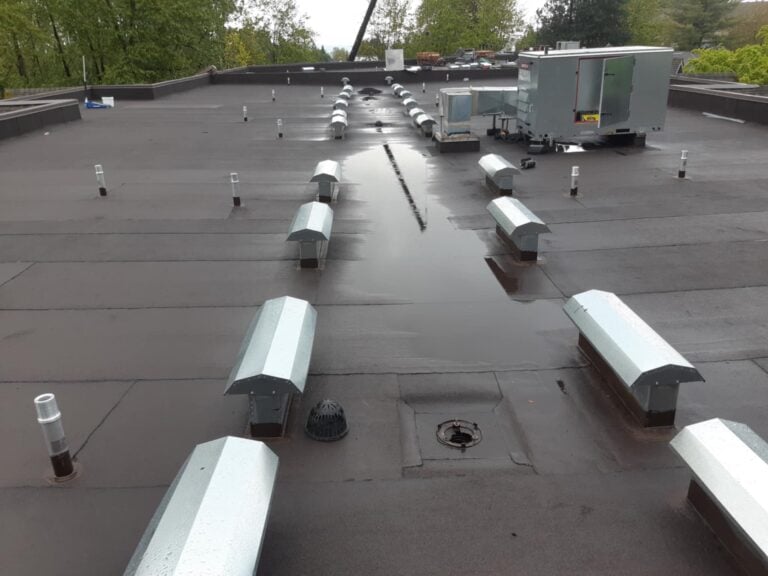
- Drainage monitoring: Prevent standing water accumulation.
- Surface checks: Identify blistering or seam separation early.
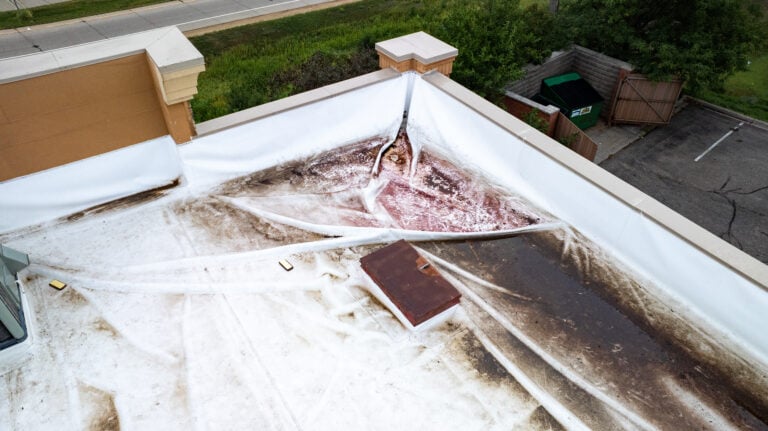
Proactive maintenance helps protect the roof membrane and reduce long term repair costs.
6. Energy Efficiency
Modified bitumen systems can be paired with reflective coatings or insulation upgrades to improve energy performance.
- Reflective coatings: Reduce heat absorption.
- Insulation compatibility: Works well with rigid insulation boards.
- Temperature control: Supports interior comfort in large structures.
Energy enhancements can be incorporated during initial installation or as part of future upgrades.
7. Budget Considerations
Modified bitumen falls within a moderate price range compared to other flat roofing systems.
| Roofing Type | Typical Lifespan | Relative Cost |
| Modified Bitumen | 20 to 30 years | Moderate |
| TPO | 20 to 25 years | Moderate |
| EPDM | 20 to 30 years | Moderate |
While upfront pricing is competitive, total cost of ownership depends on installation quality and long term maintenance planning.
8. Building Type And Usage
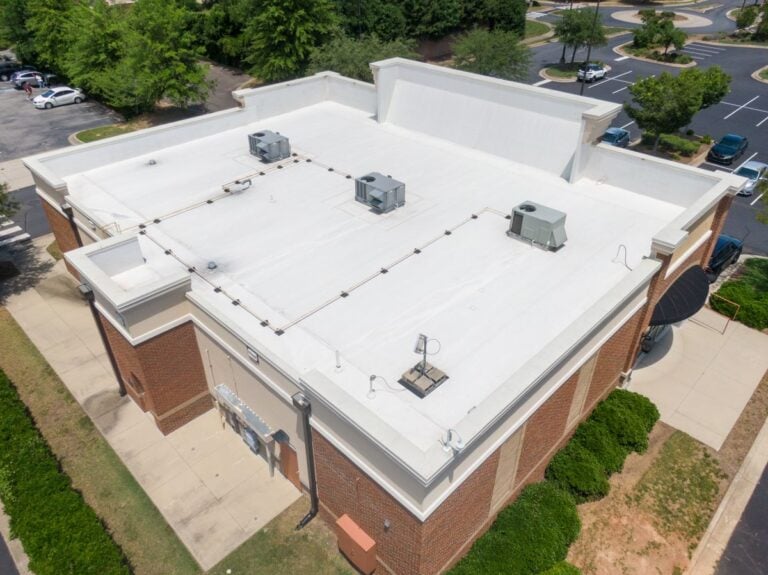
Modified bitumen is commonly selected for commercial and industrial buildings, retail spaces, warehouses, and residential flat roof additions.
- Commercial suitability: Ideal for large low slope structures.
- Residential adaptability: Works well for garages and additions.
- Foot traffic durability: Reinforced layers tolerate maintenance access.
Buildings that require periodic rooftop equipment servicing often benefit from the durability of this roofing material.
Is Modified Bitumen The Right Roofing Material For Your Property?
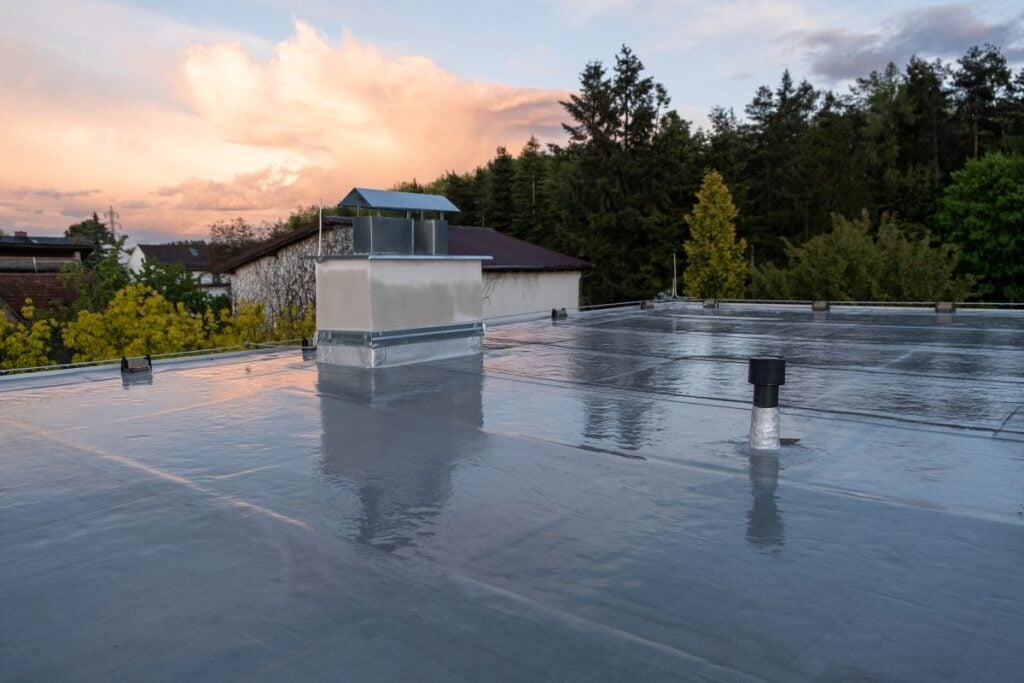
If your building features a flat or low slope design and requires a durable waterproof barrier, modified bitumen may be a strong candidate. Its layered construction offers improved performance compared to traditional built up roofing while maintaining proven asphalt based reliability.
Consulting with a professional contractor ensures the selected roofing system is compatible with your existing roof deck, insulation, and drainage design.
Army Roofing: Your Flat Roofing Specialists
Selecting the right roofing material requires experience and careful planning.
At Army Roofing, our experienced team provides professional installation and repair services for modified bitumen roofing systems. We’re proud to serve home and business owners in Burnaby, BC, and nearby communities with dependable solutions for commercial and industrial buildings.
If you are considering a modified bitumen roofing system, contact Army Roofing today to schedule a consultation and determine whether this option fits your long term building needs.
Recent Articles
The Roof Blog