



When Roof Moss Requires Professional Removal? (6 Signs)
Roof moss is one of those problems that looks like a minor cosmetic issue from the street but can quietly compromise your shingles, underlayment, and roof structure the longer it goes unaddressed. In BC’s Lower Mainland, where wet winters, overcast skies, and heavy tree cover create near-perfect conditions for moss and algae growth, it is one of the most common roofing concerns homeowners face. Knowing when you can manage it yourself and when it requires a professional roof cleaning is the key to avoiding unnecessary shingle damage and costly repairs. If your roof is showing serious signs of growth, Army Roofing’s residential roofing services include professional inspection and moss treatment as part of a comprehensive maintenance approach. Here is what this blog covers:
- How roof moss grows and why BC roofs are especially vulnerable
- 6 signs that moss removal requires a professional
- What professional moss removal involves
- How to prevent moss from coming back
- Frequently asked questions about roof moss
How Moss Grows and Why It Is a Real Problem
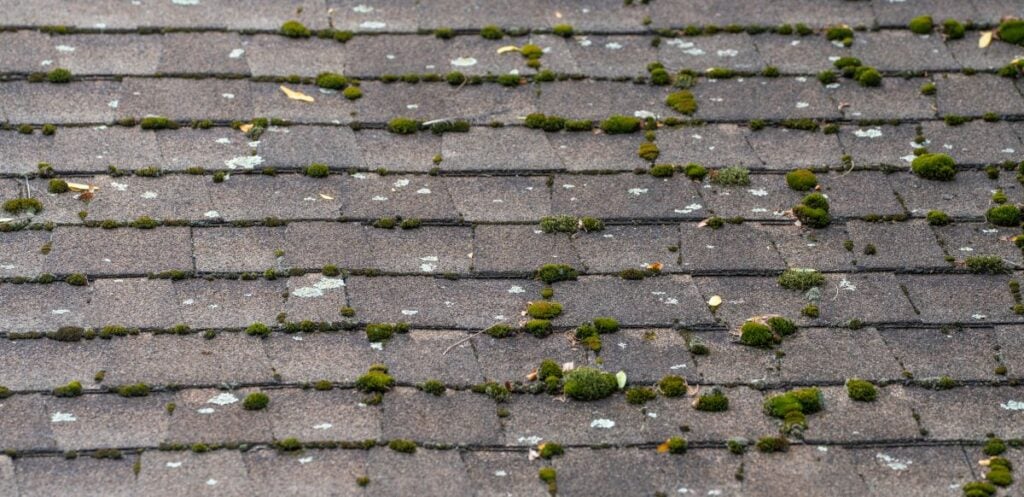
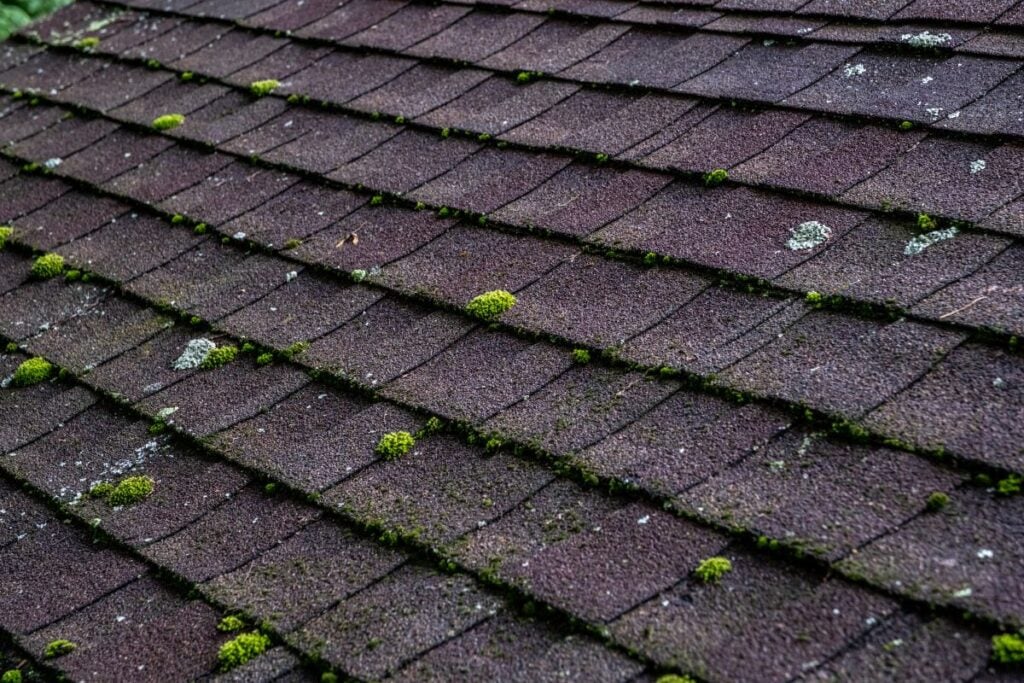
Moss is a non-vascular plant that absorbs water through its leaves rather than roots, meaning it needs a consistently damp surface to survive. Coastal or humid climates create ideal conditions for moss to thrive — north-facing roof planes that receive less direct sunlight stay wet longest and are almost always the first areas affected. In Coquitlam and across the Lower Mainland, the combination of rainfall, coastal humidity, and heavy tree cover means virtually every shingle roof is at some level of risk throughout the year.
Unlike algae, moss can be detrimental to asphalt shingles, according to the Asphalt Roofing Manufacturers Association, because its root-like structures work their way under shingle edges, lifting them and creating entry points for water. Trapped moisture accelerates shingle deterioration, promotes granule loss, and in freezing temperatures can expand and crack roofing materials from beneath — making early identification and professional roof cleaning essential.
6 Signs Roof Moss Removal Requires a Professional
A small amount of early-stage growth on a newer roof can sometimes be addressed with low-pressure rinsing and a moss treatment product. But there are situations where DIY approaches are insufficient or risky. Here are six signs it is time to call a roofing contractor.
1. Moss Is Lifting Shingle Edges
When moss growth has progressed to the point where shingle edges are visibly curling or lifting, professional intervention is needed. Lifted shingles allow water under the roof surface with every rainfall, and the moss has established a root system deep enough that surface rinsing will not solve the problem. Improper removal at this stage — scrubbing or power washing — risks tearing already-weakened shingles and accelerating granule loss.
- What to look for: Shingle edges that curl upward or appear raised in areas where moss is concentrated.
- Why DIY falls short: Aggressive scrubbing strips protective granules and can physically crack brittle shingles, causing more damage than the moss itself.
- Professional advantage: A trained crew assesses how far the lifting has spread, treats the moss without causing shingle damage, and flags any sections needing repair.
2. Moss Covers a Large Portion of the Roof Surface
Small isolated patches in one shaded corner are manageable. When moss coverage extends across multiple roof planes or covers a significant percentage of the roof surface, the problem has moved beyond what a garden hose and a bottle of roof moss treatment can address safely. Large-scale removal requires proper safety equipment, the right moss removal techniques, and a systematic approach to treating the full roof system.
- What to look for: Green coverage across more than one slope, or widespread growth visible from ground level.
- Why DIY falls short: Treating large areas without the right technique results in uneven application, missed patches, and risk of injury working at height.
- Professional advantage: Professionals treat the full roof surface including valleys, ridges, and areas not visible from the ground.
3. Granule Loss Is Visible in the Gutters
Granules are the protective coating on asphalt shingles that shield the underlying material from UV damage and weathering. When moss accompanies significant granule loss — visible as gritty buildup in gutters and downspouts — the shingles are already compromised. Moss root structures physically dislodge granules as they spread, and a roof losing granules at this rate needs professional assessment, not just surface cleaning.
- What to look for: Gritty, sand-like debris in gutters, bald patches on shingles, or dark spots where the granule coating has worn away.
- Why DIY falls short: Surface moss removal will not restore lost granules, and without a professional inspection you will not know whether the shingle is still structurally viable.
- Professional advantage: Inspection determines whether granule loss is localized and repairable or widespread enough to begin planning for roof replacement.
4. The Roof Is More Than 15 Years Old
An older roof is significantly more vulnerable to moss damage than a newer one. Asphalt shingles that have weathered 15 or more BC winters are more brittle, have reduced granule coverage, and are less able to withstand the physical stress of moss removal. On an aging roof, even minor moss growth warrants professional evaluation — the removal needs a gentler approach, and a professional inspection alongside treatment gives homeowners a clear picture of remaining roof life.
- What to look for: Any moss growth on a roof that is 15 years or older, regardless of how minor it appears.
- Why DIY falls short: The risk of shingle damage during removal increases significantly on older roofs, and assessing the underlying condition requires experienced eyes.
- Professional advantage: Combines moss treatment with a full roof inspection so homeowners understand what repairs or replacement planning may be coming.
5. Moss Is Blocking Gutters and Drainage
Moss sheds debris, spores, and plant material into gutters and roof valleys, where it accumulates and blocks drainage. Clogged gutters force water to back up under the roof edge — one of the most common causes of fascia rot, soffit damage, and interior water infiltration in BC homes. When moss is contributing to drainage problems, the cleanup needs to address both the roof surface and the gutter system together.
- What to look for: Gutters that overflow during rain, visible moss debris in gutters, or water staining on fascia and soffit boards.
- Why DIY falls short: Clearing gutters while treating the roof from a ladder at height is a significant safety risk, and clearing gutters alone without treating the moss source means the blockage returns quickly.
- Professional advantage: Roof moss removal, gutter clearing, and assessment of any fascia or soffit damage are handled in a single visit.
6. You Notice Interior Water Stains After Rain
If dark spots are appearing on interior ceilings or walls following rainfall and moss is present on the roof, the two are likely connected. Moss that has lifted shingles or caused granule loss allows water infiltration that travels down through the roof assembly and shows up as ceiling staining. At this stage the issue is not just moss removal — there is active roof damage and potential structural deterioration that needs professional diagnosis before any surface treatment is applied.
- What to look for: Brown or yellow ceiling stains that appear or worsen after rainfall, particularly in rooms near the roofline.
- Why DIY falls short: Interior water stains mean the roof’s waterproofing is already breached — surface cleaning alone will not solve the leak.
- Professional advantage: A roofing contractor can trace the leak to its source, assess structural and insulation damage, treat the moss, and carry out repairs in the correct sequence.
We are proud to serve home and business owners in Coquitlam, BC, and nearby communities with professional roof moss removal, inspection, and repair services and more.
What Professional Moss Removal Involves
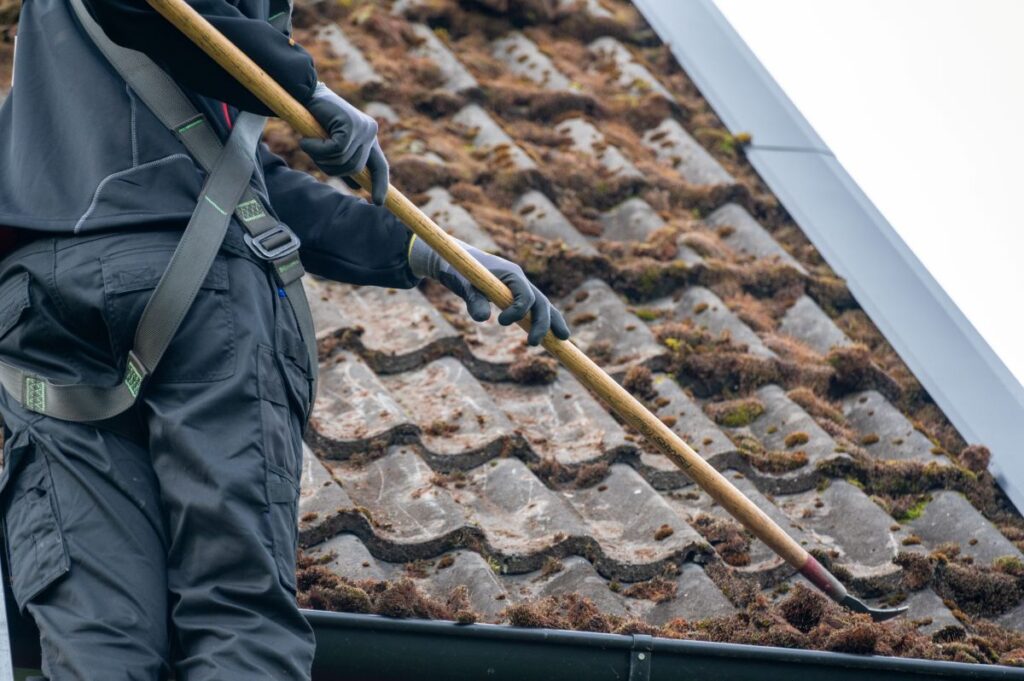
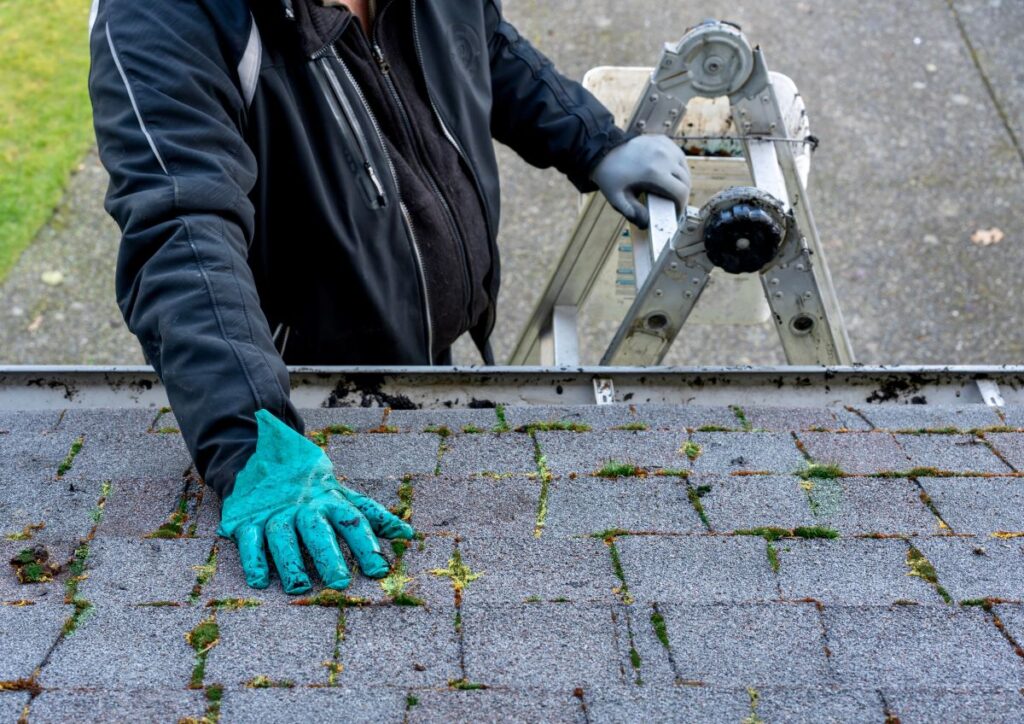
Professional roof cleaning follows a manufacturer-approved process designed to clear moss without damaging the shingles underneath. The ARMA explicitly advises against pressure washing asphalt shingles, as high-pressure water accelerates granule loss and can force moisture beneath the shingle layer. A proper approach involves manually removing loose moss with hand tools, using a leaf blower to clear debris from gutters and valleys, and applying a treatment solution designed to kill moss at the root level. Dead moss then breaks down and washes away with subsequent rainfall. Following treatment, a professional should assess flashing integrity, check for hidden shingle damage, and recommend repairs to prevent moisture intrusion going forward.
How to Prevent Moss From Coming Back
Prevention is far less expensive than repeated professional removal. These measures reduce the conditions that allow moss spores to establish and help guard against future moss growth on your shingle roof.
- Trim overhanging branches: More sunlight on the roof surface speeds drying after rain and discourages moss and algae growth across every roof plane.
- Keep gutters clear: Regular gutter maintenance removes the debris and moisture that moss spores use to spread back onto the roof.
- Install zinc or copper strips: Metal strips at the ridge release trace elements that inhibit future moss growth as rainwater washes down the slope — one of the most effective long-term prevention measures in coastal or humid climates.
- Schedule annual roof inspections: Catching early growth before it causes shingle damage keeps removal simple and inexpensive.
Common FAQs
Homeowners across the Lower Mainland frequently ask about roof moss — particularly when it becomes a serious concern and what can safely be done about it. Here are the most common questions.
Can I remove roof moss myself?
For a small amount of early-stage growth on a newer roof, low-pressure rinsing and a moss treatment product can be effective. However, the ARMA advises against pressure washing, scrubbing with stiff brushes, or any abrasive method on asphalt shingles, as these cause granule loss and physical shingle damage. For any of the six signs above — lifted shingles, widespread coverage, granule loss, an older roof, blocked drainage, or interior water staining — professional roof cleaning is the safer and more effective option.
Does moss mean my roof needs to be replaced?
Not necessarily. On a younger roof with minor moss and no granule loss or shingle lifting, professional removal and treatment may be all that is needed. On a roof over 15 years old with widespread moss growth, visible granule loss, or signs of water infiltration, the moss may be a sign that the roof is nearing end of life. A professional inspection alongside moss removal will give you a clear answer.
How often does moss come back after treatment?
In BC’s wet climate, moss can begin re-establishing within one to three years after treatment, particularly on north-facing slopes with significant tree cover. Preventive measures — trimming branches, maintaining gutters, and installing zinc or copper strips at the ridge — extend the interval between professional cleanings considerably. Annual roof inspections make it easier to catch early re-growth before it becomes a problem.
Will insurance cover moss-related roof damage?
Most standard BC home insurance policies do not cover moss or algae damage, as insurers treat it as gradual deterioration rather than a sudden accidental event. Documenting your roof condition annually and addressing moss growth promptly is the best way to protect the roof and maintain your insurance position.
Army Roofing: Professional Moss Removal Done Right
Moss on a BC roof is not something to watch and wait on. The longer it grows, the more damage it does to the shingle surface, the more moisture it traps against the roof structure, and the more costly the eventual fix becomes. At Army Roofing, we assess every roof before recommending a course of action — whether that means targeted moss treatment, shingle repairs to address existing damage, or an honest conversation about whether roof replacement is on the horizon. Contact Army Roofing today to book your free inspection and get a straight answer about what your roof actually needs.
Recent Articles
The Roof Blog