



When To Upgrade Types Of Roof Ventilation: 7 Signs
Types of roof ventilation are something most homeowners never think about until a problem makes itself known — and by then, the damage from years of poor attic airflow is often already underway. A ventilation system that worked when the home was built may no longer be sufficient after insulation upgrades, additions, or simply the passage of time. Knowing when your current setup needs upgrading — and what your options are — can protect your roof, lower your energy bills, and preserve the air quality inside your home. Army Roofing installs proper ventilation systems as part of every roofing project across New Westminster and the Lower Mainland. Here is what this blog covers:
- How roof ventilation works and why it matters
- The main types of roof ventilation
- 7 signs your system needs an upgrade
- A comparison of ventilation types
- Frequently asked questions about roof ventilation
How Roof Ventilation Works and Why It Matters
Roof ventilation works through a simple principle: cool air enters through soffit intake vents and warm, moist air exits through exhaust vents at or near the ridge. This continuous airflow keeps the attic close to the outdoor temperature, preventing ice dams, premature shingle deterioration, moisture buildup, mold growth, and elevated summer cooling costs.
According to the Asphalt Roofing Manufacturers Association, the minimum ventilation requirement is 1 square foot of net free ventilation area for every 150 square feet of attic floor space, with half as intake and half as exhaust. Many older Lower Mainland homes fall below this threshold, and even homes that once met the minimum may no longer do so after insulation upgrades that inadvertently block soffit intake vents.
The Main Types of Roof Ventilation
Understanding your options across the main types of roof vents is the first step toward knowing what an upgrade might involve. Every home has some form of attic ventilation system — the question is whether it is the right type and correctly sized for the attic space.
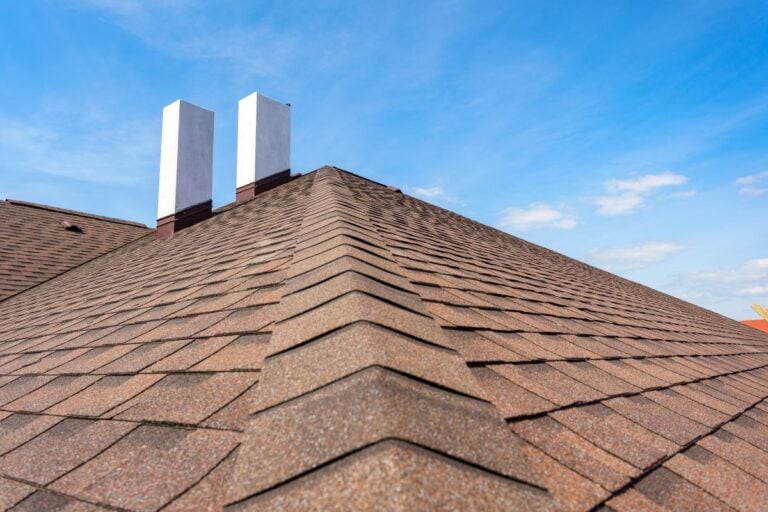
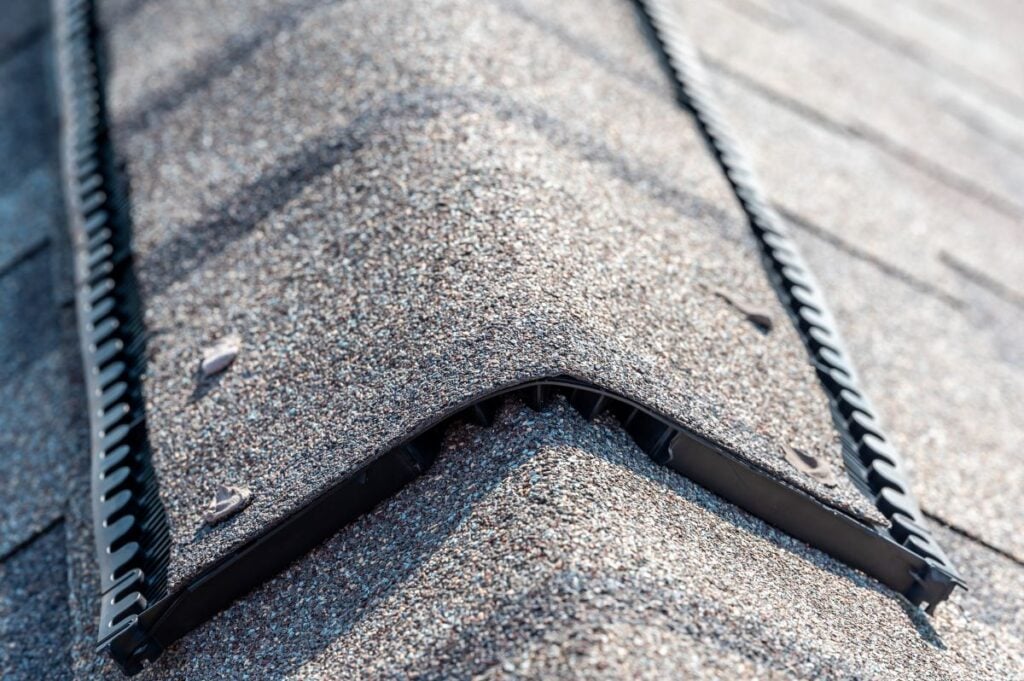
- Ridge vents: Run along the full roof peak, allowing warm attic air to escape continuously. Widely considered the most effective passive exhaust for sloped roofs when paired with adequate soffit intake.
- Soffit vents: Installed under the eave overhang, these draw cool air into the attic and form the air intake side of a balanced attic ventilation system.
- Gable vents: Located in the triangular end walls, gable vents provide cross-ventilation but are less effective than ridge-and-soffit systems because they do not promote even airflow across the full attic space.
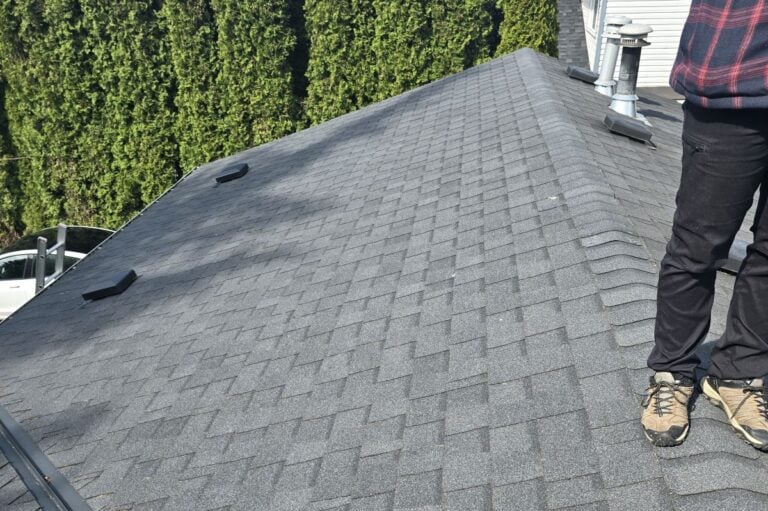
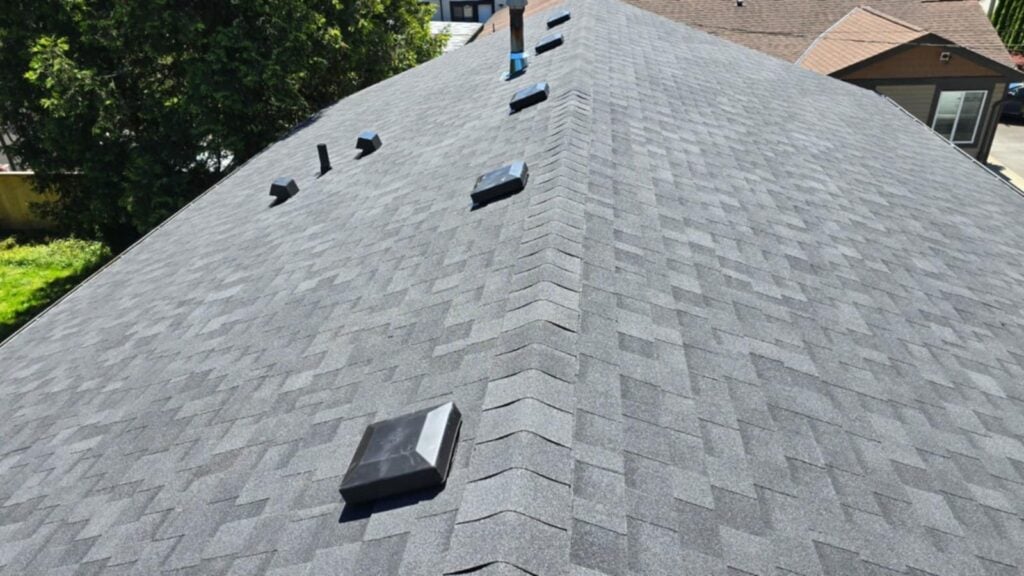
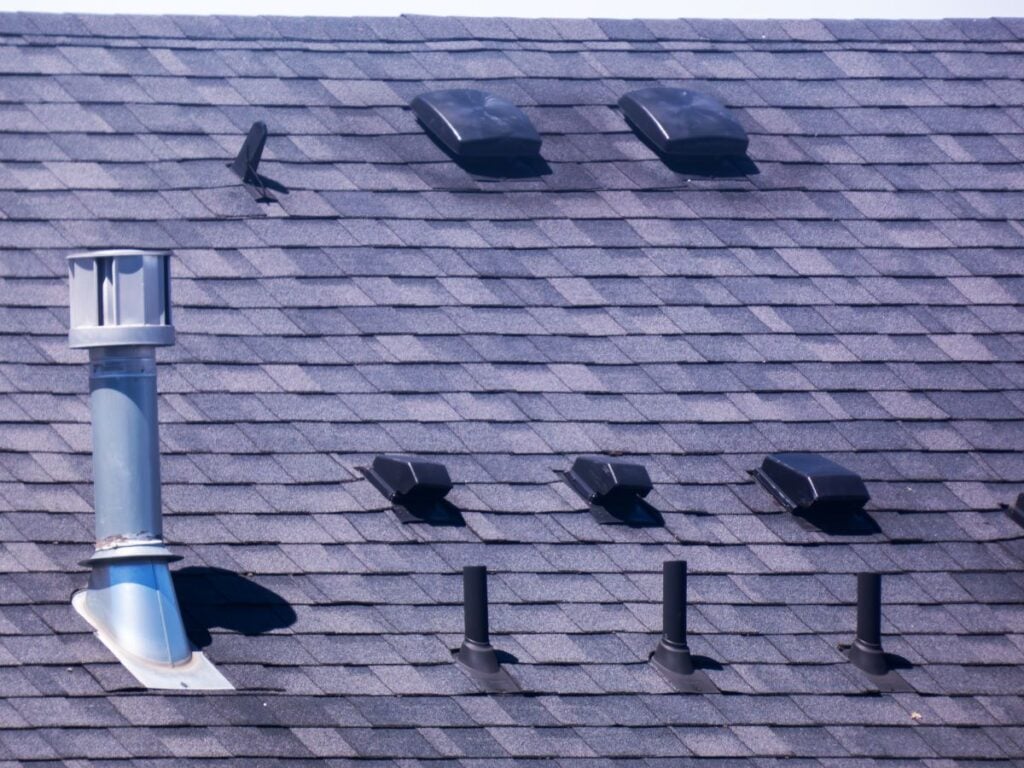
- Box vents: Also called static roof vents, box vents are fixed exhaust openings installed over holes cut in the roof deck. They have no moving parts, require no power, and work through natural convection — but multiple units are needed to achieve adequate coverage compared to a continuous ridge vent.
- Power roof vents: Also known as powered roof vents, these electrically powered exhaust fans actively draw attic air out — effective where passive ventilation is insufficient, but require electricity and can create negative pressure if air intake is inadequate.
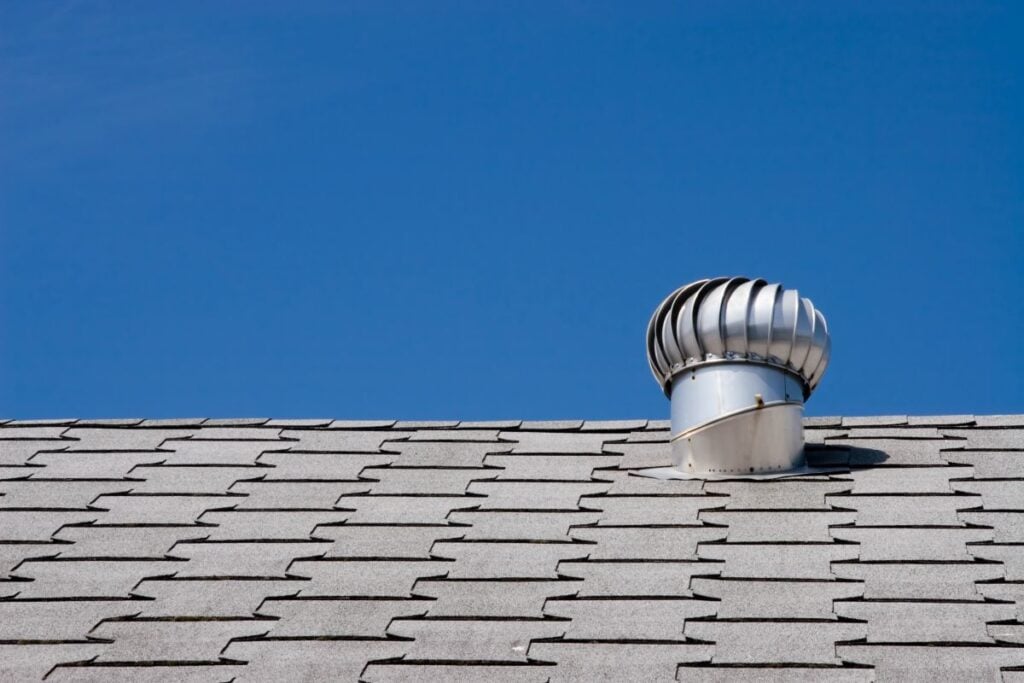
- Turbine vents: Wind-activated spinning vents that pull air from the attic without electricity. Low-maintenance but dependent on wind, making them inconsistent in sheltered locations.
- Louvered roof vents: Fixed vents with angled blades used as exhaust points where ridge venting is not practical, though they move lower air volume than continuous ridge vents.
7 Signs Your Roof Ventilation Needs an Upgrade
Inadequate ventilation tends to leave visible evidence. Here are seven signs it is time to upgrade your roof ventilation system.
1. Ice Dams Forming Along the Eaves Every Winter
Ice dams are one of the most reliable signs of poor attic ventilation. When the attic is warmer than the outside air, heat melts snow near the ridge and meltwater refreezes at the cold eave — forcing water back under shingles and into the roof assembly. If ice dams form repeatedly, inadequate exhaust ventilation is almost always a contributing factor, and upgrading to a continuous ridge vent with balanced soffit intake is typically the most effective solution.
- What to look for: Thick ice ridges at the eave edge in winter, icicles forming from gutters, or ceiling stains near the roofline after snowfall.
- What the upgrade involves: Adding or extending ridge venting and ensuring soffit intakes are clear and adequate for the attic size.
- Why it matters: Repeated ice dam cycles cause deck rot, shingle lifting, and interior water damage that far exceed the cost of a ventilation upgrade.
2. Shingles Aging Ahead of Schedule
Overheated attics break down asphalt shingles from beneath, accelerating granule loss and causing curling or blistering well ahead of the product’s expected lifespan. If your shingles look aged beyond their years, ventilation is worth investigating — and many manufacturers require adequate ventilation as a condition of their shingle warranty. Premature shingle failure can void that warranty and push a replacement years earlier than necessary.
- What to look for: Curling, blistering, or excessive granule loss in gutters relative to the shingles’ age.
- What the upgrade involves: Increasing exhaust ventilation capacity, typically by adding ridge venting or replacing gable vents with a ridge-and-soffit system.
- Why it matters: A ventilation upgrade costs significantly less than replacing a roof that failed early due to heat damage.
3. Moisture or Condensation in the Attic
When warm, humid interior air rises into an inadequately ventilated attic, it condenses on the cold roof deck and framing — creating conditions for mold, wood rot, and structural deterioration. In New Westminster and across the Lower Mainland, elevated indoor humidity through the wet season makes this a common issue in homes with insufficient exhaust ventilation or blocked soffit intakes.
- What to look for: Water staining or frost on the roof deck underside, damp insulation, mold on rafters, or a musty smell in upper rooms.
- What the upgrade involves: A full intake-to-exhaust balance assessment, followed by targeted additions to whichever side is underperforming.
- Why it matters: Moisture-related decay in the roof structure is expensive to repair and typically progresses unseen until significant damage has already occurred.
4. High Summer Cooling Costs
An overheated attic acts as a heat battery — absorbing solar energy and radiating it into the living spaces below, forcing air conditioning to work harder. If upper floors are noticeably warmer than lower ones, or cooling costs seem disproportionately high, inadequate exhaust ventilation is a likely contributor. Upgrading to a more effective passive system or adding powered roof vents can meaningfully improve attic ventilation and reduce summer heat gain.
- What to look for: Upper floors consistently warmer than lower floors in summer, high cooling bills, or attic air that feels intensely hot when accessed.
- What the upgrade involves: Adding or replacing exhaust vents, potentially with active power venting if passive ventilation alone is insufficient for the attic size.
- Why it matters: Improving attic ventilation reduces the heat load on the living spaces below, lowering cooling costs and extending shingle life simultaneously.
5. Insulation Was Added Without a Ventilation Assessment
Insulation upgrades are valuable, but blown-in or batt insulation added to an attic floor frequently covers soffit vent baffles, blocking the air intake side of the attic ventilation system. A home that previously had adequate airflow may have a critically underventilated attic after an insulation job that was not coordinated with the existing ventilation layout — a very common scenario across the Lower Mainland.
- What to look for: An insulation upgrade that occurred without a ventilation review, or insulation pushed against the eave blocking soffit vent openings.
- What the upgrade involves: Installing or reinstalling vent baffles to restore the airway from soffit to attic, and adding air intake capacity if existing soffit vents are undersized for the attic space.
- Why it matters: A ridge vent system cannot move attic air effectively without adequate soffit intake — the two sides of the attic ventilation system are equally essential.
6. Your Home Relies Entirely on Gable Vents
Gable vents were standard in older home construction but are now understood to be significantly less effective than a balanced ridge-and-soffit system. They create cross-ventilation between the gable ends but leave the central and upper attic areas — where heat and moisture accumulate most — without adequate airflow. Upgrading from gable vents to a ridge-and-soffit system is one of the most impactful ventilation improvements a homeowner can make.
- What to look for: Gable vents on the end walls of the home, no soffit vents under the eave, and no ridge vent along the peak.
- What the upgrade involves: Adding continuous ridge venting and soffit intake to replace or supplement the gable vent system.
- Why it matters: A balanced ridge-and-soffit system moves significantly more air volume across the full attic than gable vents alone.
7. Your Roof Was Replaced Without a Ventilation Assessment
A roof replacement is the ideal time to upgrade ventilation — access to the deck is already available and the incremental cost is far lower than a standalone project. If your roof was replaced without any discussion of ventilation, a professional assessment is worth scheduling. Inadequate ventilation shortens the life of the new roof, can void manufacturer warranties, and perpetuates the same problems that may have contributed to the previous roof’s early failure.
- What to look for: A recent replacement with no ventilation work included, or a contractor who did not inspect or discuss the existing ventilation system.
- What the upgrade involves: A professional measurement of current ventilation area against attic floor space, followed by targeted additions where the system falls short of the 1:150 standard.
- Why it matters: The new roof’s performance and warranty depend on adequate ventilation — without it, you are repeating the same conditions that shortened the last one.
We are proud to serve home and business owners in New Westminster, BC, and nearby communities with professional roofing, ventilation installation, and inspection services and more.
Ventilation Type Comparison
| Type | Passive or Active | Best Use | Key Limitation |
| Ridge vent | Passive | Full-length exhaust on sloped roofs | Requires balanced soffit intake |
| Soffit vent | Passive | Air intake on all sloped roofs | Can be blocked by insulation |
| Gable vent | Passive | Older homes with cross-ventilation | Uneven airflow, less effective than ridge system |
| Box vent (static roof vent) | Passive | Spot exhaust where ridge vent is not continuous | Multiple units needed for full coverage |
| Powered roof vent | Active | Supplemental exhaust where passive is insufficient | Requires electricity, can create negative pressure |
| Turbine vent | Passive/Wind | Low-maintenance exhaust in windy areas | Inconsistent in sheltered locations |
| Louvered roof vent | Passive | Exhaust where ridge venting is impractical | Lower airflow volume than ridge vents |
Common FAQs
Roof ventilation questions are common, especially when homeowners suspect their system is underperforming. Here are the questions we hear most often.
How do I know if my attic is properly ventilated?
The most reliable method is a professional inspection. You can also apply the 1:150 rule yourself — divide your attic floor area by 150 to find the minimum square feet of net free ventilation area your system requires, then compare that to the combined rating of your existing vents. Signs of underventilation include summer attic temperatures that feel extreme, winter frost or condensation on the roof deck underside, ice dams, and higher-than-expected cooling costs.
Can I mix different types of roof ventilation?
Mixing certain types reduces system effectiveness. Combining ridge vents with gable vents is a common mistake — gable vents can short-circuit the ridge-and-soffit airflow path, drawing air from the gable rather than the soffit and leaving much of the attic unventilated. Power vents can also create negative pressure if intake is insufficient. A professional assessment is the best way to determine what combination suits your specific roof design.
Is ventilation assessed during a roof replacement?
It should be, but it is not always included automatically. A quality roofing contractor will assess existing ventilation during a replacement and flag issues — both because inadequate ventilation shortens the new roof’s life and because many manufacturers require proper ventilation as a warranty condition. If your contractor does not raise it, ask specifically about the intake-to-exhaust balance and whether the system meets the 1:150 standard for your attic size.
Army Roofing Installs Ventilation That Actually Works
A roof without proper ventilation ages faster, costs more to heat and cool, and is far more likely to develop moisture, mold, and ice dam problems over its lifetime. At Army Roofing, ventilation is part of how we engineer roofing systems that hold up through BC’s seasonal extremes — not an afterthought. Whether you need a full ventilation upgrade alongside a replacement or a targeted fix to an existing system, our team will give you an honest assessment and a clear recommendation. Contact Army Roofing today to book your free inspection.
Recent Articles
The Roof Blog