



Roof Ventilation Cost: What Homeowners Actually Pay
Roof ventilation cost is one of the most commonly underestimated line items in a roofing budget, partly because ventilation is invisible once the roof is complete and partly because the consequences of inadequate airflow take years to appear. Poor attic ventilation causes shingles to deteriorate prematurely, creates ice dams in winter, drives up energy bills, and voids many manufacturer warranties. Getting it right is not optional, and understanding what different ventilation systems actually cost helps homeowners evaluate quotes accurately and avoid under-specified installations. Army Roofing installs proper ventilation systems on every roofing project across Langley and the Lower Mainland. Here is what this blog covers:
- Why ventilation costs vary as widely as they do
- A breakdown of costs by ventilation type
- What drives installation costs up or down
- A comparison table of ventilation options
- Frequently asked questions for Langley homeowners
Why Roof Ventilation Cost Varies
Ventilation pricing is driven by three main factors: the type of vent, the number of units required to meet code, and whether the installation is part of a full roof replacement or a standalone project. A single box vent added to an existing roof costs far less than a complete ridge-and-soffit system installed on a home with inadequate intake and exhaust. The Asphalt Roofing Manufacturers Association requires a minimum of 1 square foot of net free ventilation area per 150 square feet of attic floor space, with half as intake and half as exhaust. Homes that fall short of this threshold need more than one or two vents to meet the standard, and the total cost rises accordingly.
Installing ventilation during a roof replacement is almost always more cost-effective than adding it after the fact. When the ridge is already open and the roofing crew is on site, adding ridge vents adds minimal labour cost. Retrofitting a ventilation system onto a finished roof requires separate mobilization, additional cutting, and careful work around existing shingles, all of which increase the price.
Roof Ventilation Cost by Type
Here is what homeowners typically pay for each of the main ventilation types, based on installed cost including materials and labour.
1. Ridge Vents
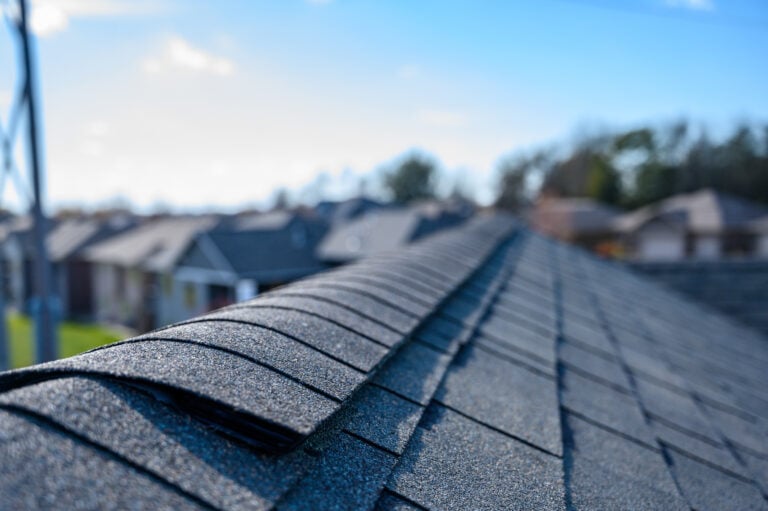
Ridge vents run continuously along the roof peak, allowing warm moist air to escape evenly across the full length of the attic. They are the most effective passive exhaust option available for standard gable and hip roofs, and they are virtually invisible from the ground. Ridge vents must be paired with soffit intake vents to function correctly, without intake, there is no airflow.
- Installed cost: $300 to $600 for a standard residential ridge vent system, or $7 to $15 per linear foot
- Best for: Most residential roofs in BC as the primary exhaust component of a balanced ventilation system
- Timing: Most cost-effective when installed as part of a full roof replacement
- BC consideration: Langley’s wet winters make continuous ridge ventilation particularly valuable for preventing moisture buildup and reducing ice dam risk along eaves
2. Soffit Vents
Soffit vents are installed under the eaves on the underside of the roof overhang and serve as the intake side of the ventilation system. Without adequate soffit intake, ridge vents and attic fans cannot draw fresh air through the attic space. Many older homes in the Lower Mainland have blocked or undersized soffit vents, particularly after insulation upgrades that inadvertently cover the intake openings.
- Installed cost: $200 to $650 for a complete soffit vent installation, or $2 to $10 per linear foot depending on the type and configuration
- Best for: Every home as the intake complement to ridge or gable exhaust vents; rarely effective alone
- Timing: Can be added to existing roofs without disturbing shingles, making it one of the more accessible retrofit options
- BC consideration: Blocked soffit vents are among the most common ventilation deficiencies found during Langley roof inspections, particularly on homes with blown-in insulation added in recent years
3. Box Vents (Static Vents)
Box vents, also called low-profile vents or turtle vents, are individual exhaust units installed by cutting a hole through the roof deck and sheathing. They are simpler and less expensive than ridge vents but provide ventilation only at a single point rather than continuously across the ridge. Multiple units are typically required to ventilate a standard attic adequately, and each additional unit represents another penetration in the roof surface.
- Installed cost: $150 to $400 per vent installed, with most attics requiring four to six units for adequate coverage
- Best for: Roofs where a continuous ridge vent is not practical, such as complex hip roofs with short ridge lengths or homes where the ridge design does not accommodate continuous venting
- Timing: Can be added to an existing roof without full replacement, though each unit requires careful flashing and sealing
- BC consideration: The multiple penetrations required for adequate coverage increase leak risk slightly over ridge vents, making installation quality particularly important in a high-rainfall climate
4. Powered Attic Vents (Electric and Solar)
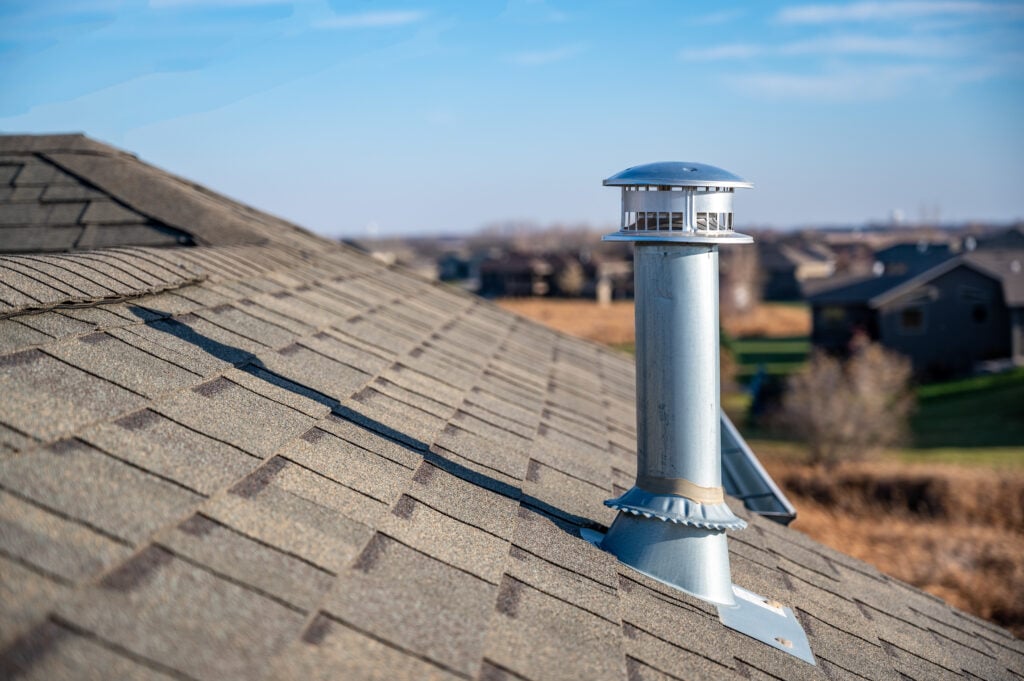
Powered attic vents use a motorized fan to actively exhaust attic air rather than relying on passive airflow. Electric-powered models require wiring and add to monthly energy costs; solar-powered versions eliminate the energy cost but carry a higher upfront price. Powered vents are most useful when passive ventilation alone is not achieving adequate airflow due to attic geometry, low roof pitch, or limited ridge length.
- Installed cost: $300 to $900 for electric powered vents; $300 to $1,400 for solar-powered vents, depending on unit size and installation complexity
- Best for: Homes with complex attic geometry where passive systems cannot move sufficient air, or as a supplement to an undersized passive system
- Timing: Can be installed on an existing roof; electric models require a licensed electrician to wire the unit
- BC consideration: Solar-powered vents perform well through Langley’s spring and summer months but are less active in the overcast fall and winter period when ventilation pressure from moisture is highest
5. Gable Vents
Gable vents are installed in the triangular gable ends of the home and can function as either intake or exhaust depending on prevailing wind direction. They are common on older homes and work reasonably well in climates where wind is a reliable driver of airflow. In low-wind conditions or for homes where wind direction is inconsistent, gable vents underperform relative to a balanced ridge-and-soffit system.
- Installed cost: $100 to $500 per vent, depending on size, material, and whether the opening already exists or needs to be cut
- Best for: Supplementing existing ventilation on homes with gable-end roof design; less effective as the sole ventilation strategy
- Timing: Can be added to an existing home without roof access; the work is done from inside the attic or from the exterior gable wall
- BC consideration: Gable vents on their own are generally insufficient for the sustained moisture load that Langley homes face through the wet season
We are proud to serve home and business owners in Langley, BC, and nearby communities with professional roofing installation, ventilation assessment, and replacement services and more.
What Drives Ventilation Costs Up or Down
Several factors consistently move the final price away from the baseline ranges above.
- Project timing: Installing ventilation during a full roof replacement reduces labour costs significantly compared to a standalone ventilation retrofit on a finished roof
- Roof complexity: Steep pitches, multiple valleys, and hip roof designs increase both the difficulty and the time required to install any vent type
- Current ventilation deficiency: Homes that need a complete intake-and-exhaust system installed from scratch cost more than homes that simply need an upgrade or supplementary unit
- Attic access: Limited attic access for inspection and measurement adds time and occasionally requires additional work to determine the correct specification before installation
- Number of units: Meeting the 1:150 ventilation ratio on a large attic may require more vents than initially estimated, particularly if the attic has irregular geometry or internal partitions
Ventilation Cost Comparison
| Vent Type | Installed Cost | Passive or Active | Best Application |
| Ridge vent | $300–$600 | Passive | Most residential roofs; best value during reroof |
| Soffit vent | $200–$650 | Passive (intake) | Every home; required for ridge vent to function |
| Box vent | $150–$400 per unit | Passive | Complex roofs where ridge vent is impractical |
| Electric powered vent | $300–$900 | Active | Supplemental airflow in low-passive-flow attics |
| Solar powered vent | $300–$1,400 | Active | Same as electric; higher upfront, no energy cost |
| Gable vent | $100–$500 | Passive | Supplemental; less effective as sole strategy |
Common FAQs for Langley Homeowners
Ventilation questions come up most often during roof replacement estimates and after homeowners notice signs of poor airflow, ice dams, high energy bills, or moisture in the attic. Here are the questions we hear most often from Langley homeowners.
How do I know if my home has adequate ventilation?
The clearest signs of inadequate ventilation include ice dams forming along the eaves in winter, unusually high cooling costs in summer, moisture or mold discovered in the attic, and shingles that are curling or deteriorating faster than expected. A professional roof inspection that includes an attic assessment is the most reliable way to determine whether your current ventilation meets the 1:150 code standard for your attic size.
Is ventilation always included in a roof replacement quote?
Not automatically. Some contractors include ridge vent installation in every reroof as standard, while others treat it as an add-on. Always ask specifically whether ventilation is included in the quote and what the existing ventilation assessment shows. A replacement that adds new shingles without addressing inadequate ventilation leaves the new roof vulnerable to the same premature deterioration as the old one.
Can poor ventilation void my shingle warranty?
Yes. All major shingle manufacturers, including IKO, GAF, CertainTeed, Owens Corning, and Malarkey, require adequate attic ventilation as a condition of warranty validity. If an inspection reveals ventilation deficiencies after a warranty claim is filed, manufacturers can and do deny coverage on that basis. Ensuring the ventilation system meets code is as important to protecting your warranty as the installation quality of the shingles themselves.
What is the most cost-effective ventilation upgrade for a Langley home?
For most homes, ensuring adequate soffit intake paired with a continuous ridge vent is the highest-value upgrade relative to cost. Many Langley homes have insufficient soffit intake rather than insufficient exhaust, meaning adding more exhaust vents without fixing the intake does little. A balanced intake-exhaust system, assessed and specified correctly for your attic size, delivers the best long-term performance per dollar spent.
Army Roofing Includes Ventilation in Every Assessment
Ventilation is not a detail to sort out after the shingles go on. At Army Roofing, every roof assessment includes an evaluation of the existing ventilation system, a calculation of whether current intake and exhaust meet code for your attic size, and a clear recommendation for what, if anything, needs to change. Contact Army Roofing today to book your free estimate and make sure your next roof is ventilated correctly from the start.
Recent Articles
The Roof Blog